Warfarin and Alcohol: What You Need to Know Before You Drink
When you're on warfarin, a blood thinner used to prevent dangerous clots in people with atrial fibrillation, artificial heart valves, or deep vein thrombosis. Also known as Coumadin, it works by slowing down your body's ability to form clots. But if you drink alcohol, you're playing with fire. Warfarin doesn't just sit there quietly—it reacts with what you put in your body, and alcohol is one of the biggest red flags.
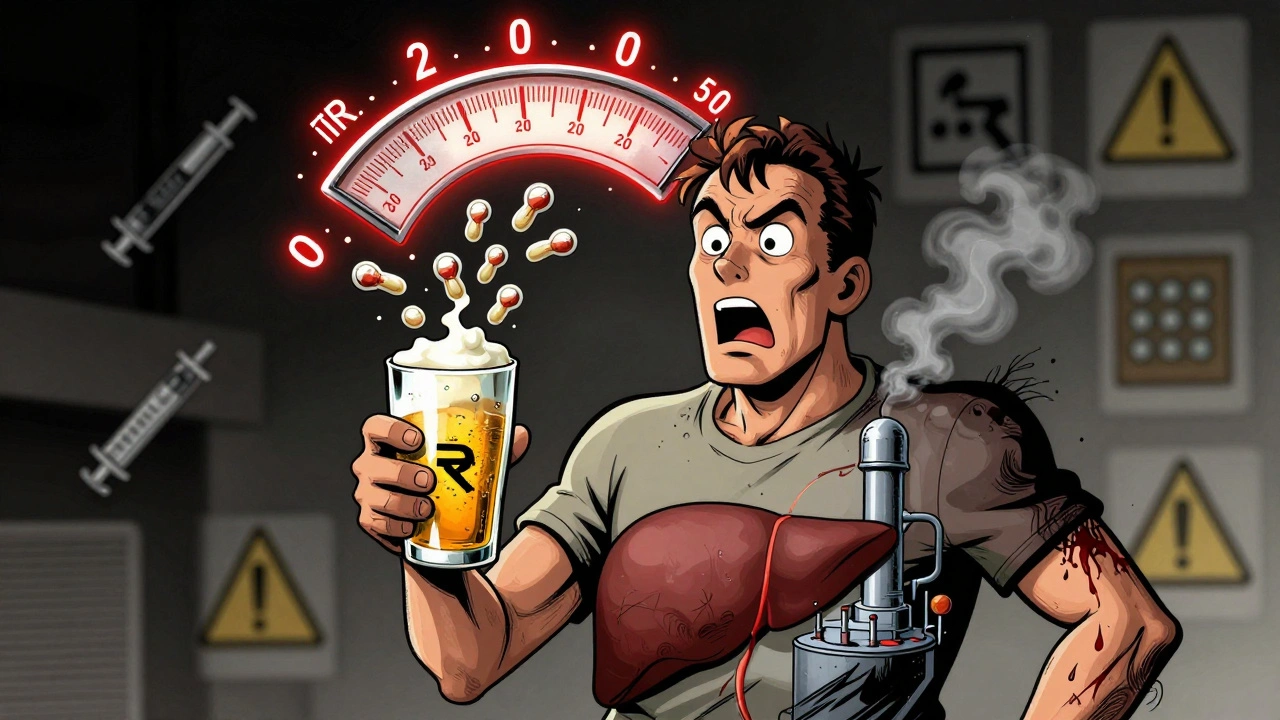
Alcohol doesn't just make you dizzy—it throws off your INR levels, a blood test that measures how long it takes your blood to clot. Too high, and you risk bleeding inside your brain, gut, or joints. Too low, and you could get a stroke or pulmonary embolism. A single night of heavy drinking can spike your INR by 20% or more. Even moderate drinking, like two glasses of wine, can cause unpredictable swings. Studies tracking patients on warfarin show those who drink regularly have nearly double the risk of major bleeding compared to non-drinkers. And it's not just about how much you drink—it's when you drink. Binge drinking followed by weeks of sobriety is especially dangerous because your liver can't keep up with the back-and-forth.
Warfarin is broken down by your liver, and so is alcohol. When both are in your system, they compete for the same enzymes. This means your body either processes warfarin too slowly (making it stronger) or too quickly (making it weaker). Neither is safe. Add in other medications—like antibiotics or painkillers—and things get even messier. You might think, "I only have a beer on weekends," but your doctor doesn't see weekends—they see patterns. And those patterns show up in your lab results. If you're on warfarin, you're not just managing a pill. You're managing your whole lifestyle.
Some people say, "My doctor said a little alcohol is fine." But that’s not a blanket rule. It depends on your liver, your age, your other meds, and how steady your INR has been. If your INR jumps around every time you drink, your doctor might tell you to quit entirely. If you’ve been stable for a year and only have an occasional drink, your provider might allow it—but only if you’re honest and consistent. No guessing. No "I had one glass" when you actually had three. The truth matters here.
You’ll find posts here that dig into how reversal agents, like vitamin K or fresh plasma, are used in emergencies when warfarin causes dangerous bleeding, how to read your medication guides, the official FDA warnings that spell out exactly what to avoid, and how drug interactions, especially with common pain relievers and herbal supplements can sneak up on you. None of this is theoretical. These are real risks that show up in emergency rooms every week. This isn’t about fear—it’s about control. Know what you’re up against, and you can stay safe without giving up everything you love.