


Prior Authorization Risk Calculator
How Long Are You Waiting?
Your Risk Assessment
High Risk
Low Risk
Enter your waiting time to see your treatment risk.
Potential Time Savings
Up to 7 days
Switching from fax to electronic systems can reduce approval time from 5 days to under 2 days.
Imagine you’re prescribed a life-saving medication. Your doctor signs the script. You walk to the pharmacy. And then you’re told: “We can’t fill this until your insurance approves it.” That approval could take days. Maybe weeks. And while you wait, your condition worsens. This isn’t a hypothetical. It’s happening right now to hundreds of thousands of people - and it’s killing them.
What Prior Authorization Actually Does (And Why It’s Broken)
Prior authorization is supposed to be a safety check. Insurance companies use it to make sure you’re not getting expensive or unnecessary treatments. Sounds reasonable, right? But in practice, it’s become a bureaucratic wall that blocks care. For Medicare Advantage patients alone, over 35 million people face this hurdle every year. And it’s not just about cost - it’s about timing. The system was designed to prevent waste. But today, it’s causing harm. A 2023 JAMA Oncology study found that when cancer patients waited more than 28 days for treatment approval, their risk of death went up by 17%. That’s not a glitch. That’s a systemic failure. And it’s not just cancer. Diabetics, transplant recipients, epilepsy patients - anyone on time-sensitive meds - are being put at risk because of paperwork delays.How the Process Kills Time - and Lives
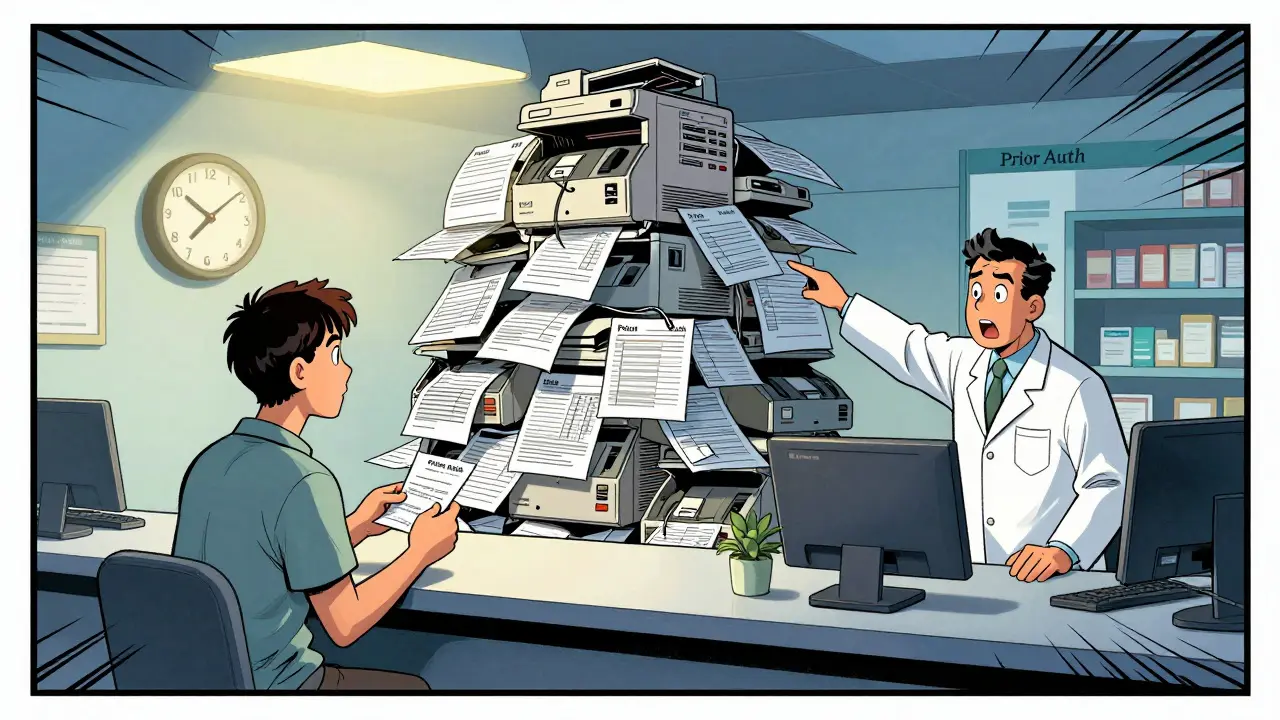
Here’s how it usually goes: Your doctor prescribes a drug. They submit paperwork - often by fax - to your insurer. Then they wait. And wait. Some requests take 5 days. Others take 14. Medicaid plans are supposed to respond within 72 hours for urgent cases. But in reality? Many states don’t meet that. And when they don’t? Patients suffer. The worst part? Most of this is still done the same way it was 20 years ago. Over 84% of prior authorization requests are still sent by fax, phone, or paper. That means a simple request might sit in a pile for hours - or days - before someone even sees it. Meanwhile, physicians spend an average of 16 hours a week just managing these requests. That’s over 800 hours a year per doctor. Time that could’ve been spent with patients.Who Gets Hit Hardest?
It’s not random. The people who lose out the most are those with chronic conditions, low incomes, or complex needs. Medicaid patients face wildly different rules depending on their state. The same drug might need prior authorization in 12% of states - and 89% in others. Commercial insurers deny 60% of specialty drug requests upfront. And Medicare Advantage? It requires prior authorization for 83% of specialty meds - even though traditional Medicare doesn’t. Real stories prove this isn’t theoretical. One Reddit user, a nurse, shared how a diabetic patient went into ketoacidosis after an 11-day delay in getting their insulin pump approved. Another case, documented by the AMA, involved a patient with epilepsy who died after a seizure because they couldn’t afford their medication while waiting for approval. These aren’t outliers. They’re symptoms of a broken system.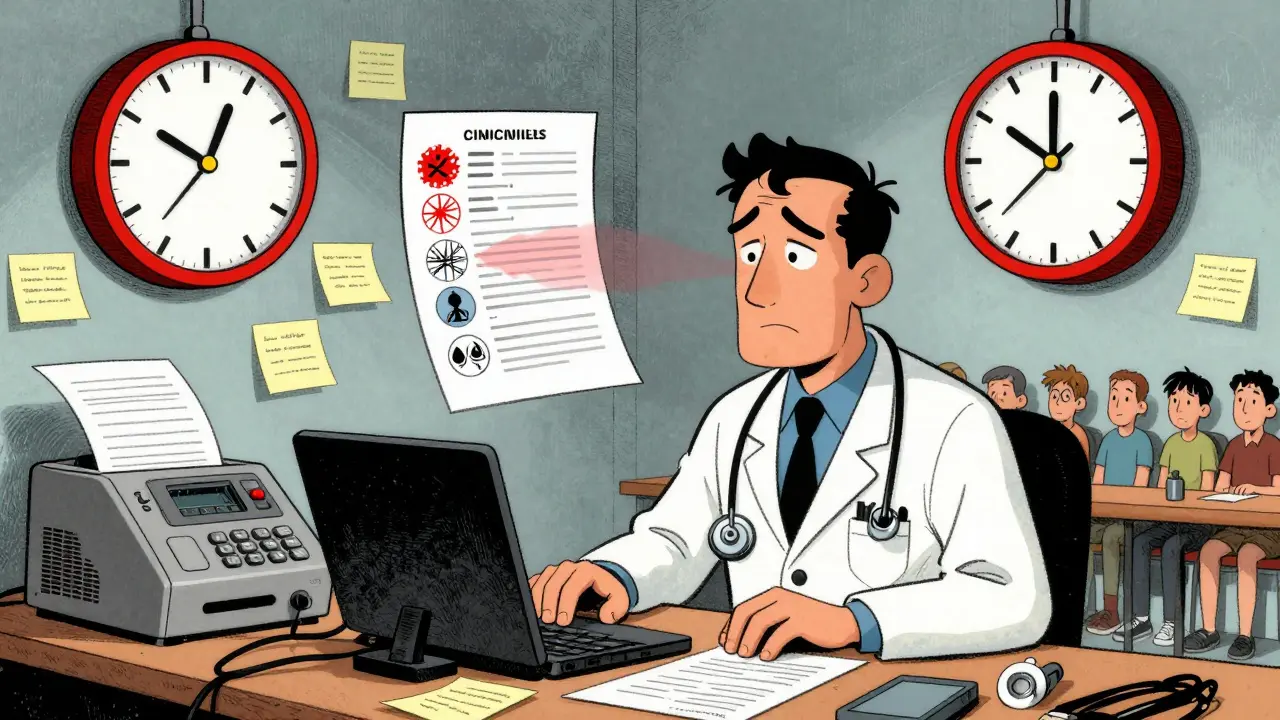
Why Step Therapy Makes It Worse
Many insurers don’t just require approval - they force you to fail first. This is called step therapy. You have to try cheaper drugs - even if they won’t work for you - before they’ll approve the one your doctor actually prescribed. For someone with rheumatoid arthritis or multiple sclerosis, that means weeks of unnecessary pain, inflammation, or even nerve damage. A 2023 Myndshft report found that step therapy is used on over 70% of specialty drugs. And it’s not just about discomfort. In some cases, it leads to irreversible damage. The American Medical Association calls this practice “medically inappropriate” when it delays effective treatment. Yet, it’s still widespread.What’s Being Done to Fix It?
There’s some progress. In January 2024, CMS issued a rule requiring all Medicare Advantage and Medicaid managed care plans to use electronic prior authorization systems by 2026. That’s huge. Right now, only 15% of requests are handled electronically. Switching to digital cuts approval time from 5 days to under 2. Some health systems are already ahead of the curve. Places using integrated EHR systems - where prior authorization status shows up right in the doctor’s chart - have cut denial rates by 35%. AI tools like Kyruus and Apricus Analytics are helping too. One pilot showed a 55% drop in processing time. And the HL7 DaVinci Project’s PDEX standard? It’s now used by 87% of major health systems. That means, soon, your doctor might know if a drug needs authorization before they even write the prescription. States are stepping up too. California now requires emergency authorizations within 24 hours. Other states have passed laws capping approval times. But federal action is still lagging. The AMA’s Prior Authorization Relief Act, introduced in April 2024, would limit prior authorization for stable patients - but it hasn’t passed yet.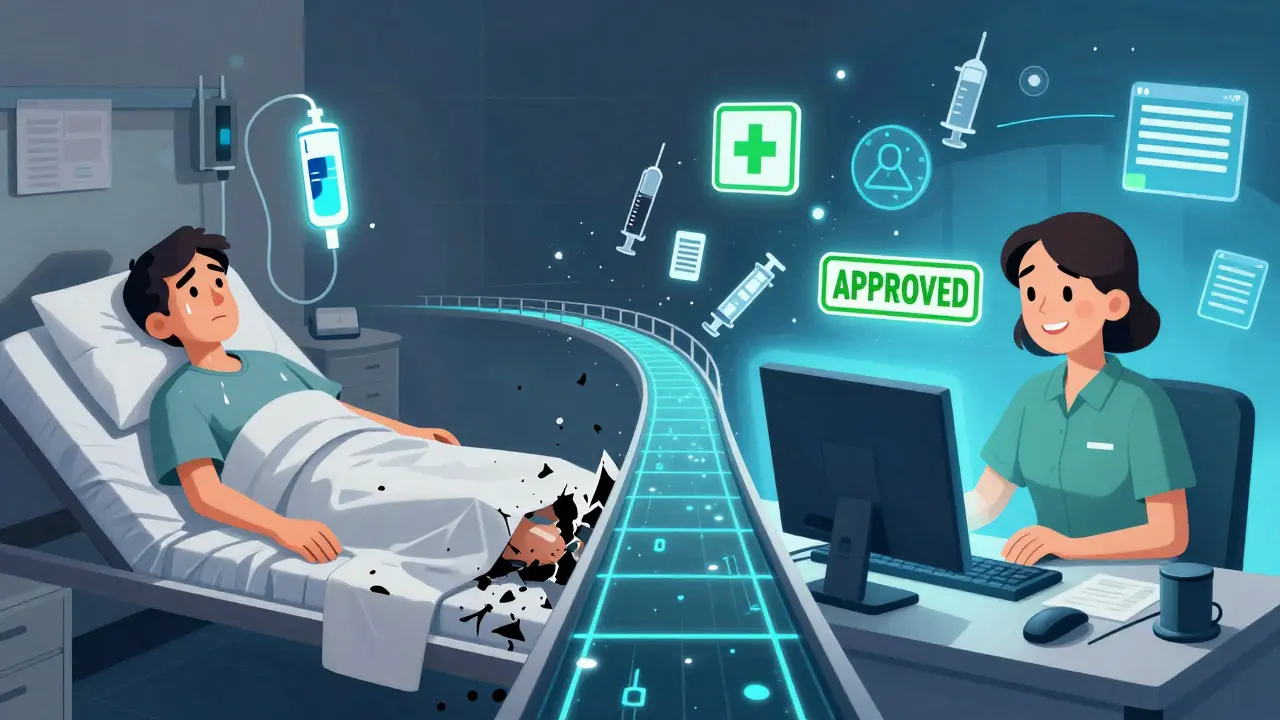
What You Can Do Right Now
You don’t have to wait for policy changes to protect yourself. Here’s what works:- Ask about prior authorization the day your doctor prescribes the medication. A 2023 Aetna study found patients who asked upfront reduced delays by 63%.
- Call your insurer directly. Don’t wait for your doctor’s office. Ask: “Is this drug pre-approved? If not, what’s the process?”
- Ask for a bridge supply. Many pharmacies and clinics keep 7-14 day samples on hand for patients waiting on approval. Ask your provider if they can give you a short-term supply.
- Use patient assistance programs. Pharmaceutical companies often offer free or low-cost meds during authorization delays. Check the manufacturer’s website - or ask your pharmacist.
- Document everything. Keep records of every call, email, and denial. If you’re denied, you have the right to appeal. And if you’re harmed because of a delay? You may have legal recourse.
The Bottom Line
Prior authorization isn’t inherently bad. But when it causes delays that lead to hospitalizations, worsened conditions, or death - it’s no longer a tool. It’s a danger. And it’s one we can fix. The technology exists. The data is clear. The human cost is undeniable. The question isn’t whether we can change this system. It’s whether we’re willing to.What medications most often require prior authorization?
Specialty drugs - those costing over $1,000 per month - are the most likely to require prior authorization. This includes cancer treatments, immunosuppressants for transplant patients, MS drugs like ocrelizumab, and high-cost biologics for rheumatoid arthritis. Even some brand-name antibiotics and diabetes medications now require approval. Medicare Advantage plans require it for 83% of specialty drugs, while commercial insurers use it for 60% of these medications.
How long does prior authorization typically take?
It varies by insurer and urgency. For non-urgent cases, commercial insurers take about 4.7 business days on average. Medicaid takes 7.2 days. Medicare Advantage takes 5.3 days. Urgent cases should be decided within 72 hours - but many states and insurers don’t meet that standard. Electronic systems cut this to under 2 days. Fax-based systems can take over a week.
Can prior authorization delays be legally challenged?
Yes. Every insurance plan must offer an appeals process. If your request is denied, you have the right to appeal - and if you’re harmed by a delay, you may have grounds for a complaint with your state insurance commissioner or even a malpractice claim. The AMA has documented cases where delays led to hospitalization or death, and families have successfully pursued legal action. Document every step: call logs, emails, denial letters.
Do all insurance plans use prior authorization the same way?
No. Medicare Part A and B rarely require it. Medicare Advantage does - for 83% of specialty drugs. Medicaid varies wildly by state: one drug might need authorization in 12% of states and 89% in others. Commercial insurers use it for 20% of generics, 30% of brand-name drugs, and 60% of specialty meds. The rules, speed, and approval rates are completely different across plans.
Is there a way to avoid prior authorization entirely?
Not always - but you can reduce the risk. Ask your doctor to prescribe drugs that don’t require authorization, if clinically appropriate. Use pharmacies that offer real-time benefit checks. Choose plans with lower prior authorization rates (some employer plans are better than others). And always verify coverage before filling a prescription. In some cases, switching to a generic or alternative drug may bypass the need - but only if it’s safe and effective for your condition.





14 Comments
I've seen this firsthand. My mom waited 19 days for her chemo drug because the fax got lost.
She ended up in the ER.
Insurance called it 'a clerical error.'
Like that fixes a near-death experience.
They treat human lives like spreadsheet errors.
And then wonder why people hate them.
It’s not just bureaucracy-it’s cruelty wrapped in policy.
I get that it’s broken, but honestly? Maybe we just need fewer drugs that cost $10k a month. Like, why does a pill need to be more expensive than a car payment?
In the UK, we don’t have this. Not because we’re perfect, but because care is a right-not a negotiation. 🇬🇧
This isn’t a system failure. It’s a profit engine.
Every delay is a hidden revenue stream.
Insurance doesn’t just slow things down-they monetize the waiting.
And let’s be real: if it were CEOs needing insulin, this would’ve been fixed in 48 hours.
I appreciate the clarity of this post. It’s heartbreaking but necessary to share.
I work in a clinic. We’ve started keeping emergency bridge supplies on hand. It’s not ideal, but it saves lives.
One patient cried when we gave her three days of insulin.
She said, 'I didn’t know anyone still cared.'
Wait… so if I call my insurer and say I’m having a heart attack because I can’t get my blood thinner, do they have to act? 😅😂
You’re not alone. I fought for my sister’s MS drug for 6 weeks. We won.
But it shouldn’t have taken a war to get medicine.
Start calling. Start documenting. Start screaming.
The HL7 DaVinci PDEX standard is actually huge.
It’s like the internet finally catching up to healthcare.
Most people don’t realize that if your EHR can talk to your insurer’s system, approvals drop to under 48 hours.
It’s not magic-it’s integration.
We’re not just talking about paperwork.
We’re talking about dignity.
Imagine needing a drug to stay alive… and being treated like a fraud.
Like your life is a liability.
Like your pain is an inconvenience.
That’s not healthcare. That’s a moral collapse.
And we’re all complicit when we stay silent. 💔
Ah yes, the classic capitalist dilemma: profit over life. And yet, we wonder why socialism is gaining traction? The system is designed to extract, not heal. The fact that you need to appeal a life-saving drug approval is proof positive of systemic rot. The state must intervene. The market cannot be trusted with human survival.
This is all a psyop. The real issue? Big Pharma and insurers are working together to push gene therapy and AI diagnostics so they can charge $2M per treatment next year. This 'prior auth' nonsense? Just a distraction so we don’t notice the real scam. You think they care if you live? They want you to need more drugs. Always more.
It’s funny. We’ve digitized everything else. Banking. Shopping. Dating.
But somehow, saving lives still requires fax machines?
There’s no logical reason. Just inertia. And greed.
Oh honey, you think this is bad? Wait till you need a wheelchair and they deny it because 'you haven’t tried walking sticks yet.' 😌