


Blood Thinner & NSAID Risk Calculator
Calculate Your Risk
Your Risk Assessment
Critical Warning Signs
Watch for these symptoms immediately:
- Black, tarry stools
- Vomiting blood or coffee-ground material
- Severe headache or dizziness
- Unexplained bruising
- Shortness of breath or weakness
Immediate Action Required
If you experience any of these symptoms, contact your doctor immediately or go to the emergency room.
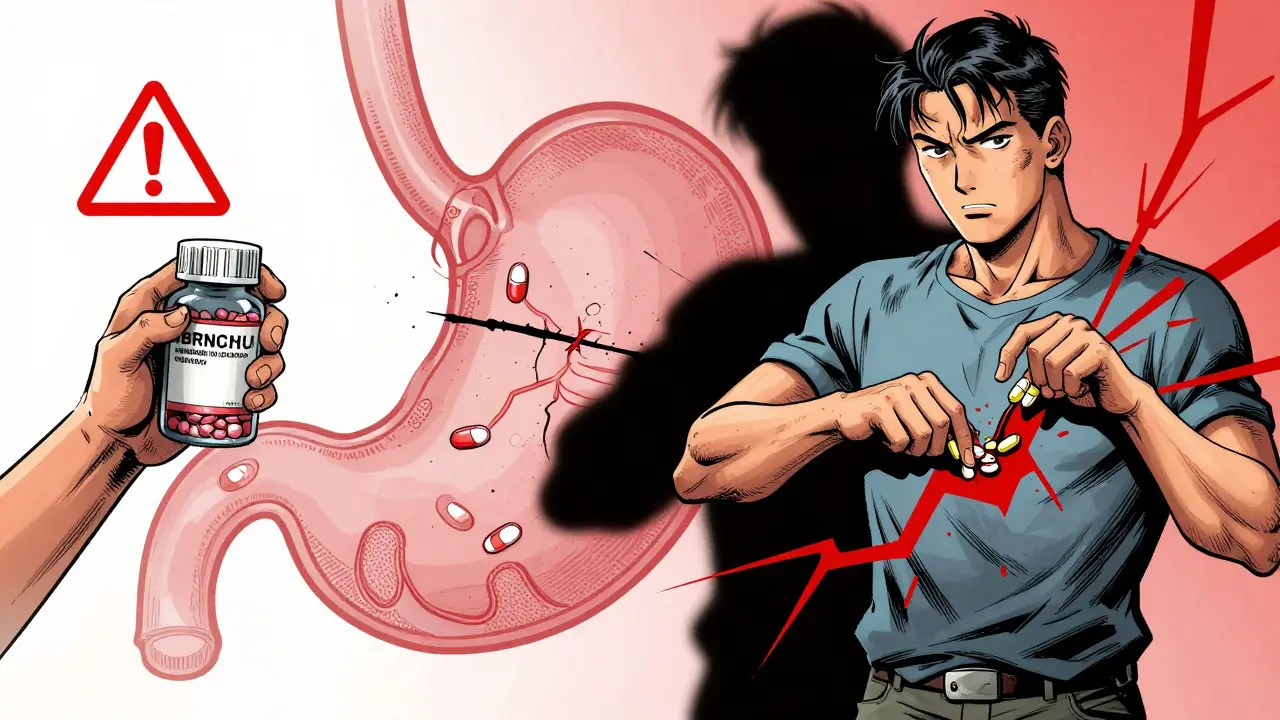
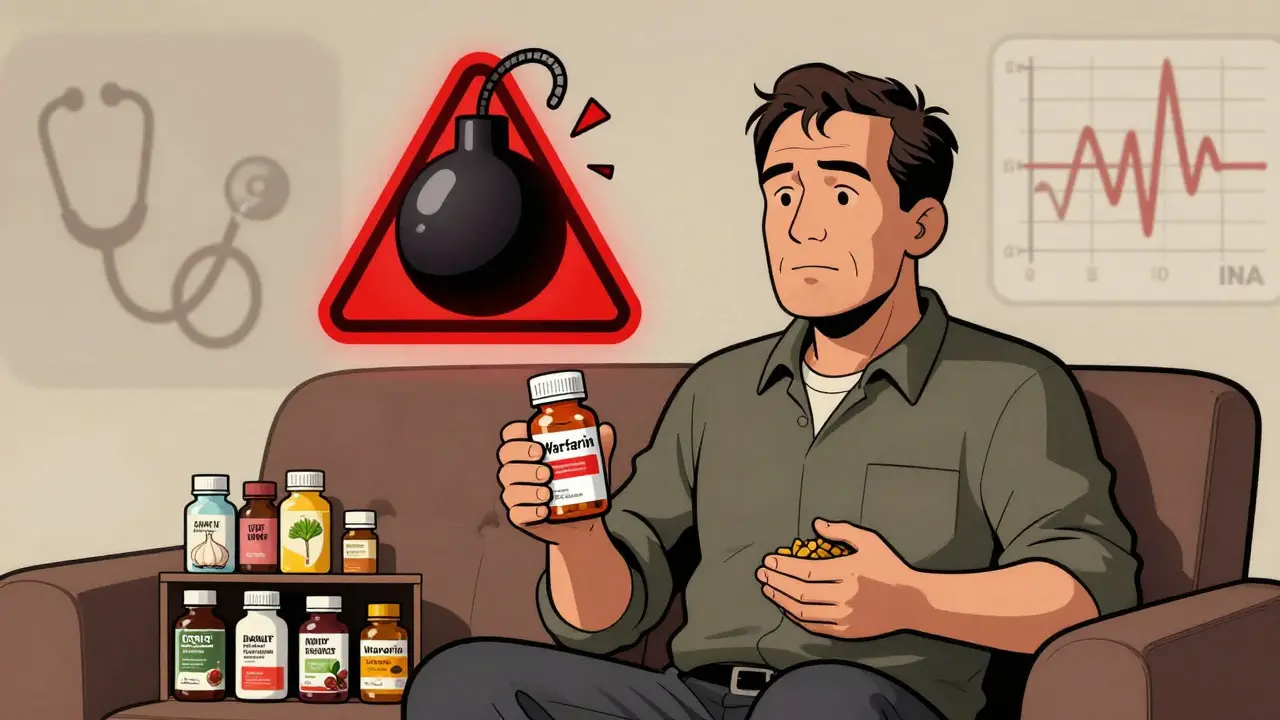
If you’re on a blood thinner like warfarin, Eliquis, or Xarelto, and you reach for ibuprofen or naproxen for a headache or sore knee, you’re playing with fire. This isn’t a "maybe" danger. It’s a well-documented, high-risk combination that sends thousands to the emergency room every year. The truth is, blood thinners and NSAIDs don’t just mix poorly-they multiply each other’s dangers in ways most people don’t understand.
How Blood Thinners and NSAIDs Work Together to Cause Bleeding
Blood thinners don’t actually thin your blood. They stop it from clotting too easily. Warfarin works by blocking vitamin K, which your liver needs to make clotting proteins. Newer ones like apixaban and rivaroxaban block specific enzymes in the clotting process. Either way, your blood takes longer to form clots when you get cut-or when a blood vessel bursts inside you. NSAIDs like ibuprofen, naproxen, and diclofenac do something different but just as dangerous. They block an enzyme called COX-1, which protects the lining of your stomach and helps platelets stick together. Without it, your stomach lining becomes more vulnerable to damage, and your platelets can’t do their job. That means even a small tear in your gut or brain can turn into a major bleed. Put them together? You’re hitting your body with a one-two punch: your blood can’t clot properly and your stomach lining is already weakened. The result? Bleeding that starts quietly-maybe just a bit of dark stool or unexplained bruising-and can quickly become life-threatening.The Numbers Don’t Lie: How Much Risk Are You Really Facing?
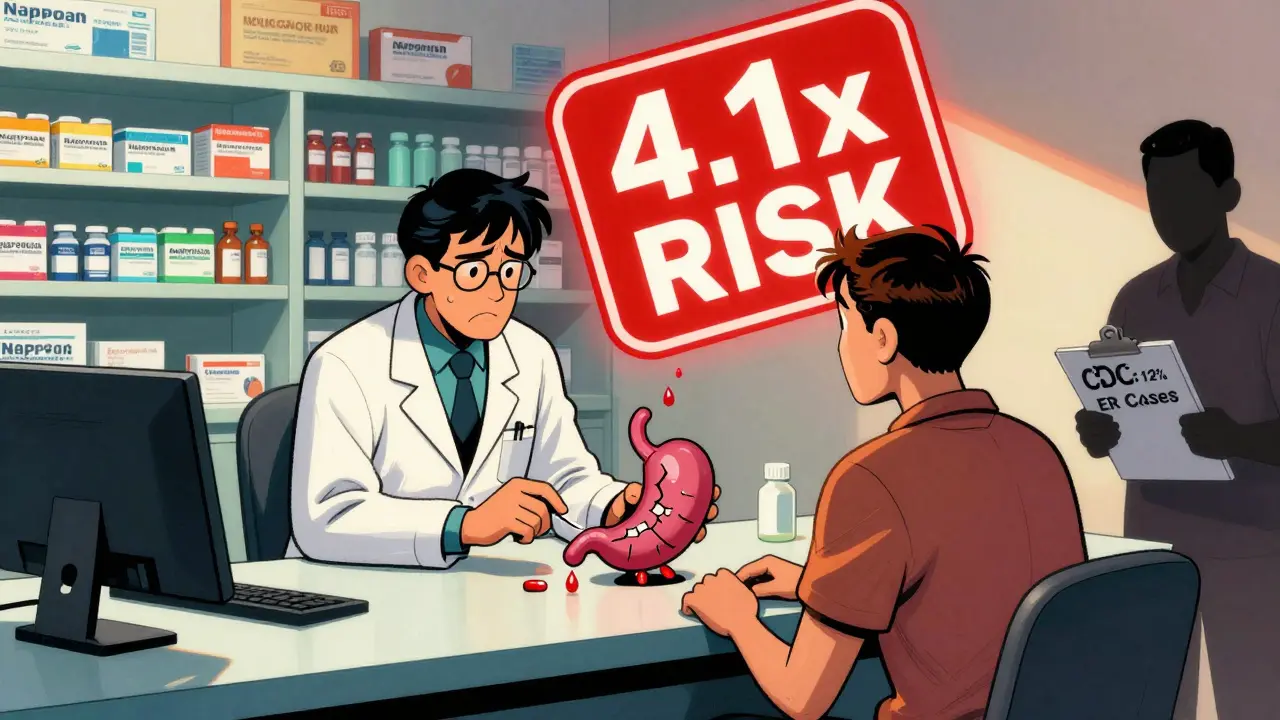
A 2020 study tracking 200,000 people over ten years found that taking an NSAID while on a blood thinner made internal bleeding more than twice as likely. That’s not a small uptick. That’s a massive jump. The risk varies by which NSAID you take:- Ibuprofen: 1.79 times higher risk of bleeding
- Diclofenac: 3.3 times higher risk
- Naproxen: 4.1 times higher risk
- Gastrointestinal tract: 2.24 times higher risk
- Brain: 3.22 times higher risk
- Lungs: 1.36 times higher risk
- Urinary tract: 1.57 times higher risk
Why Do So Many People Still Take This Risk?
You’d think after decades of warnings, people would avoid this combo. But here’s the reality: - Over 12 million Americans take blood thinners long-term.- Nearly 17 million use NSAIDs daily, mostly over-the-counter.
- About 20-30% of people on anticoagulants still take NSAIDs regularly.
Why? Because pain is real. Arthritis, back pain, migraines-they don’t wait for a doctor’s appointment. And most patients don’t realize NSAIDs are dangerous. A 2022 study found only 43% of people on blood thinners knew NSAIDs could increase bleeding risk. Two out of three thought occasional use was safe. Doctors aren’t always perfect either. In busy clinics, prescriptions get written without checking for interactions. Patients leave with a new NSAID script and no warning. And because these drugs are so common, many assume they’re harmless.
What to Use Instead of NSAIDs
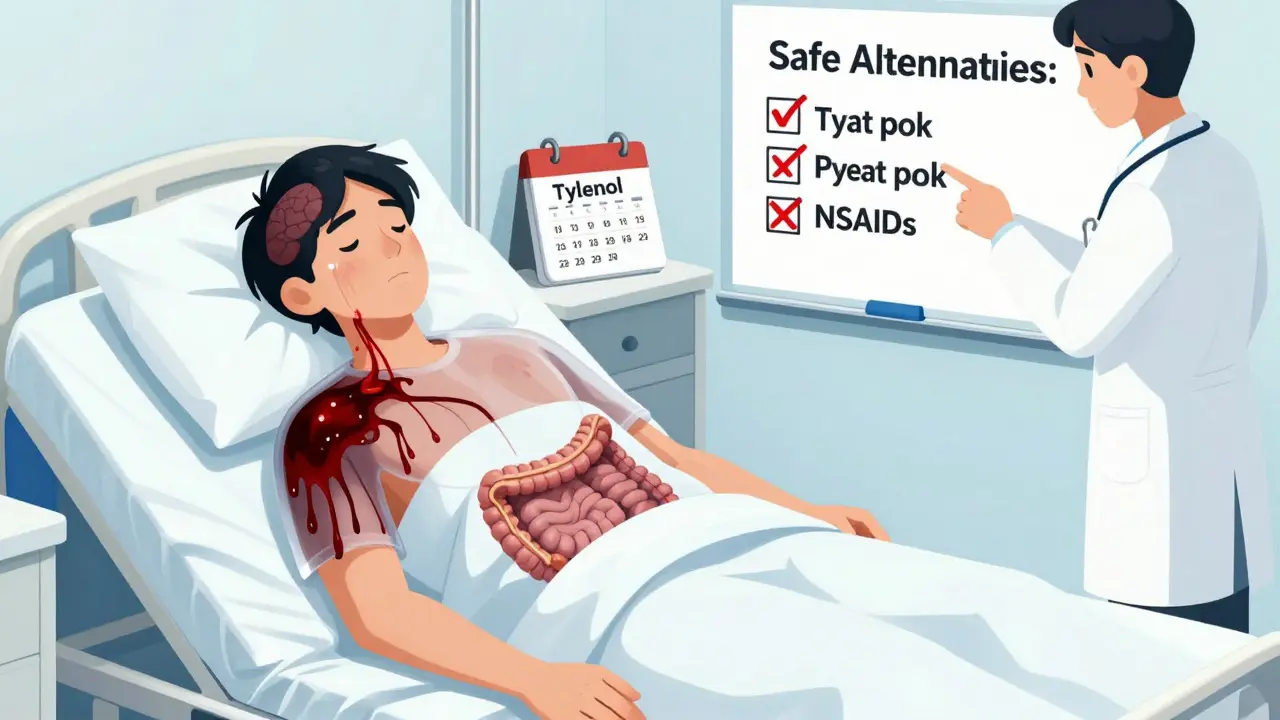
You need pain relief. You’re not asking for a miracle-you’re asking for something safe. The clear winner is acetaminophen (Tylenol). It doesn’t affect platelets or the stomach lining. It’s the go-to alternative for people on blood thinners. But even this isn’t risk-free. Stick to no more than 3,000 mg per day. Higher doses can harm your liver, especially if you drink alcohol or have existing liver issues. For localized pain-like a sore shoulder or knee-topical NSAIDs (gels or patches) are a better option. They deliver the drug directly to the skin, so very little enters your bloodstream. Studies show they carry far less bleeding risk than pills. Physical therapy, heat packs, stretching, and even acupuncture can help manage chronic pain without drugs. For inflammatory conditions like arthritis, your doctor might consider low-dose corticosteroid injections or newer biologic treatments that don’t interfere with clotting.What If You Absolutely Need an NSAID?
Sometimes, you can’t avoid it. Maybe you’re recovering from surgery, or you have severe pain that acetaminophen can’t touch. In those rare cases, here’s what your doctor should do:- Use the lowest possible dose for the shortest time
- Choose the safest NSAID (ibuprofen is better than naproxen)
- Prescribe a proton pump inhibitor (like omeprazole) to protect your stomach
- Check your INR more often-within 3-5 days of starting the NSAID
- Watch for signs of bleeding: black stools, unusual bruising, dizziness, fatigue
- Ibuprofen: stop 2 days before
- Naproxen: stop 2-3 days before
- Piroxicam: stop 10 days before
What to Do If You’ve Already Taken Them Together
If you accidentally took ibuprofen with your blood thinner, don’t panic-but don’t ignore it either. - Watch for symptoms: dark or tarry stools, vomiting blood, severe headache, unexplained bruising, shortness of breath, weakness - Call your doctor immediately if you notice any of these - If symptoms are severe (dizziness, fainting, chest pain), go to the ER Don’t wait to see if it "gets better." Bleeding doesn’t always show up right away. It can sneak up on you.The Bottom Line
This isn’t a theoretical risk. It’s happening every day-in homes, ERs, and hospitals. People on blood thinners aren’t being reckless. They’re often just trying to manage pain they’ve had for years. But without clear information, they’re walking into a trap. The safest path? Avoid NSAIDs entirely. Use acetaminophen. Try physical therapies. Talk to your doctor about alternatives. If you must use an NSAID, do it under strict medical supervision. Your life isn’t worth the gamble. One pill might seem harmless. But when you’re on a blood thinner, the math changes. And the stakes? They’re higher than you think.Can I take aspirin with blood thinners?
No. Aspirin is an NSAID and also acts as a blood thinner by blocking platelets. Taking it with another anticoagulant like warfarin or Eliquis doubles your bleeding risk. Even low-dose aspirin for heart protection should only be used with blood thinners under strict medical supervision-and even then, it’s not recommended unless absolutely necessary.
Is naproxen worse than ibuprofen for people on blood thinners?
Yes, significantly. Studies show naproxen increases bleeding risk by 4.1 times when combined with anticoagulants, compared to 1.79 times for ibuprofen. It stays in your system longer and has a stronger effect on platelets. The European Society of Cardiology specifically warns against naproxen for patients on blood thinners. If you must use an NSAID, ibuprofen is the lesser evil-but still risky.
Can I use topical NSAIDs like diclofenac gel while on blood thinners?
Yes, topical NSAIDs are much safer than oral ones. Since they’re absorbed through the skin and don’t enter your bloodstream in large amounts, they don’t significantly affect clotting or stomach lining. They’re a good option for localized pain like arthritis in the knee or shoulder. But avoid using them over large areas or for long periods without checking with your doctor.
How do I know if I’m bleeding internally?
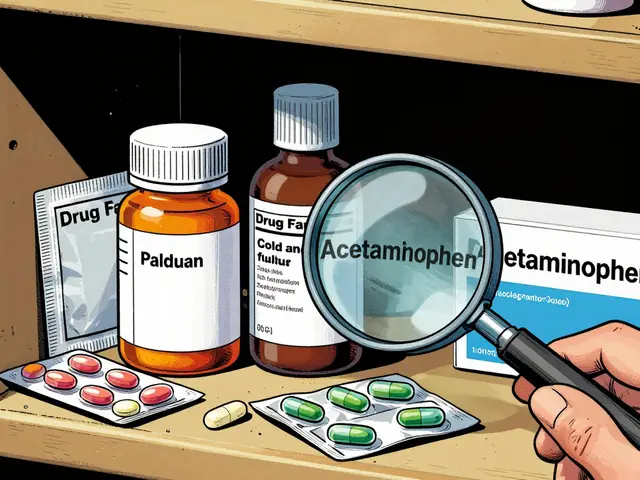
Signs include black, tarry stools; vomiting blood or material that looks like coffee grounds; unexplained bruising; sudden dizziness or weakness; shortness of breath; severe headaches; or blood in urine. Fatigue and pale skin can signal anemia from slow bleeding. If you notice any of these, contact your doctor immediately-or go to the ER. Internal bleeding can be silent until it’s serious.
What pain reliever is safest for someone on Eliquis or Xarelto?
Acetaminophen (Tylenol) is the safest choice. It doesn’t interfere with blood clotting or stomach lining. Stick to 3,000 mg per day or less. Avoid NSAIDs like ibuprofen, naproxen, and aspirin entirely. For chronic pain, ask your doctor about physical therapy, heat therapy, or alternative treatments like nerve blocks or low-dose antidepressants that help with nerve-related pain.
Should I stop NSAIDs before surgery if I’m on a blood thinner?
Yes, always. The timing depends on the NSAID: ibuprofen should be stopped 2 days before surgery, naproxen 2-3 days, and piroxicam 10 days. This gives your body time to clear the drug and restore normal platelet function. Never stop your blood thinner without your doctor’s instructions, but NSAIDs should be paused well ahead of any procedure.
Do COX-2 inhibitors like celecoxib have less risk than regular NSAIDs?
They may have slightly less stomach irritation, but they still increase bleeding risk when combined with blood thinners. Studies show celecoxib doesn’t eliminate the danger-it just reduces stomach damage. The risk of internal bleeding remains significantly higher than not using any NSAID. So while it’s marginally better than naproxen, it’s still not safe to use casually.
Why do some doctors still prescribe NSAIDs to patients on blood thinners?
Sometimes it’s oversight. In fast-paced clinics, drug interaction checks aren’t always done thoroughly. Other times, doctors believe the patient’s pain is severe enough to justify the risk-especially if they think the NSAID will only be used briefly. But research shows even short-term use increases bleeding risk. Better practice is to always start with acetaminophen or non-drug options first, and only consider NSAIDs as a last resort with close monitoring.





14 Comments
I know this sounds crazy but I’ve been taking naproxen with Eliquis for 3 years and I’m fine 😅 Maybe my body just doesn’t care? 🤷♂️ Also why does everyone act like Tylenol is magic? I get liver anxiety just thinking about it.
This post is so dramatic. You act like NSAIDs are poison. People have been taking ibuprofen with warfarin since the 90s. If you’re not bleeding out, you’re fine. Stop fearmongering. 😒
The statistical risk presented here is statistically significant, yes-but the real issue is the lack of contextual framing. The baseline risk of GI bleeding in the general population is approximately 1.5 per 1,000 person-years. When compounded by dual anticoagulant and NSAID exposure, the absolute risk increase remains below 2% annually for most age groups. The alarmism is disproportionate to the actual epidemiological burden. One must also consider that many patients are on these combinations under clinical supervision, which mitigates risk. This article reads like a public service announcement written by a pharmaceutical lobbyist.
I love how this post actually cites studies 🙌 I’ve been on Xarelto for AFib and always use Tylenol now. Also, topical diclofenac gel? Game changer for my knee. 🙏 No more stomach nightmares. (And yes, naproxen is the worst. Don’t even think about it.)
Let me guess… Big Pharma wrote this. They don’t want you taking cheap NSAIDs because they’re pushing their $500/month anticoagulants AND their $12 Tylenol. They also don’t want you knowing that aspirin is the original blood thinner and has been used for centuries. The FDA is in bed with the drug companies. They suppressed studies on natural anti-inflammatories like turmeric. This isn’t about safety-it’s about profit. You’re being manipulated. Wake up.
I am from India and here many people take ibuprofen with warfarin without any problem. Doctor says if you monitor INR regularly, it is fine. Maybe western medicine is too scared? I have aunt who takes both for 5 years, no issue. Maybe this is cultural difference?
TYLENOL IS YOUR FRIEND 🤗 No drama, no bleeding, just pain relief. Stop risking your life for a headache. Your body will thank you later. 💪
I’ve been on Eliquis for 4 years and I used to take ibuprofen for my back. I switched to heat wraps and stretching. It’s not perfect, but I sleep better knowing I’m not risking a bleed. Small changes add up.
I just found out my dad was taking naproxen with his blood thinner and I freaked out. We called his doctor and now he’s on Tylenol and physical therapy. He says he feels better now anyway. Thank you for this post-it saved him.
Topical NSAIDs are underrated. I use the diclofenac patch for my shoulder and it works great. No stomach issues, no bleeding risk. Also, acupuncture helped my chronic knee pain way more than I expected. Just saying. 🌿
The citation of the 2020 study is misleading. The hazard ratio of 2.1 was adjusted for age, comorbidities, and concomitant medications. The unadjusted risk was closer to 1.3. Also, naproxen’s 4.1x risk was only observed in patients over 75 with renal impairment. This post cherry-picks data to manufacture urgency. The real issue is poor patient education-not the combination itself.
I’m from the Philippines and we have a traditional remedy called "tawa-tawa"-a herb used for bleeding disorders. My grandmother swore by it. I’m not saying replace meds with herbs, but we’ve always balanced Western and traditional care. Maybe the fear around NSAIDs is too absolute? There’s nuance.
So let me get this straight… you’d rather take Tylenol and risk liver failure than take ibuprofen and risk a bleed? Cool. Cool cool cool. 😏
I’m a PA. We see this all the time. Patient comes in with black stools, says they took Advil for their back. We ask if they’re on blood thinners-they say "yeah but my doctor said it was fine." No it wasn’t. This post? 100% accurate. Just use Tylenol. Seriously.