
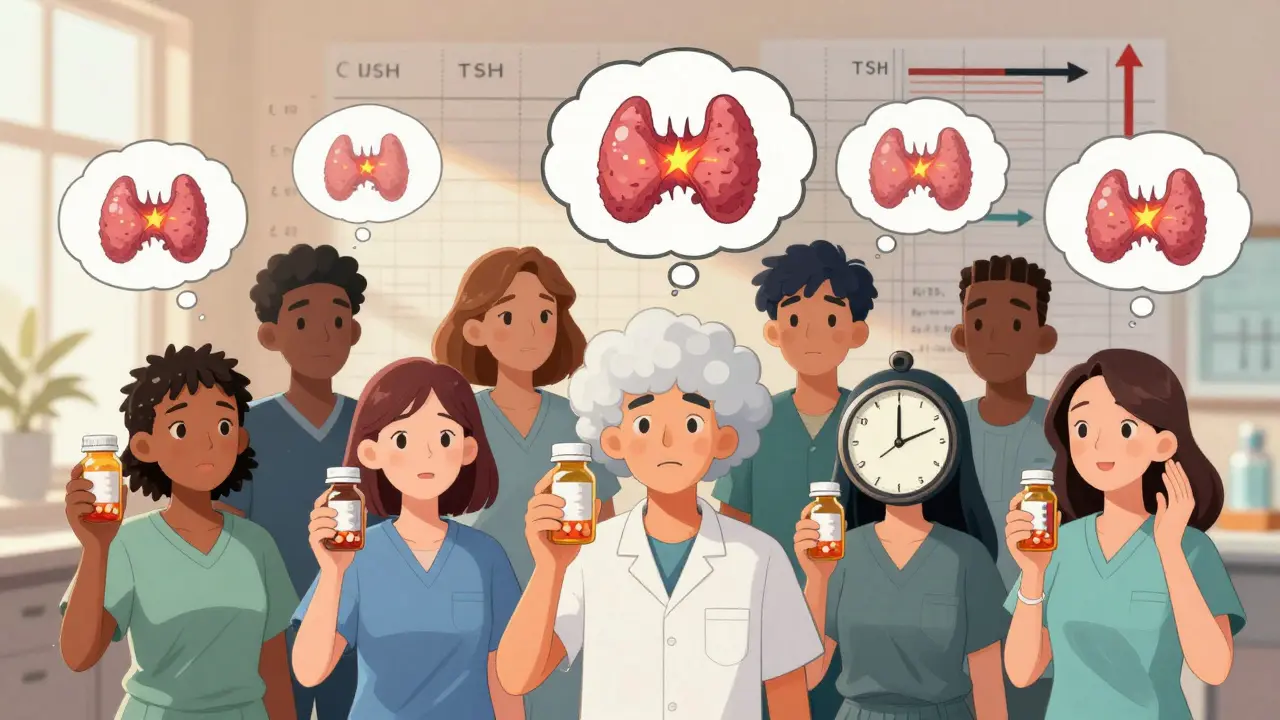


Levothyroxine is one of the most commonly prescribed medications in the world. In the U.S. alone, over 127 million prescriptions were filled in 2022. In the UK, nearly 260 million packs were dispensed between 2016 and 2020. For millions of people with hypothyroidism, it’s life-changing. But it’s not a simple ‘take one pill and forget it’ situation. Getting it right takes time, attention, and regular testing. Get it wrong, and you could be dealing with fatigue, heart palpitations, weight gain-or worse.
Why Levothyroxine Works-And Why It Can Go Wrong
Levothyroxine is a synthetic version of T4, the main hormone your thyroid makes. When your thyroid doesn’t produce enough, this pill replaces it. But thyroid hormones don’t just affect energy-they control your metabolism, heart rate, body temperature, and even mood. That means even small changes in dosage can have big effects.
Most people feel better within a few months of starting the right dose. Studies show about 90% of patients see symptom relief-less fatigue, better focus, improved weight control-once their levels stabilize. But here’s the catch: finding that right dose isn’t a one-time fix. Your body changes. Your other medications change. Even your diet or supplement routine can interfere.
How Often Should You Get Tested?
Many patients think once they’re on levothyroxine, they’re set for life. That’s a dangerous assumption. The Specialist Pharmacy Service and the American Thyroid Association both say: TSH testing is non-negotiable.
Here’s the real-world timeline:
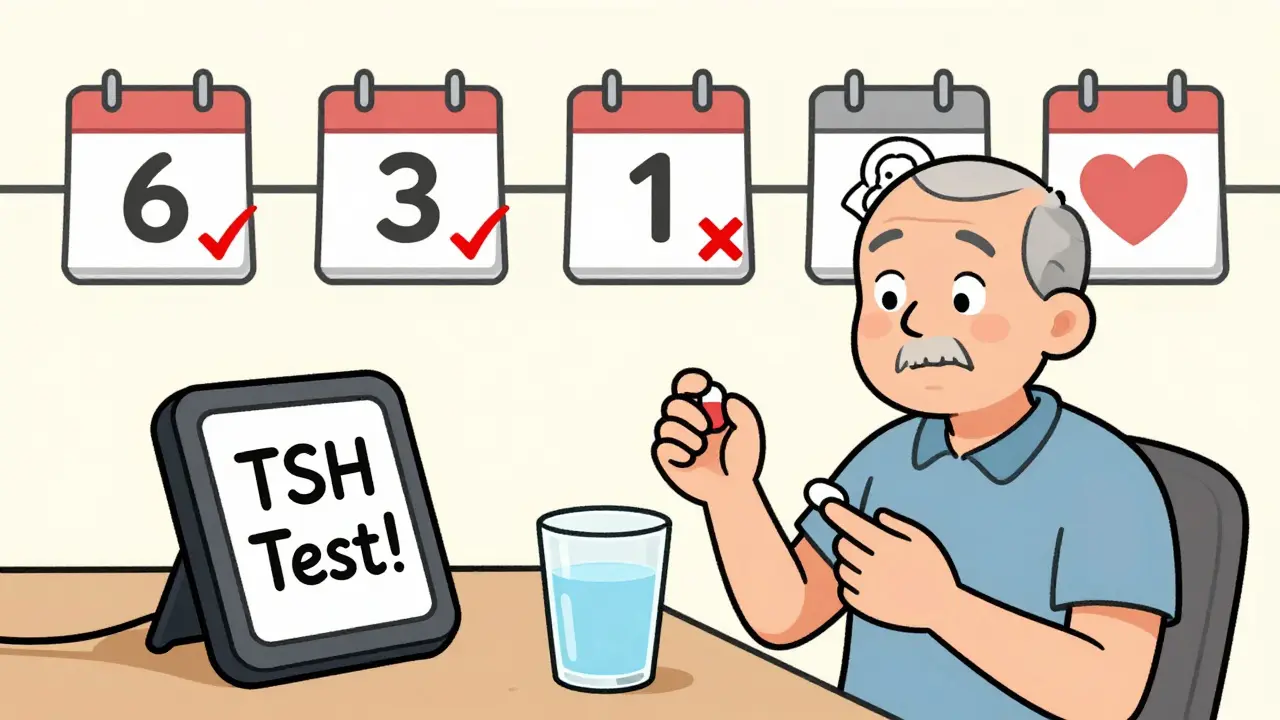
- After starting or changing your dose: Test TSH at 6 weeks.
- Until stable: Test every 3 months.
- Once stable: Test at least once a year-even if you feel fine.
- During pregnancy: Test every 4 weeks in the first half, then every 6-8 weeks after.
And here’s what most people don’t realize: feeling fine doesn’t mean your levels are right. A 2022 NHS England study found that 32% of hypothyroid patients went over 18 months without a single TSH test. That’s not just lazy care-it’s risky. Over-treatment can lead to bone loss and atrial fibrillation. Under-treatment leaves you tired, cold, and at higher risk for heart disease.
The Brand Switch Problem
Generic levothyroxine is cheap. That’s good for the system. But it’s not always good for you.
The UK’s Medicines and Healthcare products Regulatory Agency (MHRA) reviewed 335 reports of problems linked to switching between different brands of levothyroxine between 2015 and 2019. In 78% of those cases, patients reported fatigue. In 65%, headaches. In 39%, palpitations. These are classic signs of either too little or too much hormone.
Here’s the kicker: only 27 of those 335 reports included thyroid blood tests. That means doctors were guessing. And patients? They were just told, ‘It’s the same pill.’
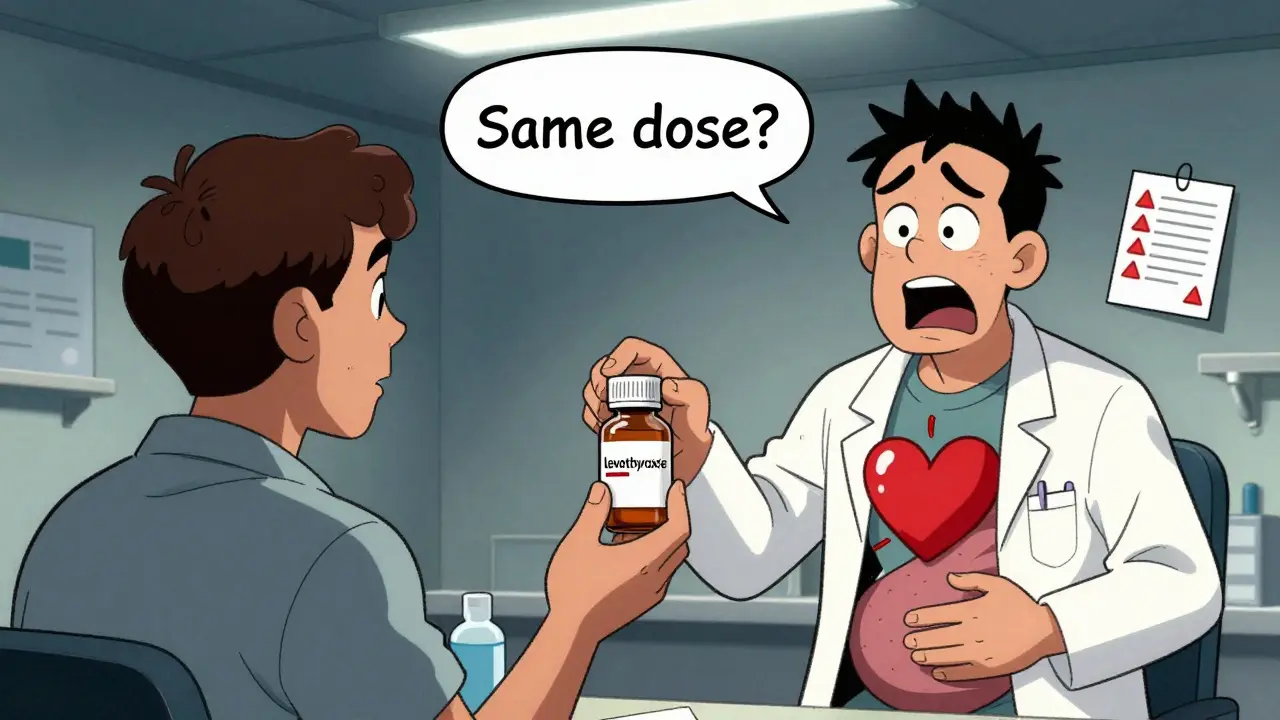
But it’s not. Even though all brands are supposed to meet strict bioequivalence standards (90-110% of labeled potency), tiny differences in fillers and manufacturing can change how your body absorbs the hormone. On patient forums like Thyroid UK, 68% of 1,245 respondents said they had symptoms after switching brands-even though the dosage label was identical.
If you’ve ever felt worse after a pharmacy refill, don’t brush it off. Talk to your doctor. Ask if you can stay on the same brand. If you’ve had issues before, your prescription should say ‘do not substitute.’
What You Need to Know About Taking It
Levothyroxine isn’t like a multivitamin. How and when you take it matters.
- Take it on an empty stomach, 30-60 minutes before breakfast.
- Wait at least 4 hours before taking calcium, iron, antacids, or cholesterol meds like cholestyramine.
- Don’t take it with coffee, soy milk, or high-fiber meals-they can block absorption.
- Take it at the same time every day. Consistency is key.
One patient I spoke with (a 52-year-old teacher from Perth) started taking her pill with her morning coffee. Her TSH stayed high for a year. She thought the medication wasn’t working. It was just being blocked. Once she switched to taking it before breakfast, with water only, her levels normalized in 6 weeks.
Who Needs Extra Care?
Not everyone can be treated the same. Certain groups need tighter monitoring:
- Pregnant women-hormone needs jump by 30-50% in the first trimester.
- People over 65-higher TSH targets (up to 7.5 mIU/L) may be safer to avoid heart strain.
- Those with heart disease-dose increases must be slow and cautious.
- Patients on lithium or amiodarone-these drugs interfere with thyroid function.
- Anyone with pituitary disease-TSH levels can be misleading here.
If you fall into any of these groups, your doctor should be checking you more often and thinking beyond just TSH. Free T4 levels matter too. And if you’re still tired, gaining weight, or feeling depressed-even with ‘normal’ labs-ask about symptom questionnaires like ThyPRO or ThySRQ. Numbers don’t tell the whole story.
The Bigger Picture: Why Monitoring Falls Through the Cracks
Why do so many people go years without testing? It’s not just patient forgetfulness. It’s system failure.
Primary care doctors are overloaded. Blood tests don’t always trigger automatic reminders. Pharmacies don’t notify clinics when a patient switches brands. Patients don’t know they should be pushing for tests.
And then there’s the myth: ‘If it ain’t broke, don’t fix it.’ But with levothyroxine, it’s not about fixing-it’s about fine-tuning. Your body isn’t static. Your metabolism slows with age. You gain weight. You start a new medication. Your stress levels change. All of that affects your dose.
Dr. Rebecca Bahn, former president of the American Thyroid Association, puts it bluntly: ‘About 15-20% of patients need a dose change every year.’ That’s not rare. That’s normal.
What You Can Do Right Now
You don’t need to wait for your doctor to bring it up. Here’s your action plan:
- Check your last TSH result. If it’s been over a year, call your doctor and request a test.
- If you’ve switched pharmacies or brands recently, ask: ‘Could this be why I’m not feeling right?’
- Write down your symptoms-fatigue, mood, weight, temperature sensitivity-before your appointment.
- Ask if your prescription says ‘dispense as written’ or ‘do not substitute.’ If not, ask to add it.
- Set a calendar reminder for your next blood test. Don’t rely on your clinic to call you.
Levothyroxine is safe. But safety isn’t automatic. It’s earned through attention, consistency, and communication. You’re not just taking a pill. You’re managing a hormone system that runs your entire body. Treat it that way.
When to See an Endocrinologist
You don’t need to see a specialist just because you’re on levothyroxine. But if any of these apply, ask for a referral:
- You’re under 16 or pregnant/postpartum.
- Your TSH keeps swinging-too high one test, too low the next.
- You’ve had multiple dose changes without stable results.
- You’re on amiodarone, lithium, or have known pituitary issues.
- You still have symptoms despite ‘normal’ labs.
Endocrinologists don’t just tweak doses. They look at the full picture: your history, your meds, your genetics, your lifestyle. And with new research showing that up to 23% of dose variability may be genetic, that personalized approach matters more than ever.




14 Comments
So basically, if you take your pill with coffee, you're just paying $50 a month to pee out thyroid hormone? 😅
I’ve been on levothyroxine for 12 years… and yes, I still get my TSH checked every 6 months. Even if I feel fine. Because I learned the hard way that ‘fine’ doesn’t mean ‘in range.’
My doctor once said, ‘You’re not sick-you’re just underdosed.’ And that changed everything. Don’t wait until you’re miserable to ask for a test.
Let’s be real-generic levothyroxine is like buying ‘soda’ instead of ‘Coca-Cola.’ Sure, they’re both fizzy and sweet, but one makes you feel like a human again, and the other makes you want to nap in a dumpster.
I switched brands once. Within 72 hours, I was crying over spilled milk. Literally. My therapist asked if I was okay. I said, ‘No, my thyroid just betrayed me.’
Thank you for writing this. I’ve seen so many people feel dismissed when they say, ‘I don’t feel right, but my labs are normal.’
It’s not just about numbers-it’s about how you live. Your energy, your mood, your ability to play with your kids or finish a workday without needing a nap.
Keep advocating. Your voice matters-even if your TSH looks ‘fine.’
One must contemplate, in the existential vacuum of modern pharmacology, whether levothyroxine is truly a remedy-or merely a palliative bandage applied to the hemorrhaging soul of a post-industrial society that has forgotten the sanctity of biological rhythm.
Are we not, in our haste to ‘optimize,’ reducing the sacred dance of endocrine homeostasis to a commodified algorithm? And if so… who is the true patient? The body? Or the insurance company?
OMG I switched pharmacies and my dose was the same but I felt like a zombie for 3 months… I thought I was just aging 😅
Turns out the new brand had different fillers. I begged my doc to put ‘do not substitute’ on my script. Now I’m back to feeling like me again. Don’t ignore the little things!!
Well-researched and clearly presented. The data on brand-switching adverse events is underappreciated in primary care. I’ve seen multiple cases where patients were labeled as non-compliant when the real issue was inconsistent absorption.
Recommendation: Clinics should integrate pharmacy dispensing data into EHRs to flag potential substitutions.
If you’re on levothyroxine and you haven’t checked your TSH in over a year-you’re not being lazy. You’re just trusting a broken system.
But here’s the good news: You can fix it. Call your doctor. Ask for the test. Write down your symptoms. Bring a list. You don’t need to be a medical expert to advocate for your own body.
You’re not asking for a favor. You’re asking for basic care. And you deserve it.
I used to think thyroid meds were just a pill you take and forget. Then I got pregnant and my body went haywire.
I had to get tested every 4 weeks. I cried every time I had to draw blood. But I kept going. And when my baby was born? I felt like myself again.
You’re not just taking a pill. You’re protecting your future. Keep going.
Wow. Another ‘thyroid is everything’ cult post. Newsflash: your fatigue is probably because you’re 40, drink wine, and scroll TikTok till 2am.
Stop blaming your meds. Take responsibility. Also, stop buying into pharma’s ‘you’re broken’ narrative. You’re not a machine. Stop treating yourself like one.
bro… i took my pill with green tea and my heart was racing for 2 weeks 😭
then i switched back to water and boom. normal again. why is this not common knowledge??
also my pharmacy gave me a different brand and i cried for 3 days. not joking. my cat noticed. 🐱
i forgot to get tested for 2 years and i thought i was just depressed
turns out my tsh was 12.5. i was basically running on fumes
now i set a reminder every 6 months. life is better. thanks for the reminder
As a Nigerian-American who moved from Lagos to Atlanta, I noticed my energy dropped hard after the move. I thought it was culture shock.
Turns out, my thyroid was struggling with the change in environment, diet, and stress. I got tested, adjusted my dose, and now I’m thriving.
Thyroid health doesn’t care about your passport. It cares about your routine. Don’t ignore it.
@jesse chen: You’re right. I got my first test after 18 months. TSH was 14. My doctor said, ‘You’re lucky you didn’t have a heart attack.’
Now I set a calendar alert. And I don’t take it with coffee. Ever.