How to Split Pills Safely to Reduce Medication Costs
Learn how to split pills safely to save money on prescriptions without risking your health. Discover which pills can be split, the right tools to use, and safer alternatives to cut costs.

When you need to take half a pill, a pill splitter, a simple device designed to cut tablets evenly. Also known as a pill cutter, it's a practical tool for saving money or adjusting doses — but only if used correctly. Not all pills can be split. Some are coated to control how they release in your body, others are too soft or crumbly. Splitting the wrong tablet can ruin its effectiveness or even make it unsafe.
People often split pills to stretch their supply, especially with expensive brand-name drugs or when a lower dose isn't available. But this isn't just about cost — it's about control. If your doctor recommends 25mg of a drug but only 50mg tablets are sold, splitting makes sense. But here’s the catch: if the pill splitter is cheap, uneven, or you're not careful, you could end up with 30mg one day and 20mg the next. That kind of inconsistency matters, especially with blood pressure meds like lisinopril or antidepressants like dosulepin, where small changes can trigger side effects or reduce effectiveness. Studies show that splitting can lead to dosing errors in up to 20% of cases when done without proper tools or guidance.
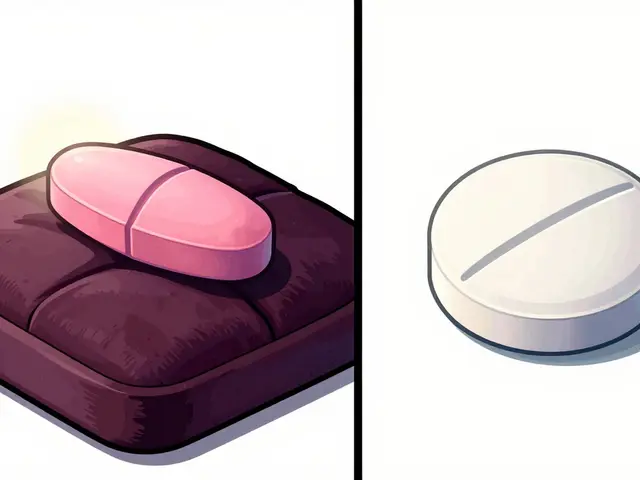
It’s not just the tool that counts — it’s the pill itself. Extended-release tablets, capsules, enteric-coated pills, and those with a hard shell should never be split. Look for a score line — that’s the manufacturer’s signal that splitting is designed into the drug. But even then, don’t assume it’s safe. Some scored pills still break unevenly. A good pill splitter with a sharp blade and a secure holder makes a big difference. You’ll also want to clean it regularly. Dust, residue, and moisture build up, and that can contaminate your next dose. If you’re splitting pills for someone with arthritis or shaky hands, consider a model with a non-slip base and easy push mechanism.
And don’t forget the bigger picture. Splitting pills often goes hand-in-hand with using generics, which brings up questions about batch variability and bioequivalence. If one batch of a generic drug behaves slightly differently than another, and you’re cutting it in half, those small differences get amplified. That’s why knowing your medication’s profile matters. It’s not just about the tool — it’s about understanding the drug, its purpose, and how it interacts with your body. The posts below cover exactly that: how to spot when splitting is safe, what alternatives exist, and how to avoid hidden risks like those tied to inactive ingredients or inconsistent dosing.
Below, you’ll find real-world guides on how to handle meds safely — from why some pills shouldn’t be split at all, to how drug interactions and dosing timing can change what happens when you cut a tablet in half. Whether you’re managing blood pressure, depression, or Parkinson’s, these insights help you make smarter choices — without guessing.
Learn how to split pills safely to save money on prescriptions without risking your health. Discover which pills can be split, the right tools to use, and safer alternatives to cut costs.