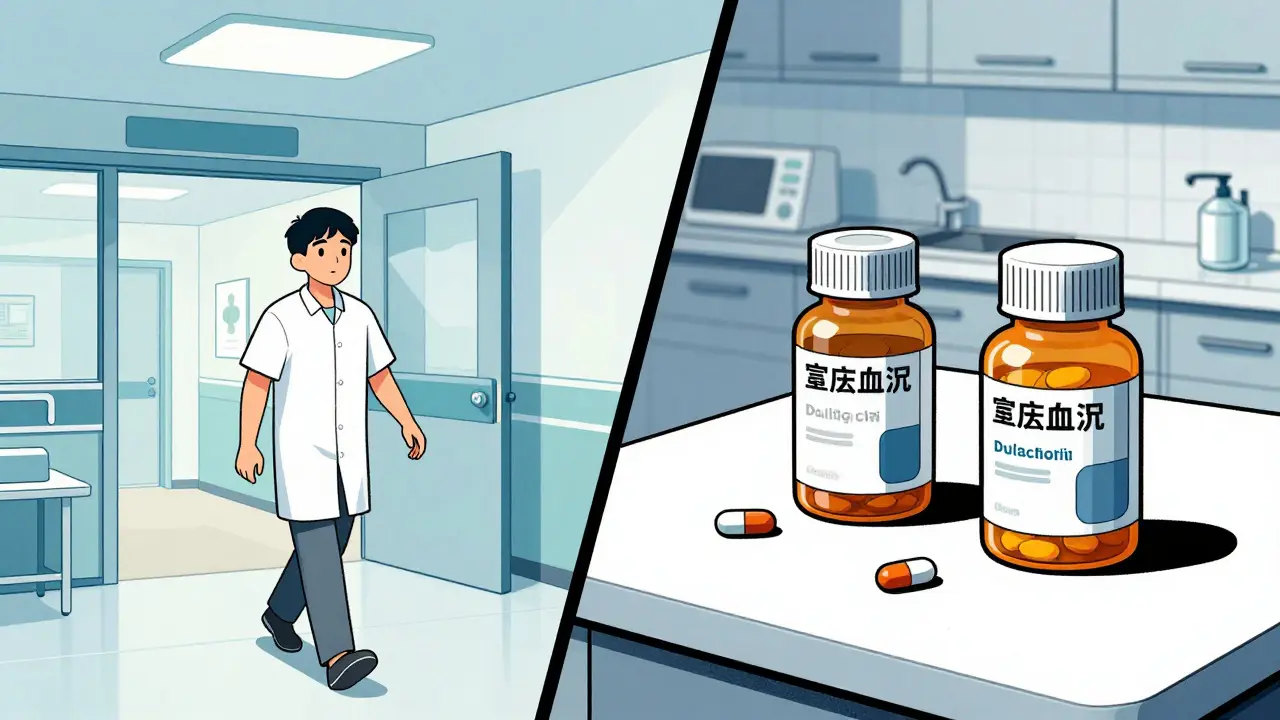


Imagine leaving a hospital after a major surgery, only to realize a week later that you're taking two different versions of the same blood pressure medication-one prescribed by your surgeon and one by your primary doctor. This isn't a rare mistake; it's a systemic failure. In fact, research shows that medication errors happen in 50% to 70% of patient transitions. These aren't just clerical slips; they are dangerous gaps in care that can lead to emergency readmissions or worse.
The solution is a rigorous process called Medication Reconciliation is the process of creating the most accurate list possible of all medications a patient is taking and comparing that list against the physician's orders to prevent errors. It is a critical safety net designed to ensure that no matter where you are in the healthcare system-the ER, a surgical ward, or your own living room-your medication list is current and correct. This isn't just a suggestion; it's a formal safety standard championed by the The Joint Commission is an independent, non-profit organization that accredits and certifies nearly all healthcare organizations in the United States to prevent omissions, duplications, and dosing errors.
Why a Simple List Isn't Enough
You might think a patient simply handing over a piece of paper would be enough. Unfortunately, it rarely is. Data suggests that when providers rely solely on patient self-reporting, about 42% of those medication histories contain errors. People forget the name of a pill, confuse the dosage, or forget to mention that "natural" herbal supplement they take every morning. This is where the Best Possible Medication History (or BPMH) comes in. BPMH is a systematic process of gathering a comprehensive list of all medications using at least two independent sources.
To get a truly accurate BPMH, a provider can't just ask the patient. They need to cross-reference multiple data points: pharmacy records, electronic medical records (EMR), family input, and physical pill bottles. If a pharmacist handles this, the accuracy skyrockets. This is because they are trained to spot "therapeutic duplications"-where two different brands of the same drug are prescribed-which clinical decision support systems only catch in about 15% to 25% of cases.
The Five Steps of an Effective Reconciliation
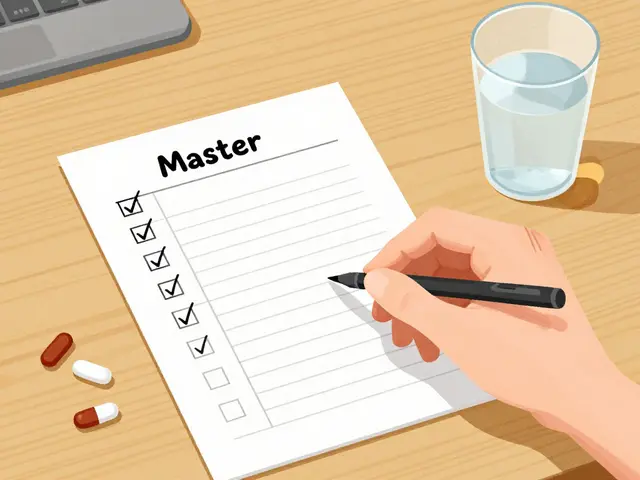
For a medication reconciliation process to actually work, it can't be a "checkbox exercise." It has to follow a specific, five-step clinical workflow:
- Develop a complete list: This includes prescriptions, over-the-counter (OTC) drugs, herbal remedies, and traditional medicines. (Yes, that vitamin C supplement counts).
- Create the "New Setting" list: This is the list of medications the doctor intends to prescribe for the current stay or discharge.
- Compare the lists: This is the critical "matching" phase where discrepancies are identified.
- Clinical Decision Making: A provider decides whether to continue, stop, or change a medication based on the comparison.
- Communication: The final, corrected list is given to the patient and all relevant caregivers.
When this process is skipped or rushed, the results are staggering. Adverse drug events (ADEs) account for roughly 6.5% of all hospital admissions. That is a massive number of preventable hospital visits caused simply by a lack of communication between a discharge summary and a primary care visit.
Comparing Reconciliation to Other Reviews
It is common to confuse medication reconciliation with other pharmacy services, but they serve very different purposes. A general medication review is like a "yearly tune-up" for your health; it happens during routine checkups to see if a drug is still working. Medication reconciliation, however, is an "emergency bridge" specifically for transitions of care.
| Feature | Medication Reconciliation | Comprehensive Medication Review | Medication Therapy Management (MTM) |
|---|---|---|---|
| Primary Goal | Prevent errors during transitions | Evaluate long-term effectiveness | Optimize overall therapy outcomes |
| Timing | Admission, Transfer, Discharge | Routine checkups / Annual | Ongoing clinical service |
| Trigger | Change in care setting | Scheduled appointment | Patient needs / Insurance plan |
| Focus | Accuracy and consistency | Therapeutic goals | Adherence and cost-efficiency |

The High Cost of Fragmented Data
Even with the best intentions, technology sometimes gets in the way. Many hospitals use Epic Systems is a leading healthcare software company that provides electronic health record (EHR) systems to hospitals worldwide , which has helped reduce reconciliation time. However, the "fragmentation" of data remains a nightmare. A pharmacist might spend 60 minutes on a single discharge because the community pharmacy's system doesn't talk to the hospital's EHR.
This gap is where the most danger lies. According to CMS audit data, only 43% of discharge summaries actually include a complete medication list. When patients leave the hospital feeling confused-which happens to about 61% of them-they often stop or change their medications incorrectly within the first week. This is why the 21st Century Cures Act is a US law designed to accelerate medical product development and improve the electronic exchange of health information is so important; it pushes for "interoperability," meaning your data should follow you from the hospital to the local pharmacy seamlessly.
Best Practices for a Safer Transition
What does a "gold standard" program look like? The most successful facilities, like Mayo Clinic, utilize pharmacist-led reconciliation. Pharmacists are the medication experts, and their involvement can reduce error rates by nearly 47% compared to nurse-only models. By focusing on a "verify, clarify, reconcile" approach, some facilities have slashed the time spent per patient from 28 minutes down to just 12, while actually increasing accuracy from 63% to 89%.
For those managing their own care or caring for a loved one, there are a few practical rules of thumb to avoid the "checkbox" trap:
- Keep a Medication Diary: Using a physical or digital diary can improve reconciliation accuracy by 27%. Don't rely on memory.
- The "Brown Bag" Method: When going to a new clinic or hospital, bring every single bottle you use-including vitamins and supplements.
- Ask for a "Teach-Back": When a doctor gives you a new list at discharge, repeat it back to them in your own words to ensure there is no confusion.
- Demand a Comparison: Ask the provider, "Can you show me what changed from my home list to this hospital list?"

The Future: AI and Automation
We are moving toward a world where Artificial Intelligence is the simulation of human intelligence processes by machines, especially computer systems, to perform tasks like pattern recognition handles the heavy lifting. Google's DeepMind Health has already piloted tools that predict medication discrepancies with 89% accuracy. While this is impressive, it doesn't replace the human element. A computer can spot that you're taking two beta-blockers, but it can't always know *why* a doctor made a nuanced clinical decision to taper one off while starting another.
The trend is shifting toward virtual reconciliation tools and tighter integration with the Surescripts is a healthcare technology company that manages the electronic transmission of prescriptions between providers and pharmacies network, which currently connects about 90% of pharmacies. The goal is a "single source of truth" where the patient's medication list is a living document, updated in real-time across all care settings.
What is the difference between a medication list and medication reconciliation?
A medication list is simply a record of what you are taking. Medication reconciliation is the active process of comparing that list against new orders to ensure no mistakes-like double-dosing or missing a critical drug-occur during a transition of care.
Why is the "Best Possible Medication History" (BPMH) so important?
BPMH is critical because relying only on a patient's memory is unreliable; about 42% of self-reported histories contain errors. BPMH uses multiple sources (like pharmacy records and family interviews) to ensure the starting point of the reconciliation is accurate.
Who is responsible for performing medication reconciliation?
While nurses and doctors often perform the initial steps, pharmacist-led reconciliation is considered the gold standard. Pharmacists have the specialized training to identify complex drug-drug interactions and therapeutic duplications that others might miss.
When should medication reconciliation happen?
It should happen at every "interface of care." This includes admission to the hospital, transfer between departments (e.g., ICU to a general ward), emergency department visits, and most importantly, upon discharge from the hospital.
Can AI completely replace human medication reconciliation?
No. While AI can flag discrepancies with high accuracy (up to 89% in some studies), human clinical judgment is required to resolve those discrepancies and decide the safest course of action for the individual patient.
Next Steps and Troubleshooting
If you are a healthcare provider struggling with reconciliation time, consider implementing a dedicated reconciliation technician role. Facilities that separate the "data gathering" (BPMH) from the "clinical decision" (Reconciliation) often see a 72% reduction in discrepancies.
If you are a patient who feels confused after a hospital stay, do not start or stop any medications until you have a "bridge appointment" or a phone call with your pharmacist. If your discharge papers contradict what you were taking at home, call your primary care provider immediately to resolve the conflict before taking the first dose.