

The FDA Orange Book is the single most important tool for anyone trying to figure out when a brand-name drug will open up to generic competition. It’s not a marketing brochure or a patient guide-it’s a government database that holds the keys to when cheaper versions of your favorite medications will hit the shelves. If you’re a pharmacist, a generic drug manufacturer, a healthcare provider, or even a patient curious about when your prescription might get cheaper, knowing how to read the Orange Book is essential.
What Is the FDA Orange Book?
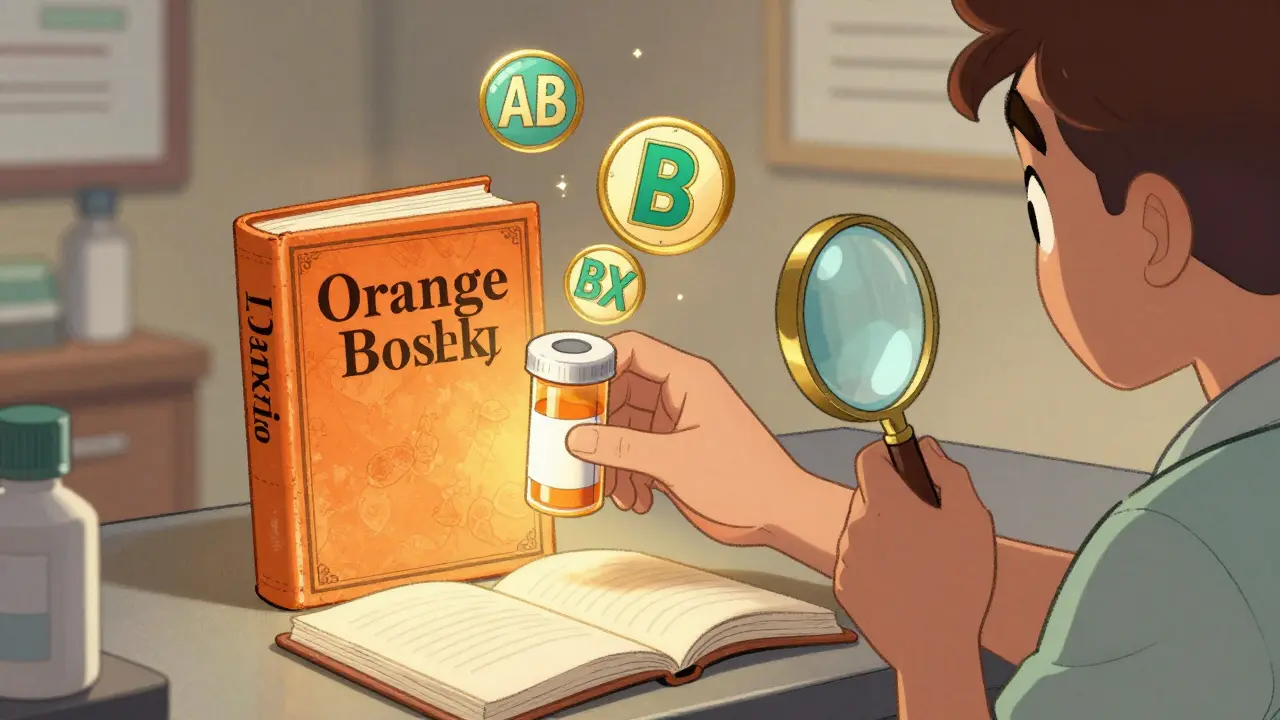
The FDA Orange Book, officially called Approved Drug Products with Therapeutic Equivalence Evaluations, has been around since 1985. It was created by the Hatch-Waxman Act to balance two goals: protecting innovation by giving drugmakers time to recoup R&D costs, and speeding up access to affordable generics. It lists every approved small-molecule drug in the U.S. and includes the patents and exclusivity periods that block generics from entering the market.
It’s not a list of all drugs-biologics like insulin or cancer therapies aren’t included. Only traditional pills and injectables covered under the 1984 law are tracked here. The data is updated daily, and the most recent version was published in November 2023. The Orange Book is now fully digital, and you can access it for free at accessdata.fda.gov/scripts/cder/ob/.
Where to Find Patent Expiration Dates
Finding a patent expiration date isn’t as simple as typing in a drug name and seeing a date pop up. The interface requires a few clicks to get to the right data. Here’s how to do it:
- Go to the Electronic Orange Book.
- Search by the drug’s brand name, active ingredient, or application number. For example, search for “Brilinta” or “ticagrelor”.
- Click on the Application Number (it’s hyperlinked) next to the drug you’re looking for.
- Scroll to the bottom of the page and click View under the “Patents” section.
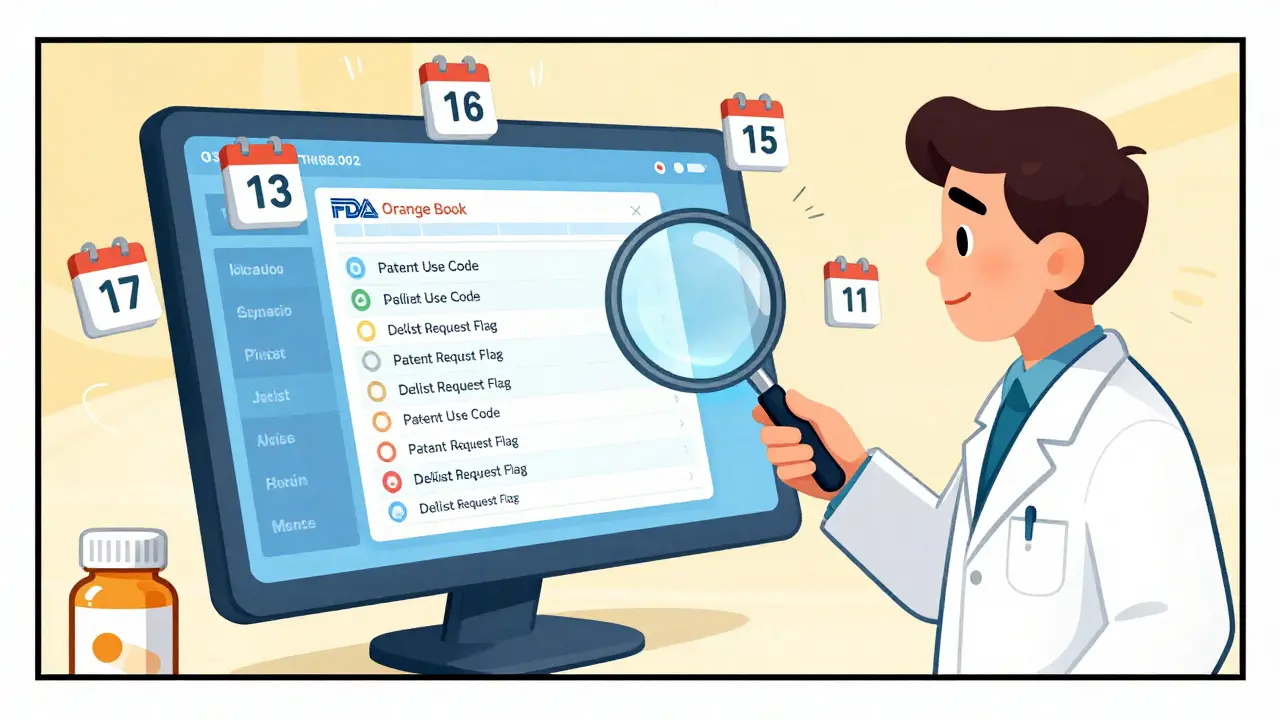
This will show you every patent tied to that drug. Each patent entry includes:
- Patent Number (e.g., 8,436,190)
- Patent Expiration Date (in MMM DD, YYYY format, like July 9, 2021)
- Patent Use Code (starts with “U-”, like U-123, which tells you what the patent covers-e.g., treating heart attacks, not just the chemical structure)
- Delist Request Flag (Y or blank-this tells you if the company asked to remove the patent)
For bulk data or research, you can download the full dataset from the FDA’s Orange Book Data Files page. The CSV files include columns for patent number, expiration date, submission date (since 2013), and whether the patent covers the drug substance or just the formulation.
What the Patent Expiration Date Really Means
The date you see isn’t just the original patent expiry-it’s often extended. The FDA allows Patent Term Extensions (PTE) under 35 U.S.C. 156 to make up for time lost during the drug approval process. A patent that was supposed to expire in 2020 might show a date of 2025 because the company spent five years waiting for FDA approval.
But here’s the catch: the Orange Book doesn’t always reflect what’s actually happening in the real world. A 2023 study from the National Bureau of Economic Research found that 46% of patents listed in the Orange Book expire early because the patent holder didn’t pay required maintenance fees. The FDA doesn’t remove those expired patents retroactively, so the database can show a date that’s no longer valid.
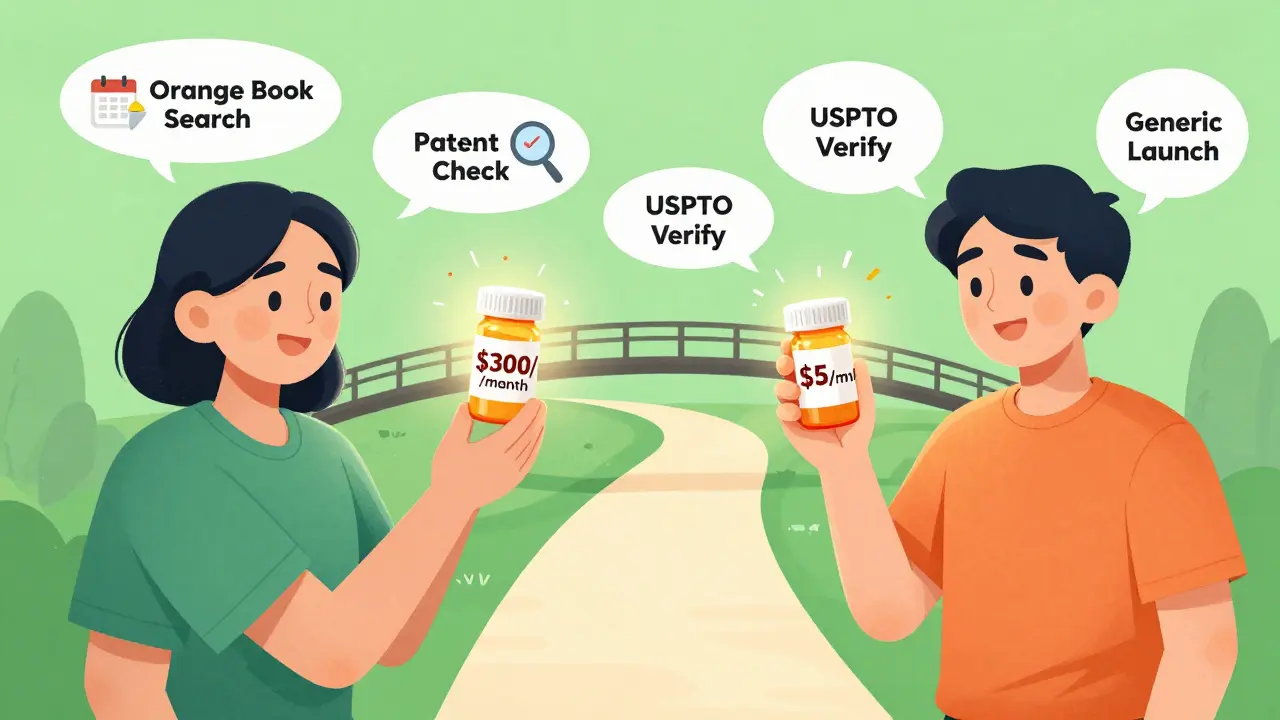
That’s why serious players-like generic drug makers-cross-check the Orange Book with the USPTO Patent Center. If a patent’s maintenance fees aren’t paid, it’s dead, even if the Orange Book still lists it as active.
Pediatric Exclusivity: The Hidden 6-Month Extension
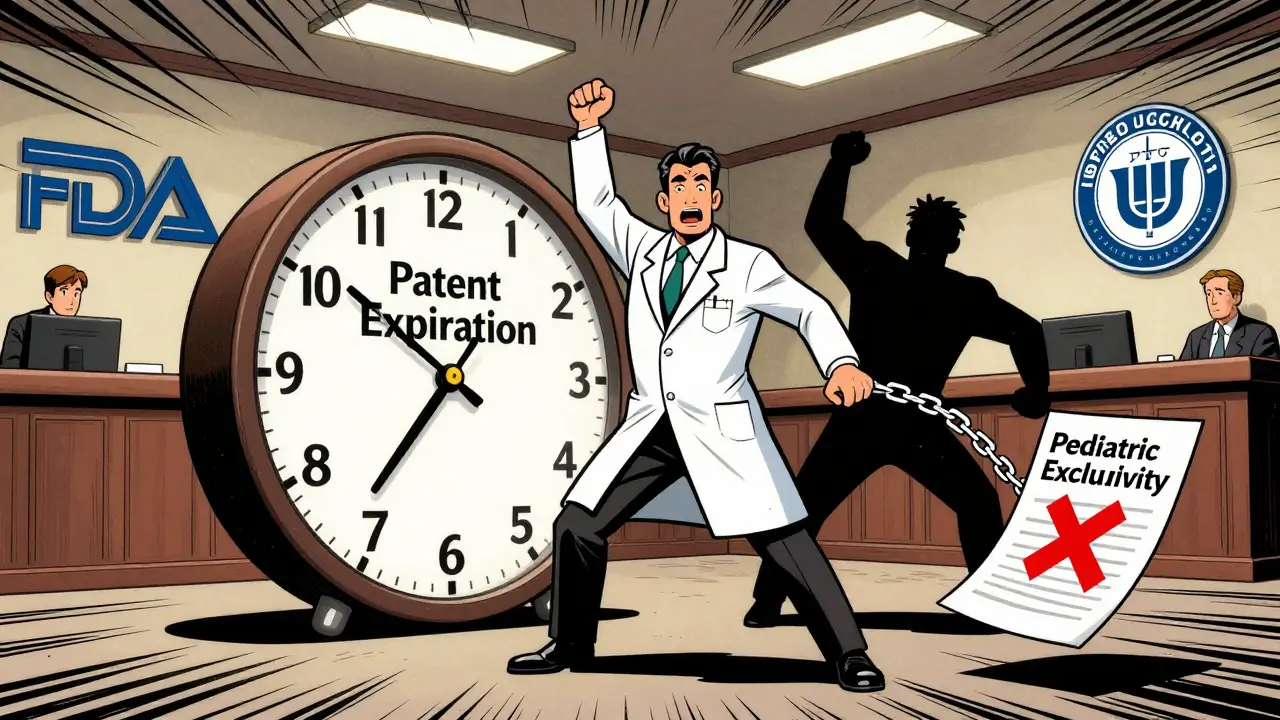
Many drugs have an extra 6 months of protection that doesn’t come from a patent. If a drugmaker runs pediatric studies requested by the FDA, they get an automatic 6-month exclusivity period. This isn’t a new patent-it’s added onto existing patents and exclusivities.
That’s why you’ll sometimes see the same patent listed twice in the Orange Book. One entry shows the original expiration date. The second entry shows the same patent number, but with a date 6 months later. That second date is the real cutoff for generic entry. For example, if a patent expires on January 1, 2024, and pediatric exclusivity applies, the Orange Book will show two entries: one for Jan 1, 2024, and another for July 1, 2024. The latter is the date that matters.
Exclusivity vs. Patents: Don’t Confuse Them
The Orange Book also lists regulatory exclusivity-separate from patents. These are legal protections granted by the FDA for things like orphan drug status, new chemical entities, or clinical studies conducted by the brand-name company.
For example:
- A new chemical entity gets 5 years of exclusivity.
- Orphan drugs get 7 years.
- Some drugs get 3 years for new clinical studies.
These exclusivities can run at the same time as patents-or they can be the only thing blocking generics. A drug might have no active patents left, but still be protected by exclusivity. That’s why you can’t just look at patent dates and assume generics can launch. You have to check both sections.
Common Mistakes and Pitfalls
Even experienced users make these errors:
- Assuming the first patent listed is the one that matters-There can be 10 patents on one drug. The last one to expire controls market entry.
- Ignoring the Delist Request Flag-If a company marks a patent for delisting, it often means they’ve lost a lawsuit or realized the patent is weak. That’s a signal generics might enter sooner.
- Not checking the patent use code-A patent might cover only one use of a drug. If a generic wants to sell it for a different use, they might not need to wait.
- Trusting the Orange Book as final-Always verify with USPTO records if you’re making business decisions.
Why This Matters
By 2025, 78% of brand-name drug revenue will face generic competition, according to Evaluate Pharma. That’s billions of dollars in savings for patients and insurers. But if you don’t know when those generics can launch, you can’t plan for it.
Pharmacists use the Orange Book to answer patient questions about when a cheaper version will be available. Generic companies use it to time their lawsuits and manufacturing plans. Even patients can use it-if you’re paying $300 a month for a brand drug, and you see the patent expires in 6 months, you can ask your doctor about switching to a generic when it’s available.
Final Tips for Using the Orange Book
- Bookmark the Electronic Orange Book-it’s free and updated daily.
- Use the downloadable data files if you’re doing research or analysis. They’re more reliable than the web interface for bulk work.
- Always check the patent use code. It tells you what the patent actually protects.
- Watch for delisting requests. They’re early warnings that a patent might not hold up.
- When in doubt, compare with the USPTO Patent Center. The FDA doesn’t update for early expirations.
The Orange Book isn’t perfect. But it’s the best tool we have. If you understand how to read it, you’re not just finding dates-you’re unlocking the timeline for cheaper, life-saving medicines.
Is the FDA Orange Book free to use?
Yes, the Electronic Orange Book is completely free and publicly accessible at the FDA’s website. No subscription, login, or payment is required. You can also download the full dataset for free from the FDA’s Orange Book Data Files page.
Can I find patent expiration dates for biologics like Humira in the Orange Book?
No. The Orange Book only includes small-molecule drugs approved under the 505(b)(2) or 505(j) pathways. Biologics like Humira, Enbrel, or Keytruda are regulated under a different law (the Biologics Price Competition and Innovation Act) and are listed in the Purple Book instead.
Why does the same patent appear twice in the Orange Book?
That’s usually because of pediatric exclusivity. When a drugmaker completes FDA-requested pediatric studies, they get a 6-month extension on all existing patents and exclusivities. The Orange Book shows the original patent date and then a second entry with the 6-month extension added. The later date is the one that controls generic entry.
Do patent expiration dates in the Orange Book always mean generics can launch then?
Not always. Even after a patent expires, a drug might still be protected by regulatory exclusivity, like 5-year new chemical entity protection. Also, if the patent was delisted or expired early due to unpaid maintenance fees, generics might be able to launch sooner than the listed date. Always verify with the USPTO and check for exclusivity.
How often is the Orange Book updated?
The FDA updates the Orange Book daily. New patents, delistings, and exclusivity changes are added within 24 hours of submission. The downloadable data files are also updated daily, so if you’re using them for tracking, you’re always working with the most current data.
What’s the difference between a patent and exclusivity?
A patent is a legal right granted by the USPTO to protect an invention, like a chemical compound or method of use. Exclusivity is a regulatory protection granted by the FDA, independent of patents. It’s given for things like being the first to file a generic application or conducting pediatric studies. Patents can be challenged in court; exclusivity cannot.
Can I trust the expiration dates in the Orange Book?
Mostly, but not always. The FDA reports that 89% of patent expiration dates match USPTO records when Patent Term Extensions are involved. However, 46% of patents expire early due to unpaid maintenance fees, and the Orange Book doesn’t remove those. Always cross-check with the USPTO Patent Center if timing is critical.
10 Comments
The FDA Orange Book is basically the only thing standing between Big Pharma and total corporate annihilation. If you're not cross-referencing every patent with the USPTO, you're not just lazy-you're enabling price gouging. I've seen generics get held up for years because some pharma exec forgot to pay a $1,200 maintenance fee. And the FDA? Still lists it like it's holy scripture. Pathetic.
It’s not just about patents-it’s about the metaphysics of access. The Orange Book is a cathedral of bureaucracy, where time is weaponized and life-saving drugs are held hostage by legal technicalities. We treat medicine like a commodity, not a right. And yet, we’re surprised when people can’t afford their insulin? The system isn’t broken-it was designed this way.
bro the orange book is free??? 😱 i thought i had to pay for it like a netflix subscription for drugs 🤡
You people are missing the point. The Orange Book is a joke. 46% of patents expire early due to unpaid fees? That means half the time, the FDA is lying to you. Generic manufacturers don’t even trust this database-they use proprietary tools that scrape USPTO, court filings, and whistleblower reports. This isn’t transparency. It’s theater.
Thank you for this. Really. I’ve been trying to explain to my patients why their $400 pill suddenly drops to $12 in six months, and I never knew how to break it down. The pediatric exclusivity part? That’s the one nobody talks about. I’m printing this out for my clinic. Seriously-thank you.
Just checked my prescription-Brilinta’s patent expires next year. I’m gonna ask my doc about switching. This post literally saved me hundreds. 💙
Oh wow, so we’re just supposed to trust the FDA? The same agency that approved Vioxx and let opioid manufacturers lie about addiction rates? You’re telling me a database maintained by the same people who gave us the opioid crisis is somehow reliable? That’s not optimism-that’s delusion.
orange book? lol who even uses this anymore
Wait, so if a patent’s maintenance fee isn’t paid, it’s dead-but the FDA still lists it? That’s not a database. That’s a haunted house. The FDA’s website is basically a ghost story where the patents keep rising from the grave. And we’re supposed to base billion-dollar decisions on this? I’m not a lawyer, but even I know that’s a lawsuit waiting to happen.
Look, I get it-the Orange Book is a tool. But let’s not pretend it’s some kind of sacred scripture. It’s a bureaucratic artifact from 1985 that’s been patched together with duct tape and hope. The fact that you have to cross-reference it with the USPTO, check delist flags, parse use codes, and track pediatric exclusivity extensions means it’s not user-friendly-it’s a maze designed to keep the average person out. And that’s the point. The system doesn’t want you to understand it. It wants you to pay. And if you’re lucky enough to have the time, the legal team, or the PhD in pharma regulation to decode it? Congrats-you’ve won the privilege of being able to afford your own medicine. The rest of us? We’re just collateral damage in a game where the rules were written by people who don’t have to take the pills.