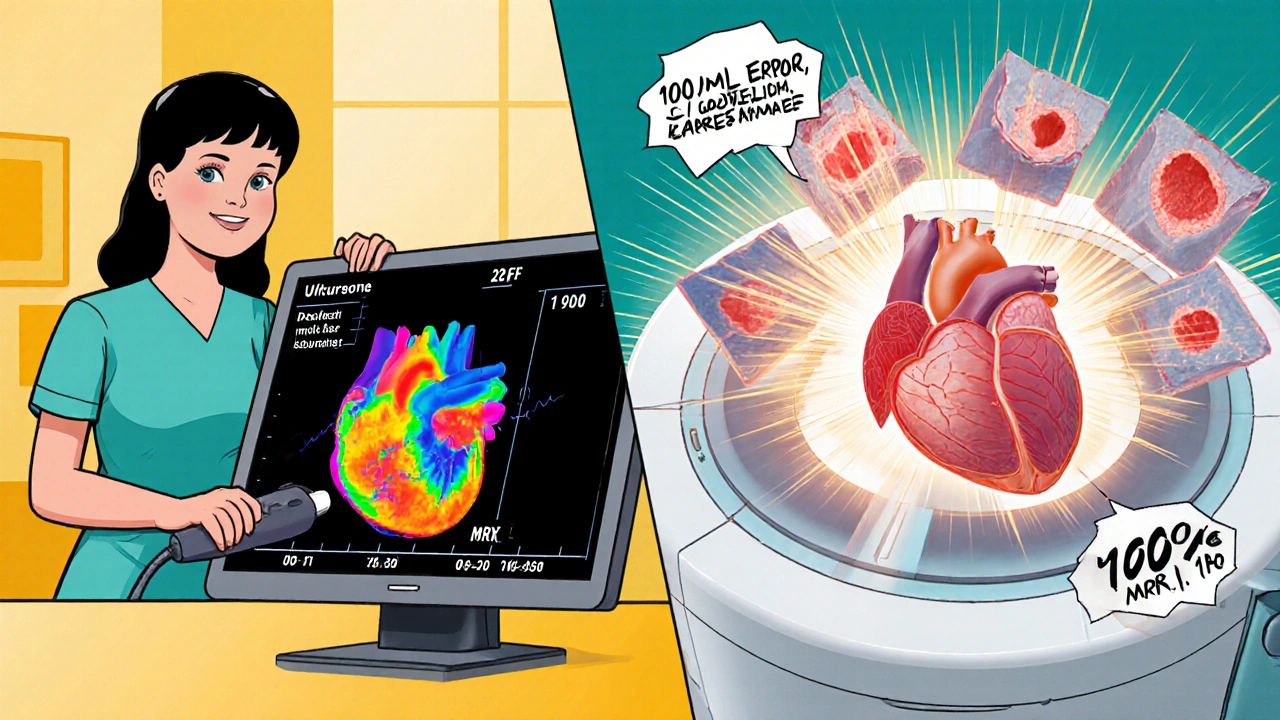
Echocardiography: What It Is, How It Works, and What It Reveals About Your Heart
When your doctor suspects something’s off with your heart, they often turn to echocardiography, a non-invasive imaging test that uses ultrasound waves to create moving pictures of your heart. Also known as an echocardiogram, it’s one of the most common ways to see how well your heart is pumping, whether valves are leaking or stiff, and if there’s fluid around the heart. Unlike X-rays or CT scans, it doesn’t use radiation. It’s safe, quick, and often done right in the doctor’s office.
This test doesn’t just show structure—it shows function. A heart ultrasound, the technical term for echocardiography, can measure how much blood your heart pushes out with each beat, called ejection fraction. If that number drops below 50%, it could mean your heart isn’t pumping efficiently. It also spots problems like thickened walls from high blood pressure, damaged muscle after a heart attack, or holes between chambers. Even small changes in valve motion can signal trouble before symptoms appear.
Doctors rely on echocardiography to guide treatment for conditions like heart failure, valve disease, and congenital defects. It’s also used to monitor patients on medications that can affect the heart, like certain chemotherapy drugs or long-term high-dose steroids. If you’ve been told you have an irregular heartbeat or unexplained shortness of breath, an echocardiogram can tell you whether it’s a rhythm issue or something structural. And for people with a family history of heart disease, it’s a powerful tool for early detection.
There are different types—transthoracic (on the chest), transesophageal (down the throat for clearer images), stress echocardiograms (done during exercise), and Doppler echocardiograms (to check blood flow). Each serves a specific purpose. You won’t feel pain during a standard test, just some pressure from the wand. No fasting or needles are needed. Results are usually available the same day.
The posts below cover real-world situations where echocardiography plays a key role. You’ll find guides on how heart imaging connects to medication decisions, why timing of blood pressure drugs matters for heart strain, how certain drugs affect heart muscle over time, and what to ask your doctor after getting results. Whether you’re trying to understand your own test, managing a chronic condition, or just curious how your heart is being checked, this collection gives you clear, practical insights—not just textbook definitions.