
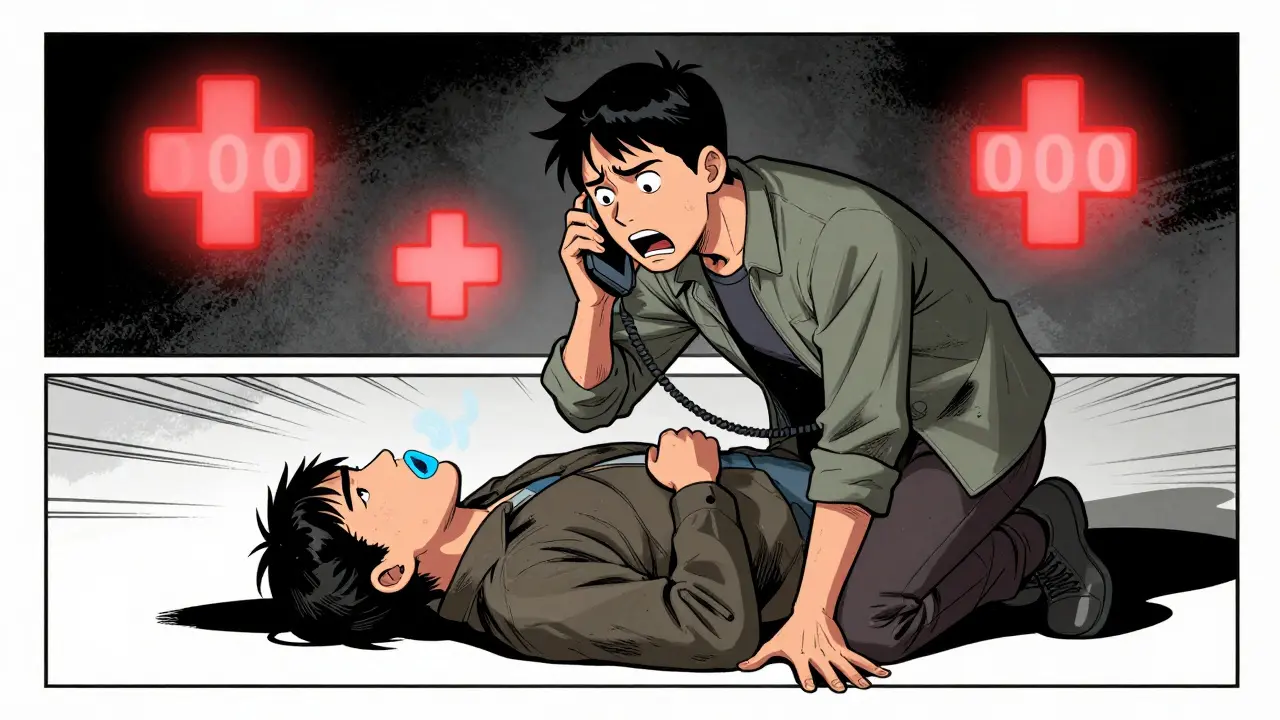
Someone you know is unconscious. Their lips are blue. Their breathing is slow, shallow, or gone. You’re scared. You don’t know what to do. But you do know one thing: you can’t wait. Every second counts.
Call for Help First - Even If You Have Naloxone
The very first thing you do is call emergency services. In Australia, that’s 000. Don’t wait to see if they wake up. Don’t wait to find your naloxone kit. Don’t wait to text a friend. Call now.Most people think naloxone is the solution. And yes, it can reverse an opioid overdose - but only if the person is actually overdosing on opioids. And even then, it doesn’t work instantly. Naloxone takes 2-5 minutes to kick in. Meanwhile, the person could stop breathing. Their brain could start dying. Emergency responders can get there faster than you think - but only if you call.
Studies show that when bystanders call 000 immediately, survival rates jump by 35%. That’s not a small number. That’s the difference between life and death. Naloxone is powerful, but it’s not magic. Calling for help is the most critical step.
Check Breathing - Don’t Assume They’re Just Sleeping
Look. Listen. Feel. Is their chest rising? Do you hear gasping? That’s not normal breathing. That’s agonal breathing - a sign the body is shutting down. Snoring, gurgling, or irregular breaths? That’s not sleep. That’s overdose.Give yourself 10 seconds. No more. If breathing is absent, too slow (less than 8 breaths per minute), or irregular, move to rescue breathing immediately. Don’t waste time shaking them or shouting. That delays help. The International Liaison Committee on Resuscitation found that shaking someone delays life-saving actions by an average of 22 seconds. You can’t afford that.
Start Rescue Breathing - Even If You’re Not Trained
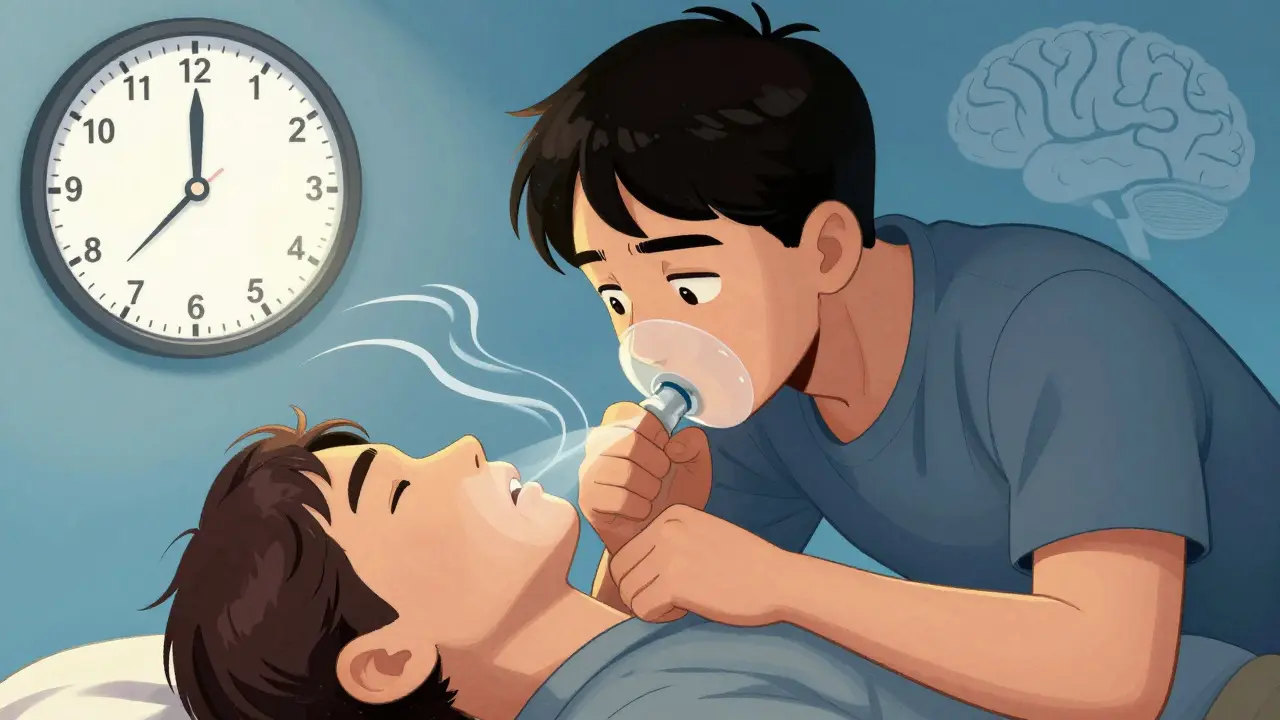
Tilt their head back gently, lift their chin. Pinch their nose shut. Cover their mouth with yours, making a tight seal. Give one breath every 5 to 6 seconds - that’s about 10 to 12 breaths per minute. Each breath should last about one second and make their chest rise. Don’t blow too hard. You don’t want air going into their stomach. That causes vomiting - and vomiting while unconscious can kill.Keep going. Even if you’re tired. Even if you’re scared. Even if you think they’re not responding. Rescue breathing keeps oxygen flowing to their brain. Without it, brain damage starts after just 4 minutes. Most people give up too soon. They think naloxone will fix everything. But naloxone doesn’t help if they’re not breathing. You are their lifeline until help arrives.
Use Naloxone If You Have It - But Only for Suspected Opioids
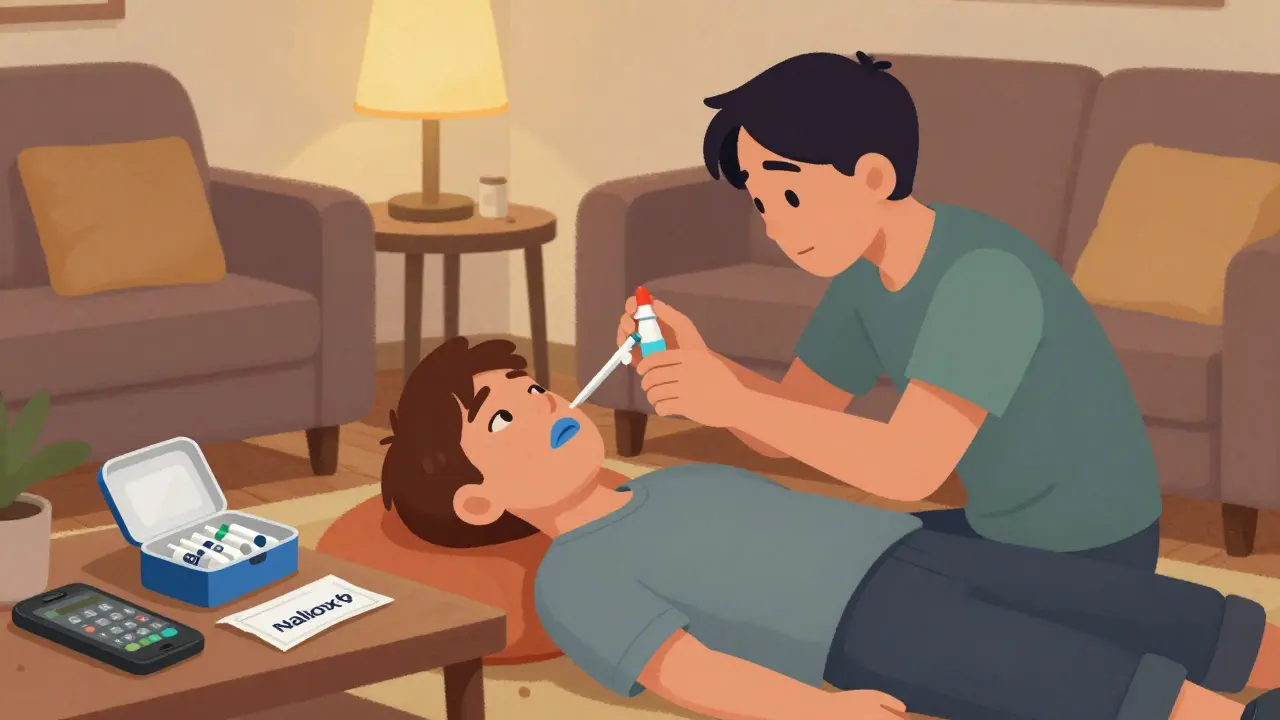
If you suspect an opioid overdose - like heroin, fentanyl, oxycodone, or even prescription painkillers - give naloxone. It’s safe. It won’t hurt someone who didn’t take opioids. It only works on opioids.Most naloxone kits in Australia are nasal sprays. Spray half the dose into one nostril. If you have a full dose, spray the other half into the other nostril. Don’t wait. Don’t argue. Don’t worry about whether they’re “addicted.” This isn’t about judgment. It’s about saving a life.
But here’s the catch: naloxone doesn’t work on alcohol, benzodiazepines, cocaine, meth, or MDMA. If you’re unsure what they took, and you have naloxone, use it anyway. Many overdoses involve multiple drugs - and opioids are often part of the mix. The CDC recommends naloxone for any suspected opioid involvement, even if other drugs are present.
Put Them in the Recovery Position If They’re Breathing
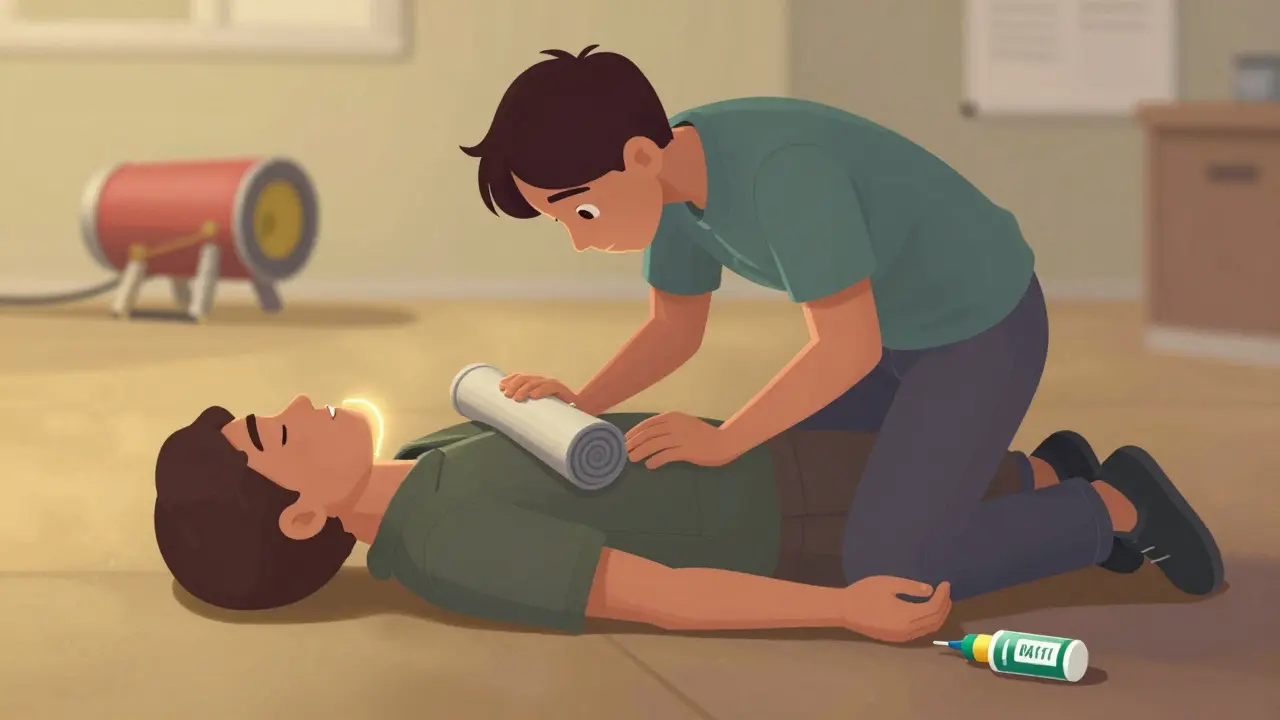
If they’re breathing but unconscious, don’t leave them on their back. That’s dangerous. Their tongue can block their airway. They could choke on vomit.Roll them onto their left side. This is called the recovery position. Bend their top leg at the knee and hip - like a right angle. That keeps them stable. Tilt their head back slightly so their airway stays open. Place their top arm under their head for support. Now, their breathing is safer.
Many people don’t know how to do this. It takes 12-15 seconds to get right. Practice it once. You’ll never forget. The Australian Drug Foundation found that 38% of bystanders couldn’t position someone correctly because they’d never practiced. Don’t be one of them.
Watch for Stimulant Overdose - It’s Different
If they’re shaking, sweating, confused, or have a very high temperature, it might be a stimulant overdose - like meth, cocaine, or MDMA. This isn’t about breathing. It’s about overheating.Don’t cool them with ice baths or cold showers. That can trigger dangerous heart rhythms. Instead, move them to a cool place. Remove extra clothing. Fan them gently. Offer small sips of water - no more than 250ml per hour. Too much water can cause hyponatremia, a dangerous drop in salt levels.
Stimulant overdoses don’t respond to naloxone. But they’re just as deadly. The key is cooling and calling 000. Don’t delay. Body temperature above 40°C (104°F) can cause organ failure in under 30 minutes.
Stay With Them - Until Help Arrives
Don’t leave. Don’t run. Don’t hide. Stay with them. Monitor their breathing every 2-3 minutes. Keep doing rescue breathing if needed. If they wake up, keep talking to them. Reassure them. Tell them help is coming.People often panic and leave after giving naloxone. They think the job’s done. But naloxone wears off in 30-90 minutes. Opioids can last longer. The person can slip back into overdose. That’s why you need to stay. Emergency services need to know what happened, what you did, and what they’re seeing when they arrive.
What Not to Do
- Don’t put them in a cold shower or ice bath - it can cause cardiac arrest.
- Don’t inject anything - salt, sugar, coffee, or “cure-alls.” That’s dangerous and ineffective.
- Don’t leave them alone - even if they seem okay.
- Don’t assume they’re just drunk or sleeping - overdose looks like deep sleep.
- Don’t wait to see if they wake up - act now.
These myths kill. They’re spread online, in peer groups, even by well-meaning friends. Don’t fall for them. Stick to the facts.
Why This Matters - Real Numbers, Real Lives
In 2021, over 107,000 people died from drug overdoses in the U.S. alone. Opioids caused nearly 75% of those deaths. In Australia, overdose deaths rose 18% between 2020 and 2022. Many of these deaths happened because someone didn’t know what to do.But here’s the good news: bystander intervention can cut overdose deaths by up to 50%. That’s not theory. That’s data from the New England Journal of Medicine. Communities with trained responders reversed over 12,500 overdoses between 2021 and 2023. Nearly all of those people survived to leave the hospital.
You don’t need to be a doctor. You don’t need a degree. You just need to know these five steps: call, check breathing, give rescue breaths, use naloxone if needed, position them safely, and stay with them.
Be Ready - Practice Before It Happens
Take 15 minutes this week. Watch a free video from the Australian Drug Foundation or the Better Health Channel. Practice the recovery position on a pillow. Learn where your local naloxone kits are - pharmacies, community centres, and some libraries stock them for free.Most people think they’ll never be in this situation. But 68% of Americans know someone who’s had an overdose. It’s not rare. It’s not distant. It could be your sibling, your friend, your neighbour.
Be ready. Know what to do. And if you ever have to use it - you’ll be the reason someone goes home.
Can naloxone be used for any type of drug overdose?
No. Naloxone only works on opioids like heroin, fentanyl, oxycodone, and morphine. It has no effect on alcohol, cocaine, methamphetamine, benzodiazepines, or MDMA. If you’re unsure what was taken, and you have naloxone, it’s still safe to use - many overdoses involve multiple drugs, and opioids are often part of the mix.
What if I’m not sure if someone is overdosing or just asleep?
If they’re unresponsive to loud shouting or firm shoulder shakes, assume it’s an overdose. Check their breathing. If it’s slow, shallow, or irregular - or if their lips are blue - act immediately. Calling 000 and starting rescue breathing won’t hurt them if they’re just sleeping. But waiting could kill them.
How long should I keep giving rescue breaths?
Keep giving one breath every 5-6 seconds until they start breathing normally on their own, or until emergency services arrive. Even if they respond to naloxone, continue monitoring. The effects of naloxone wear off faster than most opioids, so they can slip back into overdose.
Is it safe to give someone water if they’re overdosing on stimulants?
Yes - but only small sips, no more than 250ml per hour. Too much water can cause hyponatremia (dangerously low sodium levels), which is life-threatening. Focus on cooling them down and calling 000. Don’t force fluids.
Can I get in trouble for helping someone who overdosed?
No. Australia has Good Samaritan laws that protect people who call for help during an overdose. You won’t be charged for possession or use if you’re acting in good faith to save a life. Emergency services are there to help, not to punish.
Where can I get free naloxone in Australia?
Naloxone is available for free at many pharmacies, community health centres, needle and syringe programs, and some local councils. You don’t need a prescription. Ask your pharmacist or visit the Australian Drug Foundation website for locations near you.

10 Comments
Just saved a friend last month using this exact guide. Called 000, started rescue breathing while prepping the naloxone spray. They woke up before the ambulance got there. 🙏 You don’t need to be a hero - just be ready. This post is gold.
It is of paramount importance to underscore the necessity of immediate emergency service activation in the context of suspected opioid overdose events. The empirical data presented herein corroborates the established protocols endorsed by the International Liaison Committee on Resuscitation.
Of course you call 000. But why are we pretending naloxone is some kind of miracle drug? It’s not. It’s just a band-aid on a bullet wound. The real problem is the entire drug policy system being a joke. We’re treating symptoms while the government lets fentanyl flood the streets like it’s a Black Friday sale.
The phenomenological experience of the overdosing subject is often misread as passive non-responsiveness, yet the physiological reality reveals a cascading failure of homeostatic regulation - particularly in the brainstem’s respiratory centers. Naloxone’s mu-opioid receptor antagonism is temporally constrained, and its pharmacokinetic half-life is frequently outpaced by the parent opioid’s duration of action, thereby necessitating continuous monitoring. Rescue breathing, then, becomes not merely supportive but ontologically constitutive of survival - a literal oxygenation of possibility against the entropy of cessation.
Furthermore, the recovery position is not merely a mechanical maneuver but an ethical act of spatial reconfiguration, ensuring the body’s autonomy in the face of neurochemical subjugation.
Why is everyone acting like this is some big secret? This stuff is basic first aid. We’re talking about people dying because they’re too scared to call 911 or too lazy to learn how to breathe for someone else. This isn’t a miracle guide - it’s common sense. And if you don’t know this, you’re not just unprepared - you’re dangerous.
Call 000? In Australia? What if you’re in the middle of nowhere? 🇺🇸 We got 911 and we got trained responders in 5 minutes. Why are we promoting foreign systems like they’re better? This post feels like woke propaganda wrapped in medical jargon.
One must contemplate the moral architecture of intervention. To act is to assume responsibility; to refrain is to abdicate one’s duty to the other. The imperative to breathe for the breathless is not merely clinical - it is metaphysical. In the silence between heartbeats, we are summoned to be the vessel through which life persists.
Wait… so you’re telling me the government doesn’t want us to know that naloxone is just a placebo for people who didn’t take opioids? And that the whole ‘rescue breathing’ thing is just a distraction so they can push more surveillance tech into ambulances? I’ve seen the videos. They’re not saving lives - they’re collecting data.
I work in harm reduction and this is hands-down the clearest, most practical guide I’ve seen. Seriously - the part about not giving ice baths for stimulant overdoses? So many people still think that’s a good idea. I’ve had people bring ice packs to the ER for someone on meth and nearly cause cardiac arrest. And the recovery position tip? I teach it to teens at youth centers. 15 seconds of practice saves lives. Also - naloxone is free at like 80% of pharmacies here now. Just ask. No shame. No judgment. Just grab it. Keep it in your bag, your car, your drawer. You never know when you’ll be the one who has to use it. And if you’re worried about ‘enabling’? Look at the stats. People who get help survive. People who don’t… don’t. This isn’t about politics. It’s about breathing.
This saved my brother’s life last winter