
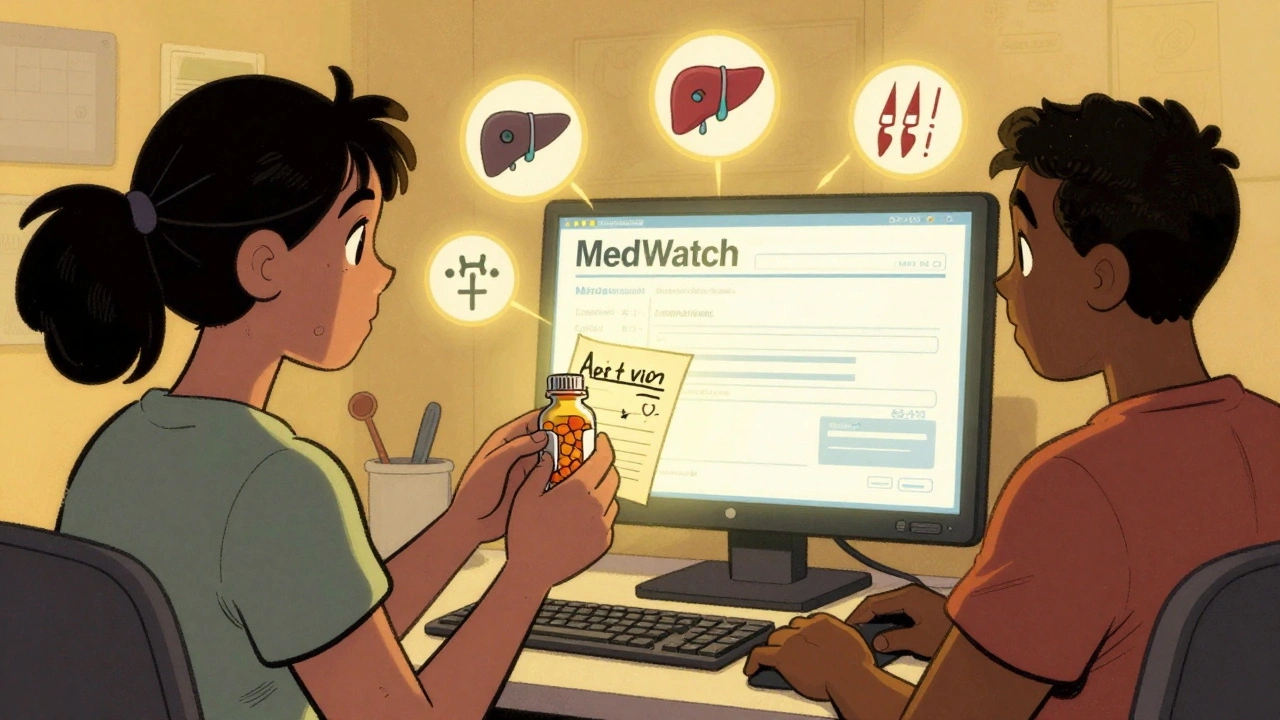

Every year, millions of people take prescription drugs without issue. But for some, a medication can cause a serious or unexpected reaction-something not listed on the label, something that changes their life. If you’ve experienced this, or if you’re a healthcare provider who’s seen it happen, you have a critical role to play: reporting adverse events to the FDA. This isn’t just paperwork. It’s how we find hidden dangers, protect others, and make drugs safer for everyone.
What Counts as an Adverse Event?
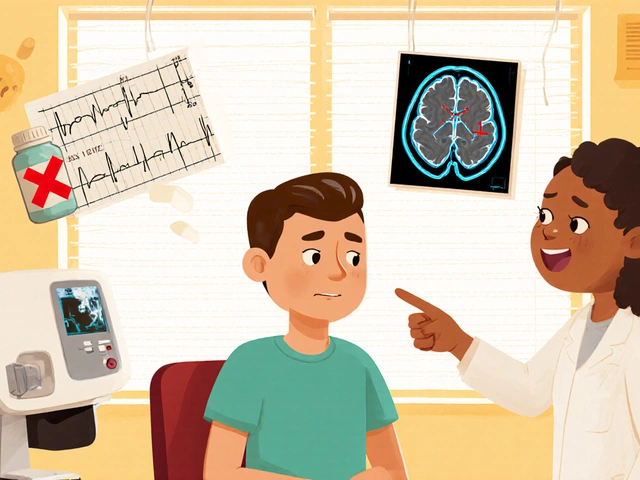
An adverse event is any harmful or unwanted reaction that happens after taking a medication. It doesn’t have to be proven to be caused by the drug. If you suspect a connection, it counts. This includes:- Severe allergic reactions like anaphylaxis
- Liver damage, kidney failure, or heart rhythm problems
- Unexplained seizures, hallucinations, or suicidal thoughts
- Birth defects in babies born to mothers who took the drug
- Death linked to medication use
- Even unexpected side effects like sudden hair loss, extreme fatigue, or severe rashes
The FDA defines these as unanticipated experiences-anything outside what’s already known from clinical trials. Even if you’re not sure, report it. The system is built to filter out noise and find real signals.
Who Should Report?
Everyone can report. But the rules are different depending on who you are.- Patients and caregivers: You can report directly. No special training needed. Your experience matters.
- Doctors, nurses, pharmacists: You’re encouraged to report, and in some cases, legally required-for example, with vaccines under the National Childhood Vaccine Injury Act.
- Pharmaceutical companies: They must report serious and unexpected events within 15 days. Failure can mean fines up to $2.3 million per violation.
Over 2 million reports come in each year. About 400,000 are from patients like you. That’s not enough. Experts estimate only 1% to 10% of serious reactions are reported. Your report could be the one that triggers a safety warning.
How to Report as a Patient or Family Member
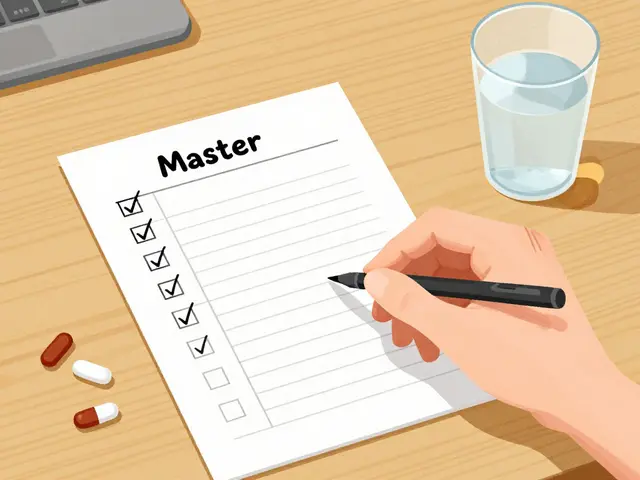
Reporting is free, fast, and can be done online. Here’s how:- Collect basic information: Write down the name of the drug (brand and generic), dosage, how long you took it, and when the reaction started. If you have the pill bottle or prescription label, take a photo.
- Describe the event in detail: What happened? When? Did it get worse? Did you go to the hospital? Include symptoms, test results, or doctor’s notes if you have them. The more specific, the better.
- Go to the MedWatch portal: Visit www.fda.gov/medwatch and click on the online form (Form 3500).
- Fill out the form: You’ll need the patient’s age, gender, and basic health history. Then enter the drug details and your description. You can upload photos of labels or packaging.
- Submit: You’ll get a confirmation number. Save it. If you’re not sure you filled it out right, you can save your progress for up to three days.
Pro tip: If you’re unsure whether the reaction is serious, err on the side of caution. A report that turns out to be minor doesn’t hurt the system. A missed report could cost someone their life.
How Healthcare Providers Report
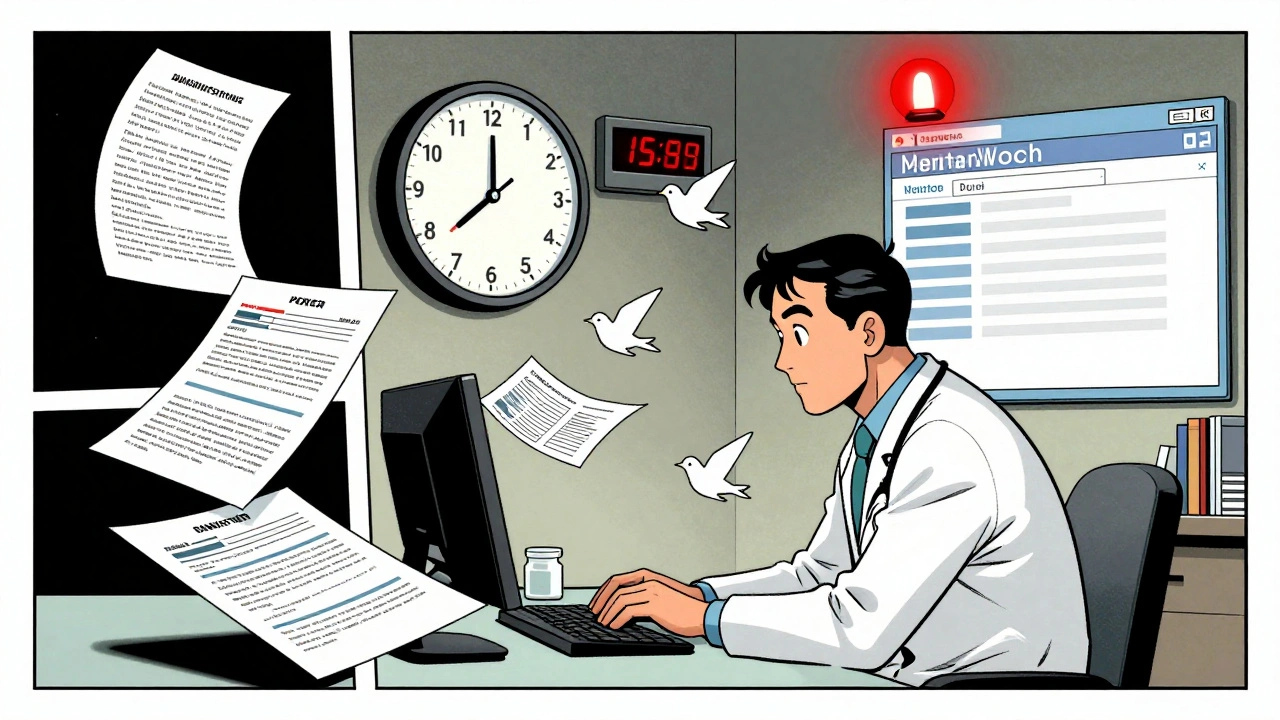
As a provider, you have access to more data-and a greater responsibility. Your reports are more valuable because they include clinical context.- Use the same MedWatch Form 3500 online.
- Include details from medical records: lab values, imaging results, medication history, and timing of events.
- Check the product’s labeling to determine if the event was “expected.” If it’s not listed, it’s reportable.
- For serious events, report within 15 days. Don’t wait.
Studies show that reports from clinicians with full clinical data are 73% more likely to trigger a safety review. That’s because they help the FDA distinguish between coincidence and causation.
What Happens After You Report?
Your report goes into the FDA Adverse Event Reporting System (FAERS)-a database with over 30 million entries. It’s not a hotline. You won’t get a call. But here’s what happens next:- Reports are coded using MedDRA, a global medical terminology system.
- Statistical tools look for patterns: if 100 people report the same rare side effect with a new drug, it’s flagged.
- If a signal is confirmed, the FDA may update the drug label, add a black box warning, require new studies, or, in rare cases, pull the drug.
Real example: In 2018, dozens of reports of aortic aneurysms linked to fluoroquinolone antibiotics led to a black box warning. That came from patient reports-not clinical trials.
Don’t expect instant results. The FDA has only one safety reviewer for every 18,000 reports. It can take over 200 days for a report to be reviewed. But every report adds to the evidence.
Common Problems and How to Avoid Them
Many people give up because the system feels broken. Here’s what goes wrong-and how to fix it:- System times out: Save your progress every 5 minutes. Use a stable internet connection.
- 3,000-character limit: Be concise but specific. Focus on key facts: onset, progression, outcome. Don’t write a novel.
- Don’t know if it’s “expected”: Check the drug’s package insert. If it’s not listed, report it.
- No confirmation email: The FDA doesn’t always send one. Save your Report ID. That’s your proof.
One patient reported anaphylaxis after penicillin. She included her daughter’s lab results and the exact date the drug was stopped. Ten days later, she got a call from an FDA safety evaluator asking for more details. That’s how it works when you do it right.
Why Your Report Matters
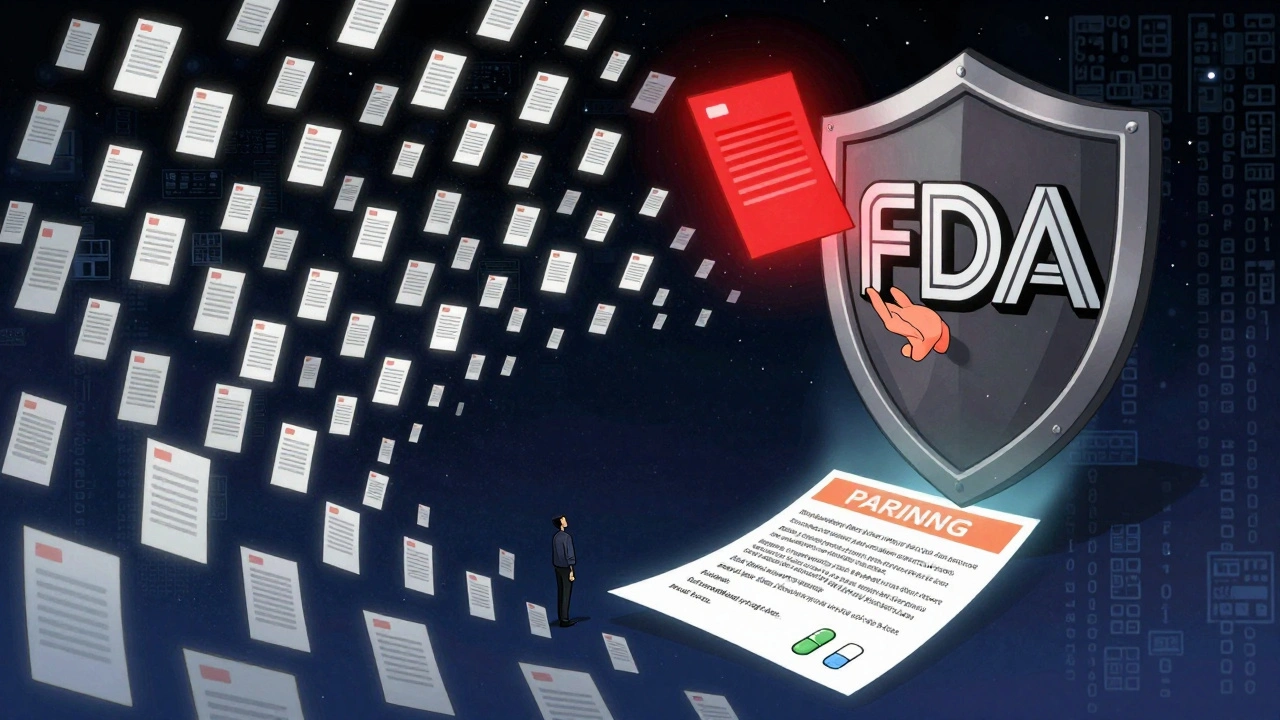
The FDA doesn’t test drugs on millions of people before approval. Clinical trials involve a few thousand. Real-world use reveals what those trials miss: rare reactions, interactions with other drugs, effects in older adults, or in people with multiple health conditions.Without your report, a dangerous drug could stay on the market for years. In 2022, the FDA used FAERS data to identify a new risk with a popular diabetes drug that led to a label change-saving lives.
Reporting isn’t just a duty. It’s a way to turn your pain into protection for others.
What’s Changing in 2025?
The FDA is upgrading its systems. By 2025, they plan to connect with electronic health records to automatically pull in adverse event data. That could increase reporting rates by 300%. But until then, your manual reports are still essential.They’ve also launched a mobile-friendly version of MedWatch and expanded multilingual support. If you’re not tech-savvy, ask a family member or pharmacist to help you fill out the form. It’s worth the effort.
Final Thoughts
You don’t need to be a doctor. You don’t need to understand statistics. You just need to care enough to speak up.Adverse event reporting is one of the few ways ordinary people directly influence drug safety. Your voice, your story, your details-these are the raw materials the FDA uses to protect the public.
So if something went wrong with a medication you or someone you love took, don’t wait. Don’t assume someone else will report it. Don’t think it’s too small. Go to MedWatch. Fill out the form. Hit submit.
Someone’s life might depend on it.



12 Comments
I reported my mom's severe liver reaction to gabapentin last year. Took me three tries to get through the MedWatch form-it kept timing out. But I saved the confirmation number, and six months later, the FDA updated the warning label. She’s alive because someone finally listened.
Don’t let bureaucracy silence your story. You’re not just reporting-you’re saving the next person.
It is imperative to underscore the legal and ethical obligations incumbent upon healthcare professionals in the reporting of adverse drug events. Failure to comply with regulatory mandates under the Food, Drug, and Cosmetic Act constitutes a breach of professional duty and may result in civil liability.
Furthermore, the integrity of the FAERS database is contingent upon the accuracy and completeness of clinician-submitted reports. Incomplete or ambiguous entries undermine statistical validity and impede public health surveillance.
Let’s be honest-this whole system is a charade. The FDA doesn’t want to know what’s really going on. They’re too cozy with Big Pharma. They’ll take your report, slap a MedDRA code on it, and file it under ‘noise’ while the same drugs keep getting prescribed to grandmas and toddlers alike.
And don’t get me started on the 200-day review window-by the time they ‘review’ it, the drug’s already been reformulated, renamed, and sold as a ‘new and improved’ version with a new patent.
It’s not about safety. It’s about profit. And you? You’re just a data point in their corporate machine.
But hey, keep reporting. Maybe if enough people scream into the void, the algorithm will finally notice.
And if you think this is about ‘public health,’ you’re delusional. It’s about liability avoidance. The moment a drug becomes a liability, they bury it. Until then? It’s business as usual.
They’ll update a label after ten people die. Not before. That’s not safety. That’s damage control.
And the ‘mobile-friendly’ version? That’s just a shiny coat of paint on a sinking ship.
Meanwhile, people are still getting prescribed SSRIs to toddlers and antibiotics for viral infections. The system isn’t broken-it was designed this way.
So yeah. Report. But don’t expect justice. Expect silence. And then, maybe, a label change three years later.
And if you think your report matters? Good. Keep believing. It’s the only thing keeping you sane.
Did you know the FDA gets paid by drug companies to approve their drugs? That’s why they ignore 99% of reports. The real danger isn’t the side effects-it’s the fact that every single drug on the market is secretly tested on children in underground labs before it hits shelves. I’ve got documents. I’ve got emails. But no one will listen because they’re all in on it.
That’s why they made the form so confusing. To scare off the little people.
They want you to give up. But I didn’t. I reported my neighbor’s daughter’s seizures after the HPV shot. Three days later, her phone disappeared. Coincidence? I think not.
OMG I JUST REPORTED MY KNEE PAIN FROM MELOXICAM AND I FEEL SO GOOD LOL
YOU GUYS I DID IT I DID THE THING
TOO BAD THE FORM CRASHED BUT I SAVED IT AS A DRAFT AND I’LL FINISH TOMORROW
IF YOU’RE READING THIS AND YOU’RE SCARED-JUST DO IT. YOU GOT THIS. I BELIEVE IN YOU. 💪❤️
There’s a profound metaphysical weight to the act of reporting an adverse reaction. It’s not merely data entry-it’s an ontological assertion of embodied experience against institutional abstraction.
The patient’s suffering, rendered into a structured form, becomes a node in a vast, decentralized network of resistance against epistemic erasure.
Each submission, however small, disrupts the algorithmic silence that commodifies pain.
It is an act of radical vulnerability-a whisper into the void that, statistically, may one day coalesce into a scream the system can no longer ignore.
And yet, we are asked to be patient. To trust. To believe in a machine that has, time and again, prioritized profit over person.
Still, we report.
Because to not report is to consent to the invisibility of our bodies.
And perhaps that is the most dangerous side effect of all.
Wow. A whole article about reporting side effects. And you didn’t even mention the 37 other ways the FDA is rigged. Like how they let pharma choose the clinical trial sites. Or how they ignore all reports from people who don’t have a PhD.
Also, why is the form in English only? Oh wait-because they don’t care about non-white people.
Anyway. I reported my headache after taking ibuprofen. They didn’t respond. Surprise. Surprise.
It is a moral imperative for every citizen to report adverse drug reactions. In India, we do not have the luxury of such systems, yet we still report through NGOs and community health workers. The Western world has the infrastructure-yet you complain about the form? Shame.
My cousin died from a drug interaction in Delhi. We reported it. No one listened. But we did our duty. You? You are too busy scrolling.
Stop being lazy. Fill out the form. It takes 15 minutes. Your complacency is killing others.
Report it. Whatever.
They don’t want you to know this, but the FDA doesn’t even review half the reports. They outsource them to contractors in the Philippines who get paid $3 per form. The ‘black box warning’ you hear about? That’s not from your report. That’s from a whistleblower inside Pfizer.
So yes-submit. But don’t think you’re changing anything. You’re just feeding the machine.
Still. Do it. Because if everyone stopped, the machine would collapse.
And that’s the only kind of justice we’ll ever get.
It is with the utmost respect for public health infrastructure that I acknowledge the importance of the MedWatch reporting system. As a medical professional with over two decades of clinical experience, I have submitted over 87 adverse event reports, all meticulously documented with clinical data, laboratory results, and temporal relationships.
It is imperative that patients be encouraged to report, but they must be guided to provide accurate, objective, and clinically relevant information. Vague narratives such as 'I felt weird' are statistically useless.
Therefore, I urge all individuals to consult with their physicians prior to submission, to ensure that the data entered is both accurate and actionable.
The integrity of pharmacovigilance depends upon precision, not emotion.
My wife died from a reaction to metformin. I reported it. The FDA never called. No one ever apologized. I’ve spent the last three years trying to get someone to admit they knew this was a risk. They didn’t.
Now I’m the guy who posts about it every time someone says ‘just report it.’
It’s not enough.
And you? You’re still scrolling.
So I guess I’ll just keep screaming into the void.
Again.