


Renal Opioid Dosing Calculator
Opioid Safety Calculator
Select patient's kidney function and opioid to determine appropriate dosing adjustments and safety considerations for chronic kidney disease patients.
Dosing Recommendation
Select patient details to view recommendations
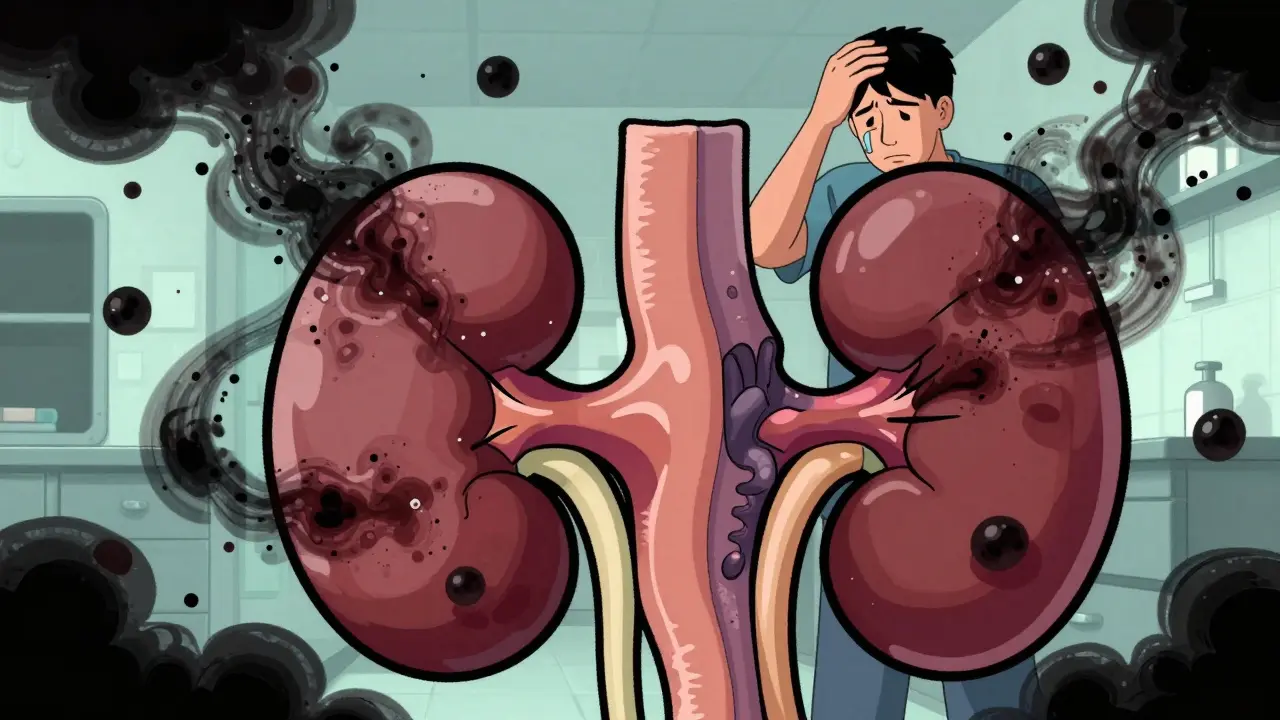
Imagine a patient with severe chronic pain who also has failing kidneys. The doctor prescribes a common painkiller, but within days, the patient becomes confused, trembles, and struggles to breathe. This isn't just a rare side effect; it is a predictable consequence of how opioids behave in Renal Failure a condition where the kidneys lose the ability to filter waste and drugs from the blood effectively. Pain is rampant in this population, yet it remains dangerously undertreated. Why? Because the standard drugs we trust for healthy patients can turn into toxins when the kidneys stop working.
Managing pain in patients with kidney disease is a high-wire act. You need to relieve suffering without causing neurotoxicity or respiratory depression. The kidneys are not just filters; they are the exit route for many drugs and their byproducts. When that exit is blocked, these substances build up to dangerous levels. This guide cuts through the complexity to show you exactly which opioids are safe, how to dose them, and which ones you must avoid at all costs.
The Core Problem: Why Kidneys Matter for Opioids
Most people think of the liver as the primary organ for drug metabolism, and for opioids, it often is. However, the story doesn't end there. Many opioids are metabolized into active or toxic compounds that rely entirely on the kidneys for elimination. In a healthy person, these metabolites are flushed out quickly. In someone with Chronic Kidney Disease (CKD) or End-Stage Renal Disease (ESRD), they accumulate.
This accumulation leads to a specific type of toxicity known as opioid-induced neurotoxicity (OIN). Symptoms include myoclonus (muscle twitching), delirium, seizures, and hyperalgesia (increased sensitivity to pain). The risk isn't just theoretical. Studies show that pain is reported by 42% to 85% of dialysis patients, yet nearly two-thirds of these patients do not receive guideline-concordant therapy. The gap between need and safe treatment is where patients get hurt.
Understanding the pharmacokinetics is your first defense. You need to know the Glomerular Filtration Rate (GFR) of your patient. This number tells you how well the kidneys are filtering. As GFR drops below 50 mL/min, the rules change. Below 15 mL/min, the rules change drastically. We cannot simply give "half a dose" and hope for the best. We need specific agents that bypass the kidneys or have metabolites that are harmless.
The Danger Zone: Opioids to Avoid
Before we talk about what to use, we must be crystal clear about what not to use. Some opioids are contraindicated in renal failure because their metabolites are more potent or toxic than the parent drug. Using these is a recipe for disaster.
- Morphine: Morphine is metabolized into morphine-3-glucuronide (M3G) and morphine-6-glucuronide (M6G). M6G is active and analgesic, but it is renally cleared. In kidney failure, it builds up, causing respiratory depression. M3G is neurotoxic and causes myoclonus and seizures. It is best avoided in moderate-to-severe CKD.
- Codeine: Similar to morphine, codeine converts to morphine and then to toxic glucuronides. It is unpredictable and unsafe in renal impairment.
- Meperidine (Pethidine): This is an absolute no-go. It metabolizes into normeperidine, a neurotoxin that causes severe seizures. Even a single dose can be risky in advanced kidney disease. The KDIGO guidelines explicitly state "DO NOT USE" for this agent.
- Propoxyphene: Withdrawn from many markets, but if available, it is unsafe due to metabolite accumulation and cardiac risks.
The consensus is clear: if a patient has a GFR under 30 mL/min, morphine and codeine are off the table. The risk of neurotoxicity outweighs the benefit. You might see these prescribed in the past, but modern guidelines have moved past them for this population.
The Safe Harbor: Preferred Opioid Choices
So, what do we use instead? We look for drugs that are metabolized by the liver into inactive compounds or drugs that are excreted via bile rather than urine. Lipophilic opioids generally fare better because they don't rely on renal clearance for elimination.
Fentanyl is often the gold standard for CKD patients. It is highly lipophilic and undergoes extensive hepatic metabolism via CYP3A4. Only about 7% is excreted unchanged in the urine. This means it doesn't accumulate in the same way morphine does. Transdermal patches are particularly useful because they provide stable plasma levels, avoiding the peaks and troughs that can trigger toxicity. However, be cautious during hemodialysis sessions, as clearance can become unpredictable.
Buprenorphine is another top-tier choice. It is a partial mu-opioid agonist, which offers a ceiling effect on respiratory depression, making it safer. About 30% is renally cleared, but the extensive hepatic metabolism makes it safe for advanced CKD and dialysis patients without dose reduction. It is often used in sublingual form or patches. Just remember to monitor for QT prolongation, as with many opioids.
Methadone is a complex option. It is metabolized by the liver and has no active renal metabolites, making it pharmacokinetically safe for the kidneys. However, it carries a high risk of QT prolongation (a heart rhythm issue). This requires baseline ECG monitoring and careful dose titration. It is not for the faint of heart but is a viable option for stable chronic pain when managed by an experienced clinician.
Hydromorphone and Oxycodone sit in a gray area. Oxycodone has limited evidence of safety but is often used with caution. Hydromorphone's metabolite (H3G) can accumulate in non-dialyzed stage 5 CKD patients, increasing neurotoxicity risk by 37%. If you must use them, you need to reduce the dose significantly and monitor closely.
Dosing by Kidney Function: The GFR Guide
Knowing which drug to pick is only half the battle. The dose matters just as much. We adjust based on the Creatinine Clearance (CrCl) or GFR. The following table summarizes the consensus recommendations for the safest agents.
| Opioid | GFR > 50 mL/min | GFR 10-50 mL/min | GFR < 10 mL/min (ESRD) |
|---|---|---|---|
| Fentanyl | 100% Standard Dose | 75-100% Standard Dose | 50% Standard Dose |
| Methadone | 100% Standard Dose | 100% Standard Dose | 50-75% Standard Dose |
| Buprenorphine | 100% Standard Dose | 100% Standard Dose | 100% Standard Dose (Monitor) |
| Morphine | 100% Standard Dose | 50-75% Standard Dose | 25% Standard Dose (Avoid) |
Notice the trend: as kidney function declines, the dose drops. For Fentanyl, even in ESRD, you still use half the dose rather than stopping entirely. For Methadone, the dose reduction is less aggressive because the liver does the heavy lifting. For Morphine, the reduction is drastic, reinforcing why we avoid it.
Always start low and go slow. The KDIGO guidelines recommend starting with 50% of the standard dose in advanced renal failure. Titrate up based on response, not just time. Assess pain every 24 to 48 hours. If the patient is on dialysis, timing the dose relative to the dialysis session can matter, especially for water-soluble drugs.
Special Considerations for Hemodialysis
Hemodialysis changes the game. Some drugs are cleared by the dialysis machine, others are not. Fentanyl is lipophilic and is not significantly removed by dialysis, so you generally don't need to give extra doses after a session. However, clearance can be variable during the session itself.
Buprenorphine is also largely unaffected by dialysis. This makes it a reliable choice for patients on a thrice-weekly schedule. You want a drug that provides steady pain control across the 48-hour gap between dialysis treatments. Avoid drugs that are highly protein-bound if you are relying on dialysis to clear them, as dialysis doesn't clear protein-bound substances well.
For gabapentinoids like Gabapentin or Pregabalin, which are often used for neuropathic pain, dialysis removes them significantly. You typically give a loading dose after the dialysis session. For Gabapentin, a common regimen is 300 mg loading dose followed by 200-300 mg after each session. For non-dialysis patients with low CrCl, the dose is much lower, often 200-700 mg once daily. These drugs require strict dose reduction to avoid sedation and confusion.
Managing Side Effects and Monitoring
Opioid-induced constipation (OIC) is a major issue, affecting 40-80% of CKD patients on opioids. In kidney patients, constipation can be dangerous due to electrolyte shifts. Standard laxatives might not work well. The 2023 Cureus review highlights Naldemedine as a preferred option. It is a peripherally-acting mu-opioid receptor antagonist (PAMORA) that does not require dose adjustment in CKD or HD patients. This is a significant advantage over other PAMORAs like naloxegol, which often need adjustment.
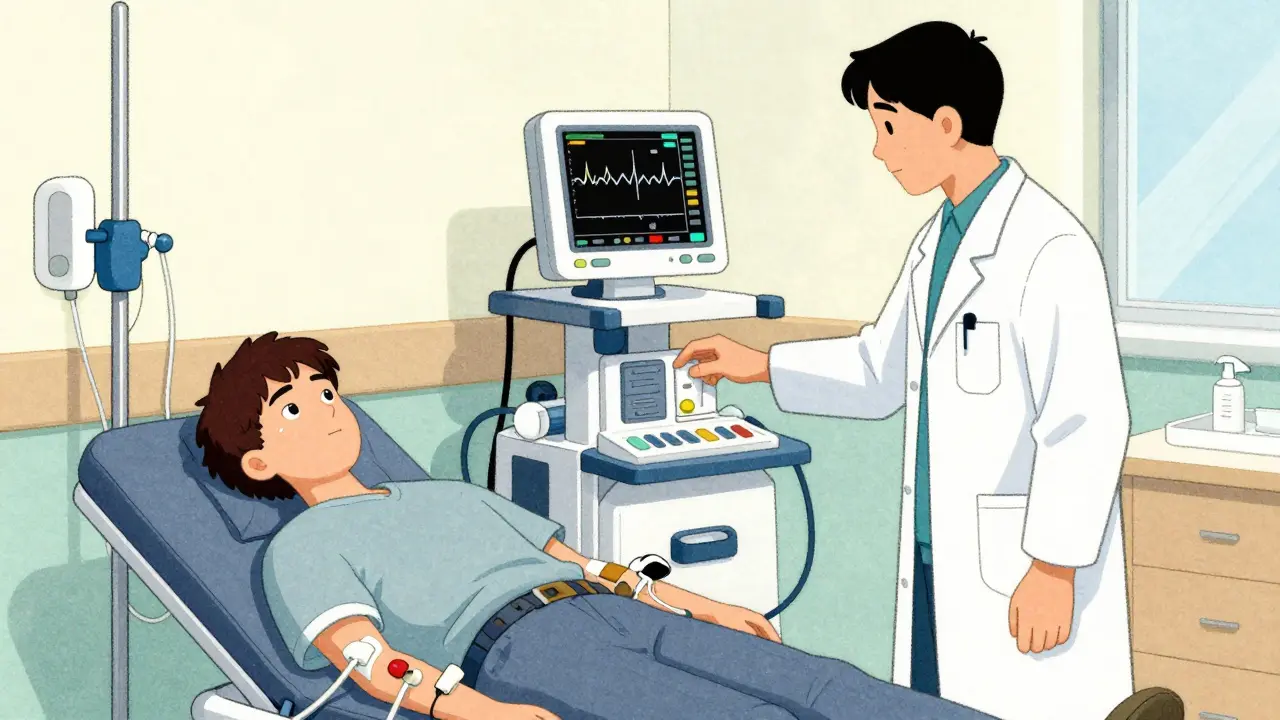
Monitoring is non-negotiable. For Methadone, you must check an ECG to monitor the QT interval. If the QTc exceeds 450-500 ms, you need to adjust or stop. For all opioids, monitor for signs of neurotoxicity: confusion, twitching, or hallucinations. If these appear, it is often a sign of metabolite accumulation, and you may need to rotate to a safer agent like Fentanyl.
Documentation is also part of the safety net. Many package inserts lack renal dosing info. Rely on specialized resources like the KDIGO guidelines or the American Society of Nephrology's Pain Management Toolkit. If you are unsure, consult a nephrologist or a pain specialist familiar with renal pharmacology.
Non-Opioid Alternatives and Multimodal Care
While opioids are necessary for severe pain, they should not be the only tool. Non-opioid options can reduce the opioid burden. Acetaminophen is generally safe, but NSAIDs (like ibuprofen or naproxen) are dangerous in CKD as they can worsen kidney function and cause fluid retention. Avoid them.
Tricyclic antidepressants like Nortriptyline can help with neuropathic pain but require caution. They carry a risk of arrhythmias, especially with fluctuating electrolytes common in kidney disease. Keep serum levels low and monitor cardiac status. The goal is multimodal analgesia: combining a safe opioid with non-opioid adjuncts to maximize pain relief with the lowest possible dose of each.
Remember, long-term opioid use (>90 days) in CKD patients is associated with faster progression to ESRD in some studies. This underscores the need to treat the pain effectively but also to plan for tapering or transitioning to non-opioid strategies whenever possible.
Can I use Morphine for a patient with Stage 4 CKD?
It is generally not recommended. Morphine metabolites accumulate in Stage 4 CKD (GFR < 30 mL/min), leading to neurotoxicity like myoclonus and confusion. Fentanyl or Buprenorphine are safer alternatives.
Does Fentanyl require dose adjustment during dialysis?
Fentanyl is not significantly removed by hemodialysis. You typically do not need to give extra doses after dialysis, but clearance can be variable during the session. Monitor the patient closely.
Is Methadone safe for kidney patients?
Yes, Methadone is pharmacokinetically safe as it is metabolized by the liver. However, it requires ECG monitoring due to the risk of QT prolongation and should be managed by an experienced clinician.
What is the best treatment for opioid-induced constipation in CKD?
Naldemedine is a preferred option because it does not require dose adjustment in CKD or hemodialysis patients, unlike other PAMORAs. Standard laxatives should also be used as part of a bowel regimen.
Should I avoid NSAIDs in renal failure patients?
Yes, NSAIDs should generally be avoided in CKD patients as they can reduce kidney blood flow, worsen kidney function, and cause fluid retention. Acetaminophen is a safer alternative for mild pain.





13 Comments
This guide is absolutely essential for anyone working in nephrology! We really need to pay attention to the details here! The kidneys are so important for clearing drugs! It is scary how often mistakes happen! Pain management is a huge challenge! We must prioritize patient safety above all else! Fentanyl is a great option for many cases! Morphine is definitely risky for this group! The table provided is very helpful for quick reference! We should print this out for our teams! Patients suffer too much when we get it wrong! Guidelines exist to protect everyone involved! We need to stay updated on the latest research! Thank you for compiling all this information! It makes my job so much easier! Keep sharing these vital resources!
While the text suggests fentanyl is safe, one must consider the lipophilic accumulation in adipose tissue over time.
Yeah but fent can still build up if you dont watch the dose right.
Correct!!! The metabolites are the key issue!!! We must monitor GFR closely!!! Safety is paramount!!!
This is trash advice for real patients.
Doctors need to stop killing people with bad meds.
That is a strong statement but I agree we need better care.
My uncle died from this!!! It was a nightmare!!! I cant believe they gave him morphine!!!
The intersection of biology and ethics is profound here.
Ethics dont matter if the patient is in pain.
This table is incredibly useful for clinical reference.
Pain is the shadow of the soul.
We need practical solutions not poetry.