
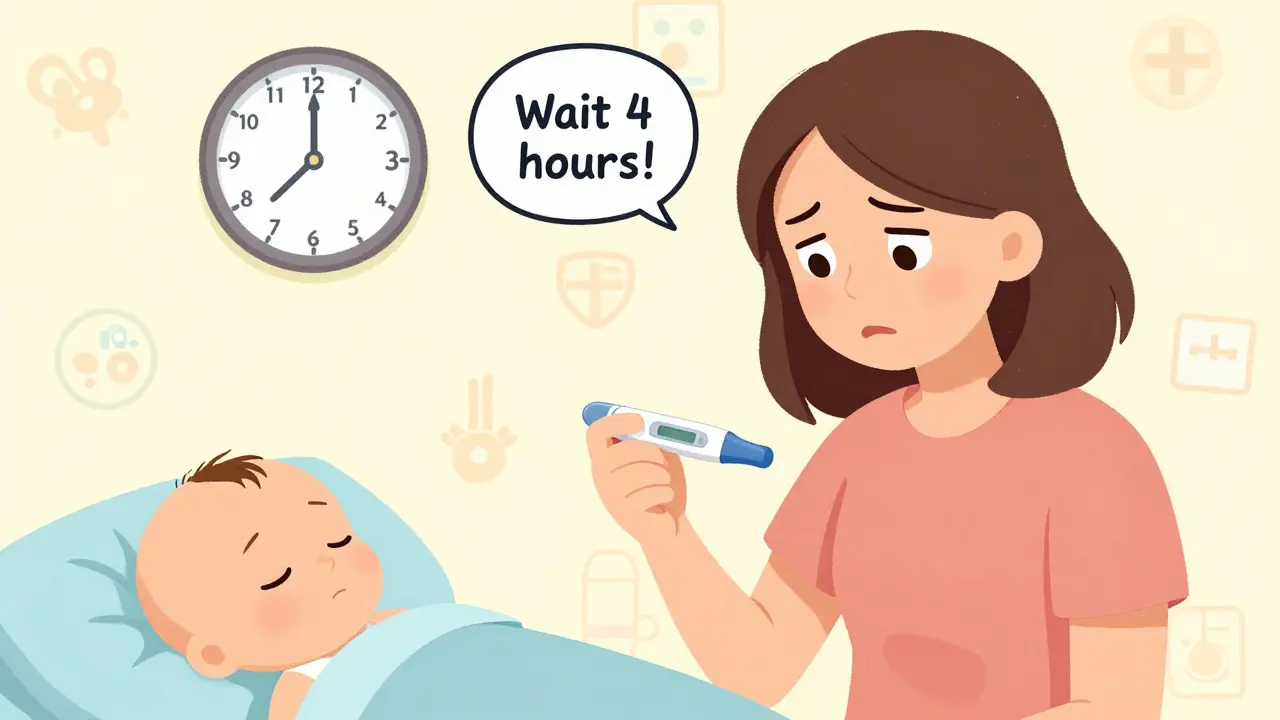

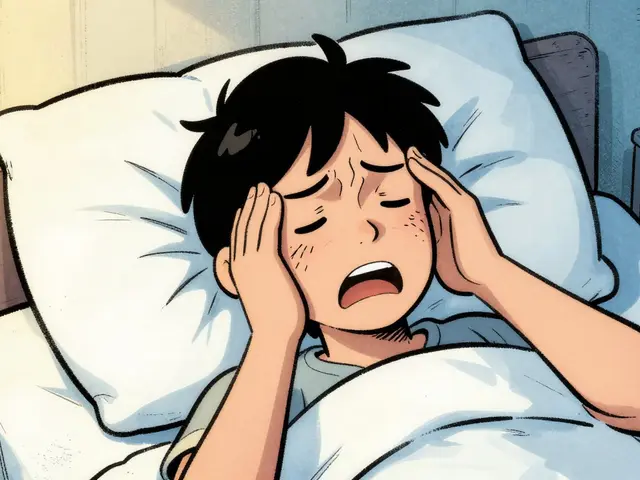
It’s common for parents to panic when their child develops a fever after a vaccine. The first thought? Give them something to bring the temperature down. But here’s the thing: giving fever reducers too early might actually make the vaccine less effective. This isn’t just a myth-it’s backed by years of research from the CDC, Children’s Hospital of Philadelphia, and major pediatric institutions.
Why Timing Matters More Than You Think
Back in the early 2000s, many doctors recommended giving acetaminophen (Tylenol) right before or right after vaccines to keep kids comfortable. It seemed logical: reduce fever, reduce fussiness, everyone wins. But studies published in 2009 and later revealed something unexpected: kids who got fever reducers before or immediately after vaccines developed lower antibody levels. That means their bodies didn’t build as strong of a defense against the diseases the vaccines are meant to prevent.
The research is clear: giving fever reducers before vaccination can reduce immune response by up to 40% for some vaccine components. This isn’t about making kids uncomfortable-it’s about making sure the vaccine works as well as possible. Even if your child doesn’t seem sick, their body is already working hard to build immunity. Fever is a sign their immune system is doing its job.
Which Vaccines Are Most Likely to Cause Fever?
Not all vaccines cause fever the same way. Some are more likely to trigger a rise in temperature than others. Here’s what the data shows:
- Prevnar 13 (pneumococcal vaccine): Fever in 24-35 out of every 100 babies
- Pediarix (DTaP-IPV-HepB combo): Fever in 28-39 out of every 100 babies
- MenB (meningococcal B vaccine): Up to 50% of infants develop fever-this is why the NHS recommends routine fever reducers after this one
Most fevers start within 12 hours after the shot and last 1-2 days. Temperatures above 102°F (39°C) are when most pediatricians suggest considering medication. Between 100°F and 102°F, your child’s body is likely handling things just fine. Fever in this range doesn’t need to be treated-and treating it might slow down their immune response.
The 4-Hour Rule: When It’s Safe to Give Medicine
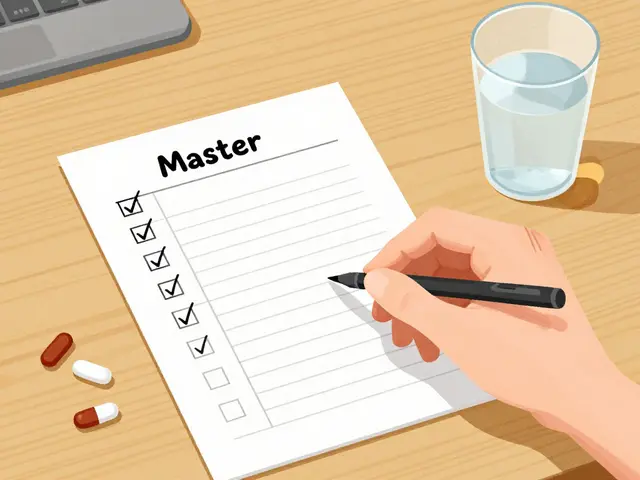
Here’s the key takeaway: Wait at least 4 hours after vaccination before giving any fever reducer. Multiple studies confirm that giving acetaminophen or ibuprofen more than 4 hours after the shot doesn’t interfere with antibody production. That’s the window where you can safely step in if your child is truly uncomfortable or has a high fever.
One Polish study compared two groups: one that got fever reducers right after the vaccine, and another that waited 6-8 hours. The group that waited had the same antibody levels as kids who got no medicine at all. The group that got medicine right away? Their immune response dropped significantly.
So if your baby cries, seems fussy, or feels warm-wait. Give them a cool cloth, offer fluids, and keep them lightly dressed. If after 4 hours they’re still running a fever above 102°F or are clearly in distress, then it’s time to reach for the medicine.
What About the MenB Vaccine? The Exception
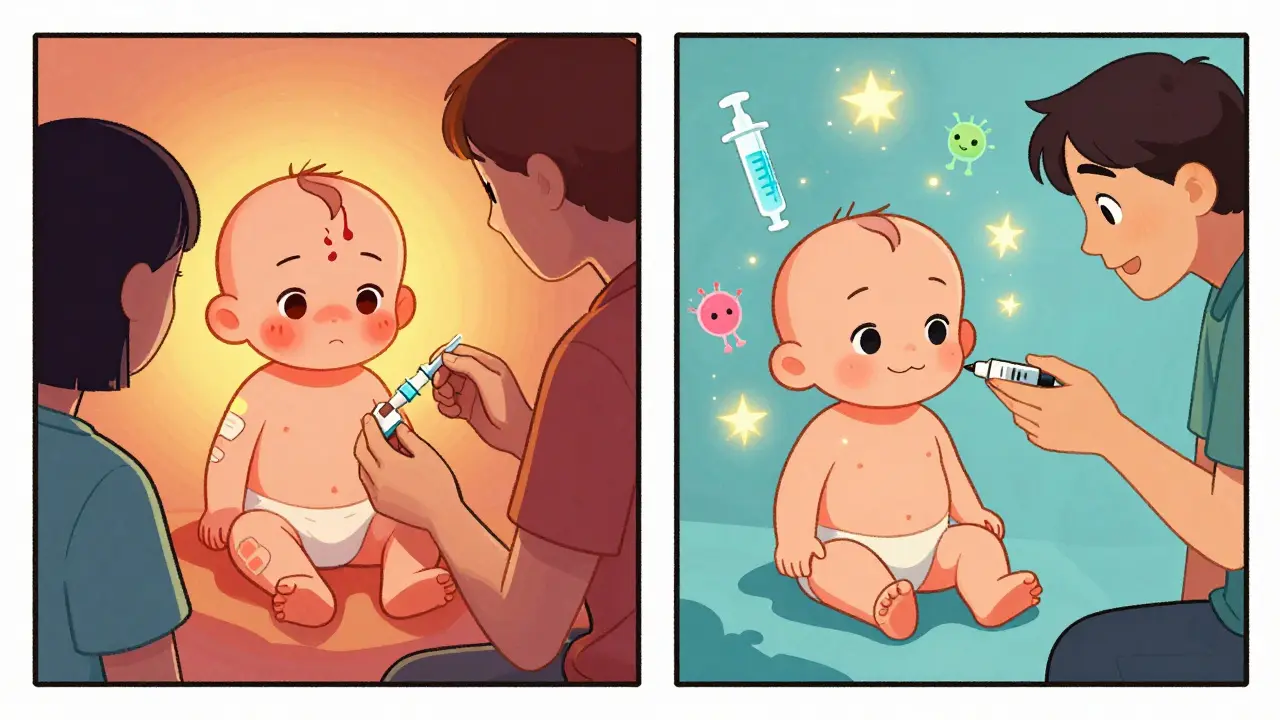
There’s one big exception to the “don’t give medicine early” rule: the MenB vaccine. In the UK, the National Health Service (NHS) recommends giving liquid paracetamol (acetaminophen) after the 8-week and 16-week MenB shots-not before, but right after. Why? Because this vaccine has a much higher chance of causing high fevers (over 102°F) and even febrile seizures in young infants.
The NHS weighed the risk of reduced immunity against the risk of dangerous fever and decided the benefit of preventing high fever outweighs the small drop in antibody response. This is a specific, evidence-based exception-not a general rule. Don’t assume this applies to other vaccines. Stick to the 4-hour rule for everything else.
Medication Dosing: What’s Safe and What’s Not
If you do need to give medicine, here’s how to do it safely:
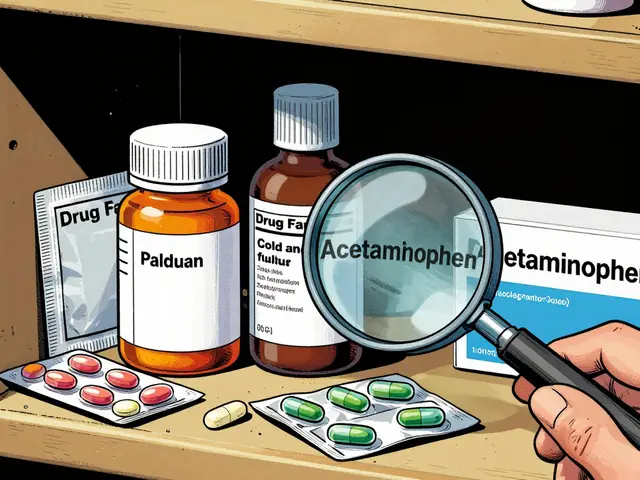
- Acetaminophen (Tylenol): Every 4-6 hours as needed. No more than 4 doses in 24 hours.
- Ibuprofen (Advil, Motrin): Every 6-8 hours as needed. No more than 4 doses in 24 hours.
Important age limits:
- Do not give acetaminophen to babies under 12 weeks old without talking to your doctor first.
- Do not give ibuprofen to babies under 6 months old unless directed by a pediatrician.
Weight-based dosing matters. For a baby weighing 18-23 lbs (8-10 kg), that’s typically 1.25 mL of infant acetaminophen or 2.5 mL of infant ibuprofen. Always check the label or ask your provider. Never guess.
And never, ever give aspirin to anyone under 20. It’s linked to Reye’s syndrome-a rare but life-threatening condition.
What to Do Instead of Medication
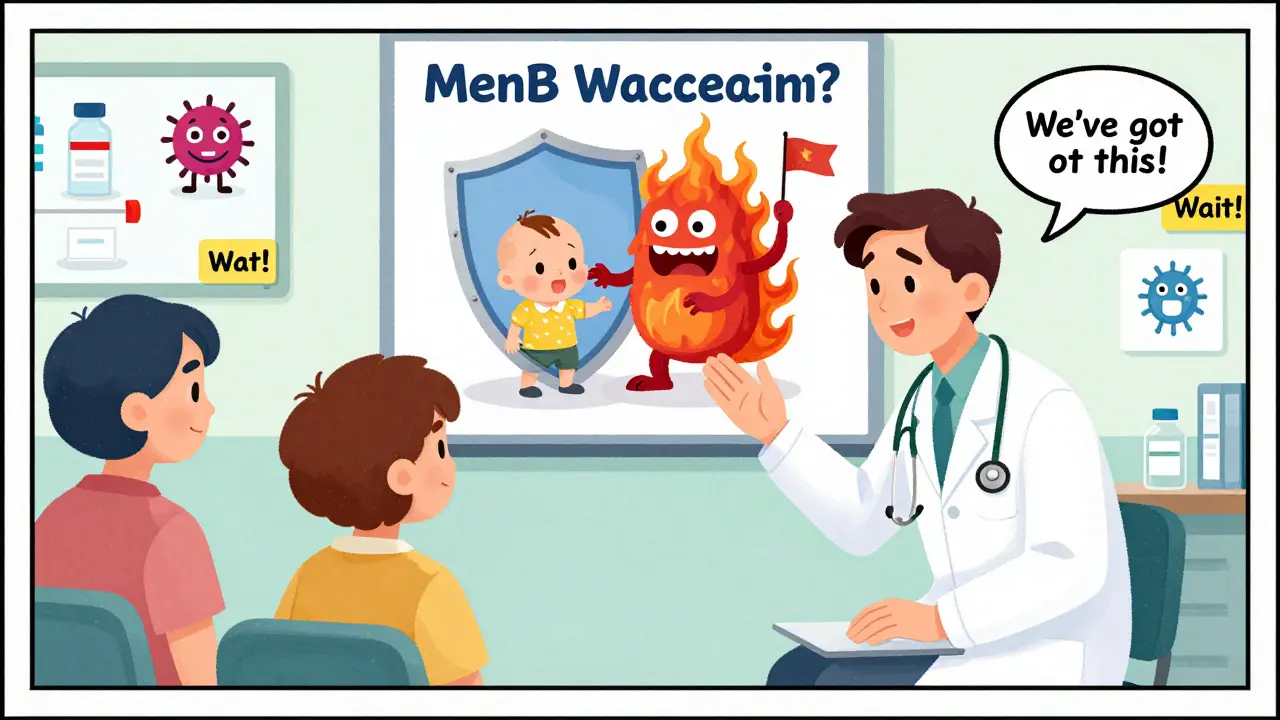
Before you reach for the medicine bottle, try these non-drug methods:
- Offer extra breast milk, formula, or water-hydration helps regulate temperature.
- Dress your child in one light layer. Over-bundling traps heat and makes fever worse.
- Use a lukewarm sponge bath if they’re very hot. Never use cold water or alcohol.
- Let them rest. Fever is exhausting. Don’t force play or activity.
- Monitor their behavior. If they’re alert, drinking, and responsive, they’re probably okay.
Remember: a fever isn’t the enemy. It’s a sign your child’s body is fighting something-and in this case, it’s fighting to build immunity.
When to Call the Doctor
You don’t need to panic at every slight rise in temperature. But here’s when to call your pediatrician:
- Your baby is under 12 weeks old and has a fever of 100.4°F or higher
- The fever lasts more than 48 hours
- Your child won’t drink, is unusually sleepy, or won’t wake up
- They have a rash, stiff neck, or trouble breathing
- They’ve had a seizure (febrile convulsion) after the vaccine
Most of the time, a low-grade fever after a vaccine is normal and harmless. But in infants under 3 months, any fever is a red flag-always check with your provider.
The Bottom Line
You want your child to be safe, comfortable, and protected. The best way to do that isn’t by reaching for medicine right away-it’s by waiting. Let the vaccine do its job. Let the fever happen if it does. Use fever reducers only when necessary, and only after the 4-hour window has passed.
That small delay doesn’t mean your child will suffer. It means they’ll build a stronger defense against diseases like whooping cough, pneumonia, meningitis, and more. That’s worth the extra hour or two of fussiness.
Follow the 4-hour rule. Know which vaccines are more likely to cause fever. Use medicine only when needed. And remember: your child’s immune system is stronger than you think.
Can I give my baby Tylenol before their vaccines?
No. Giving acetaminophen or ibuprofen before vaccination can reduce how well the vaccine works. Studies show lower antibody levels in children who received fever reducers before shots. Wait at least 4 hours after the vaccine before giving any medication.
Is it okay to give fever medicine after the vaccine?
Yes, but wait at least 4 hours after the shot. If your child has a fever above 102°F (39°C), seems very uncomfortable, or won’t drink fluids, it’s safe to give acetaminophen or ibuprofen. This timing avoids interfering with their immune response.
Why does the NHS recommend fever medicine after the MenB vaccine?
The MenB vaccine has a much higher chance of causing high fevers (over 102°F) and febrile seizures in infants. The NHS decided the benefit of preventing dangerous fever outweighs the small risk of reduced immunity. This is a specific exception for MenB only-not a general rule for all vaccines.
What temperature should I treat in my child after a vaccine?
Don’t treat low-grade fevers (100-102°F). These are normal and help the immune system. Only use fever reducers if the temperature is above 102°F (39°C) or if your child is clearly uncomfortable, irritable, or not drinking. Always check with your pediatrician if you’re unsure.
Can my child get vaccines if they already have a fever?
Yes. A mild fever (under 101°F) or a cold doesn’t stop vaccines from working. The CDC says children can still be vaccinated with minor illnesses. Only delay vaccines if your child has a moderate to severe illness, like a high fever, vomiting, or trouble breathing.
How long does vaccine fever usually last?
Most vaccine-related fevers last 1-2 days. They usually start within 12 hours of the shot and go away on their own. If the fever lasts longer than 48 hours or gets worse, contact your pediatrician.

9 Comments
So let me get this straight... we're supposed to let our babies scream like they're being individually targeted by the government's secret vaccine agenda just so their immune systems can do a TikTok dance? 😅 I'll pass on the drama and wait 4 hours. My kid's comfort > your academic footnotes.
This is precisely the kind of science-backed, compassionate guidance our parenting community needs! 🌟 Letting the body respond naturally isn't cruelty-it's trust. Trust in biology. Trust in medicine. Trust in ourselves as caregivers. The 4-hour rule is not a suggestion; it's a gift. A gift of stronger immunity, fewer future illnesses, and the quiet pride of knowing you did right by your child. Keep sharing this wisdom!
I read this and I'm like... why are we even having this conversation? My cousin's neighbor's dog got vaccinated and lived. My kid got Tylenol right after and still got into Harvard. Science is just a trend. I'm going with what works: Mom instinct. And mine says: if they're hot, cool them down. End of story.
I just sat here sobbing because I gave my 3-month-old Tylenol 30 minutes after her shots. I thought I was helping. Now I feel like I betrayed her immune system. I didn't know. I didn't know. I'm so guilty. I don't know how to forgive myself. I just wanted her to stop crying. Why didn't anyone tell me this before?
Let me tell you something, family-your baby’s fever isn’t your enemy. It’s your baby’s body doing the heavy lifting, putting in overtime, building shields you can’t even see. That’s power. That’s love in action. Don’t rush to silence it. Sit with it. Hold them. Sing to them. Offer water. Be still. You’re not failing-you’re parenting. And that’s enough. You’ve got this. 💪❤️
you know what i think this is all just a big pharma ploy to sell more tylenol later right like they want you to wait so you panic and buy more stuff and then they get rich also why is the nhs the only one saying give it after menb maybe they got bribed idk i just think we should all question everything
so like... if the vaccine works better without tylenol... then why do hospitals give it to babies right after? like... is everyone lying? or is this just another one of those things where science changes its mind every tuesday? i'm just saying...
Thank you for this clear, detailed, and deeply necessary post. I’ve seen too many parents panic and reach for acetaminophen at the first sign of warmth. The research is solid: timing matters. The 4-hour window is your ally. Hydration, light clothing, calm presence-these are your first-line tools. And when you do medicate? Use weight-based dosing. Never guess. Always check the label. Your child’s immune system is counting on you to be informed, not frantic. You’re doing better than you think.
Wait 4 hours? That’s it? No studies from the 90s? No FDA warnings? Just some 2009 papers? I’m not buying it.