
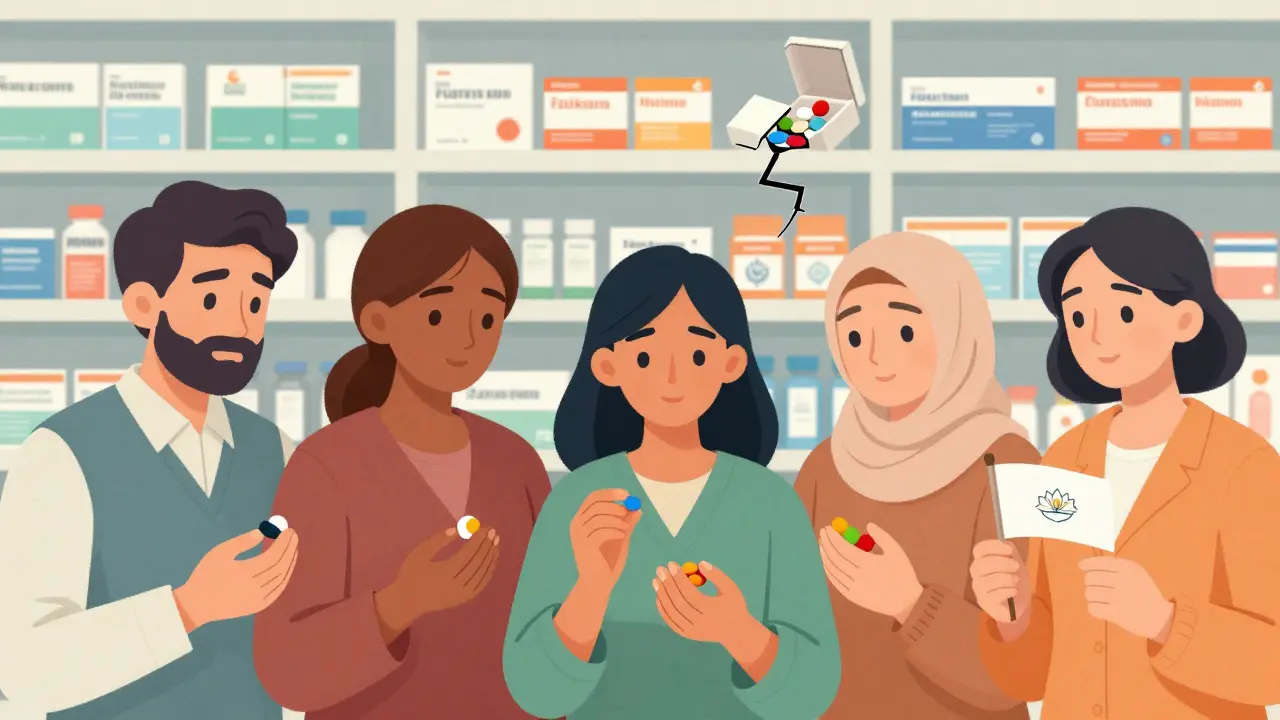

When you pick up a prescription, you might not think twice about the color, shape, or size of the pill. But for many people around the world, those details matter deeply. A green capsule might mean something sacred to one person and something unclean to another. A pill that looks nothing like the brand-name version they’ve used for years might feel like a scam. And if that pill contains gelatin made from pork? For some, it’s not just a concern-it’s a dealbreaker.
Generics make up 70% of all medicines sold in Europe by volume, and nearly the same in the U.S. They’re cheaper, widely available, and just as effective as brand-name drugs-when they work. But for millions of patients from culturally diverse backgrounds, effectiveness doesn’t start with the active ingredient. It starts with trust. And trust is shaped by culture.
Why Generic Pills Don’t Look the Same
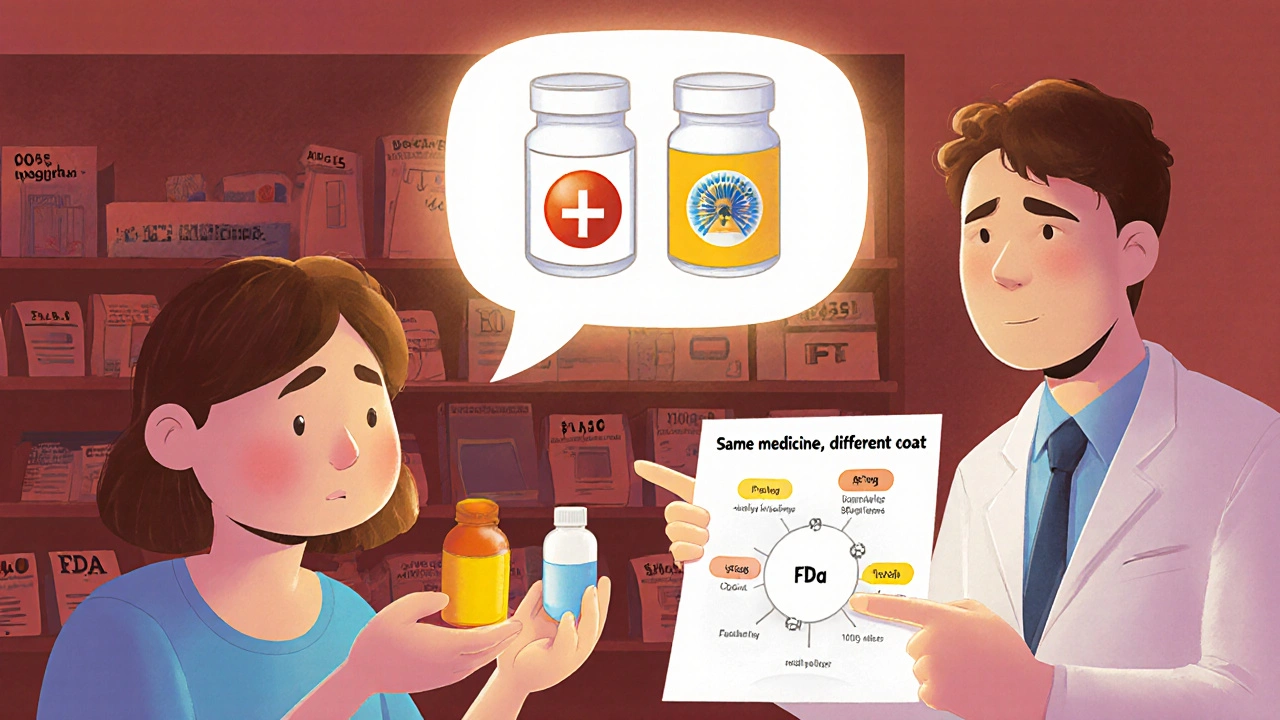
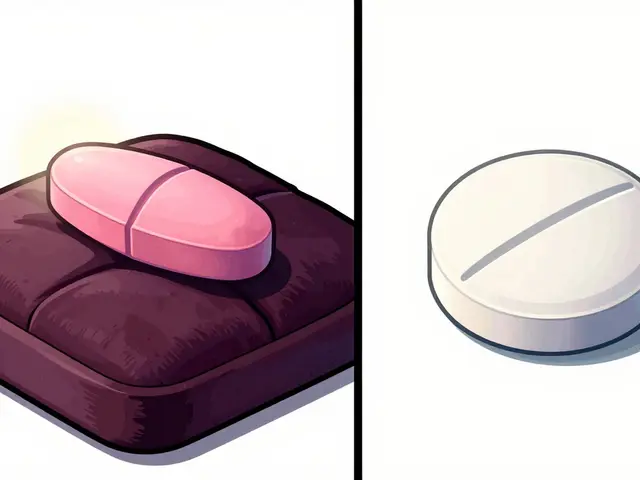
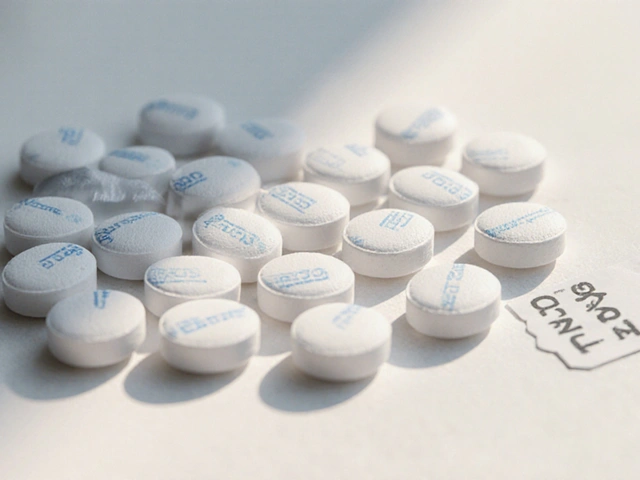
Generic drugs must contain the same active ingredient as the brand-name version. But they don’t have to match the look. That’s legal. And it’s why a blue, oval pill from Pfizer might become a white, round tablet from Teva. To manufacturers, it’s just chemistry. To patients, it’s a mystery.
Studies show that African American and Hispanic patients are more likely than non-Hispanic White patients to believe generics are less effective. In one FDA survey, 28% of African American patients expressed doubt about generics. Why? Because their experience with the healthcare system, combined with cultural beliefs about appearance and power, leads them to equate looks with quality. A pill that’s smaller, differently colored, or oddly shaped doesn’t feel like the real thing. It feels like a substitute. And in communities with a history of medical neglect, that feeling can be dangerous.
What’s Inside the Pill Matters More Than You Think
The active ingredient is what treats the illness. But the rest? The fillers, coatings, dyes, and capsules? Those are called excipients. And they’re where culture crashes into chemistry.
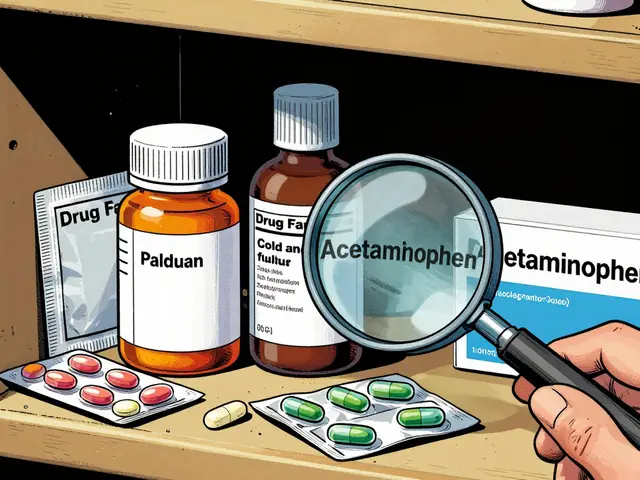
For Muslims, gelatin made from pork is forbidden. For Jews, it must be kosher-certified. For some Hindu communities, bovine gelatin is unacceptable. And while brand-name drugs often list these ingredients, generics rarely do. A 2023 FDA review found only 37% of generic medication inserts in the U.S. provide full excipient details. In the EU, it’s 68%. That gap leaves pharmacists scrambling.
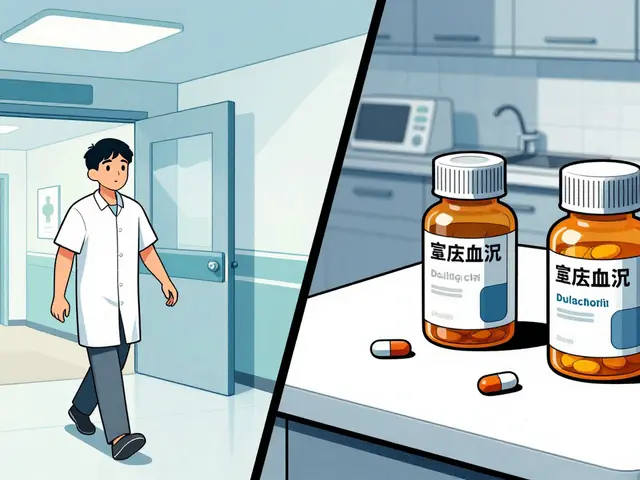
One pharmacist in Melbourne told a story: a Muslim patient needed a blood pressure medication, but every generic version had pork gelatin capsules. He spent two hours calling manufacturers, checking databases, and finally found a liquid formulation that worked. That’s not normal. It shouldn’t be that hard.
Cultural Beliefs About Medicine Shape Behavior
Color matters. In some Asian cultures, white pills are associated with mourning. In parts of Latin America, red pills are seen as strong and effective. In West Africa, large pills are trusted more than small ones. These aren’t superstitions-they’re deeply held beliefs shaped by generations of experience.
When a patient sees a tiny, white generic tablet where they expected a large, blue one, they may stop taking it. They think it’s weaker. Or fake. Or meant for someone else. This isn’t ignorance. It’s logic based on lived experience.
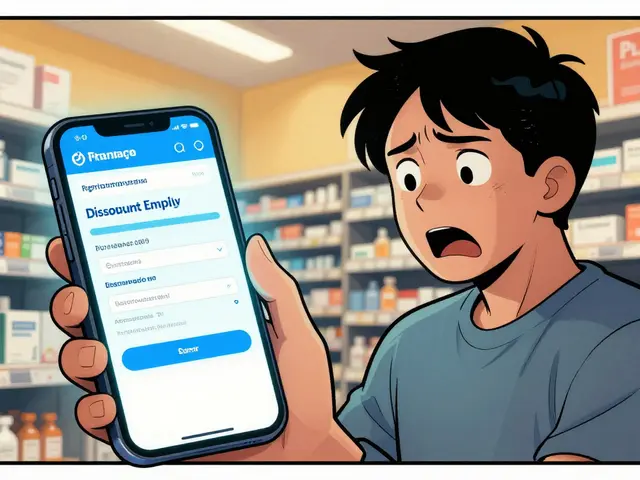
Language adds another layer. Instructions printed only in English won’t help a Spanish-speaking grandmother. A visual guide showing how to swallow a pill might be more useful than a 10-page leaflet. And if the pharmacy staff doesn’t speak the patient’s language, or doesn’t know how to ask about religious needs, the patient walks away with a prescription they won’t fill.

What Pharmacies Are Doing Right
Some pharmacies are changing. In Sydney, a chain started training staff to ask: “Does the way this medicine looks or what’s inside it matter to you?” Simple. Direct. No jargon.
They built a database of generics that are halal, kosher, vegetarian, or dye-free. They trained pharmacists to recognize when a patient hesitates-not because they’re confused, but because something feels off. Now, when a patient asks, “Is this the same?” the answer isn’t just, “Yes, same active ingredient.” It’s, “It’s the same medicine, but the capsule is made from plant-based material instead of pork. Would you like me to check if we have another option?”
One pharmacy in Perth now offers printed guides in 12 languages, with pictures of pills and explanations of what’s inside. They even include symbols: a green checkmark for halal, a menorah for kosher. Patients don’t need to explain their beliefs. The information is right there.
The Bigger Picture: Why This Isn’t Just About Pills
This isn’t just about making patients feel comfortable. It’s about health outcomes. When people stop taking their meds because of cultural mismatch, their blood pressure spikes. Their diabetes worsens. They end up in the hospital. And the cost? Billions. One study estimated that culturally mismatched generic prescriptions cost the U.S. healthcare system $12.4 billion a year in avoidable complications.
It’s also about equity. People from minority backgrounds already face barriers: less access to doctors, lower trust in the system, language gaps. Generic drugs were meant to fix that. But if the system ignores culture, it ends up widening the gap.
The 2022 Food and Drug Omnibus Reform Act (FDORA) pushed for better inclusion in clinical trials and more attention to social determinants of health. But laws don’t change practice overnight. Real change happens in the pharmacy, when a pharmacist takes five extra minutes to listen.
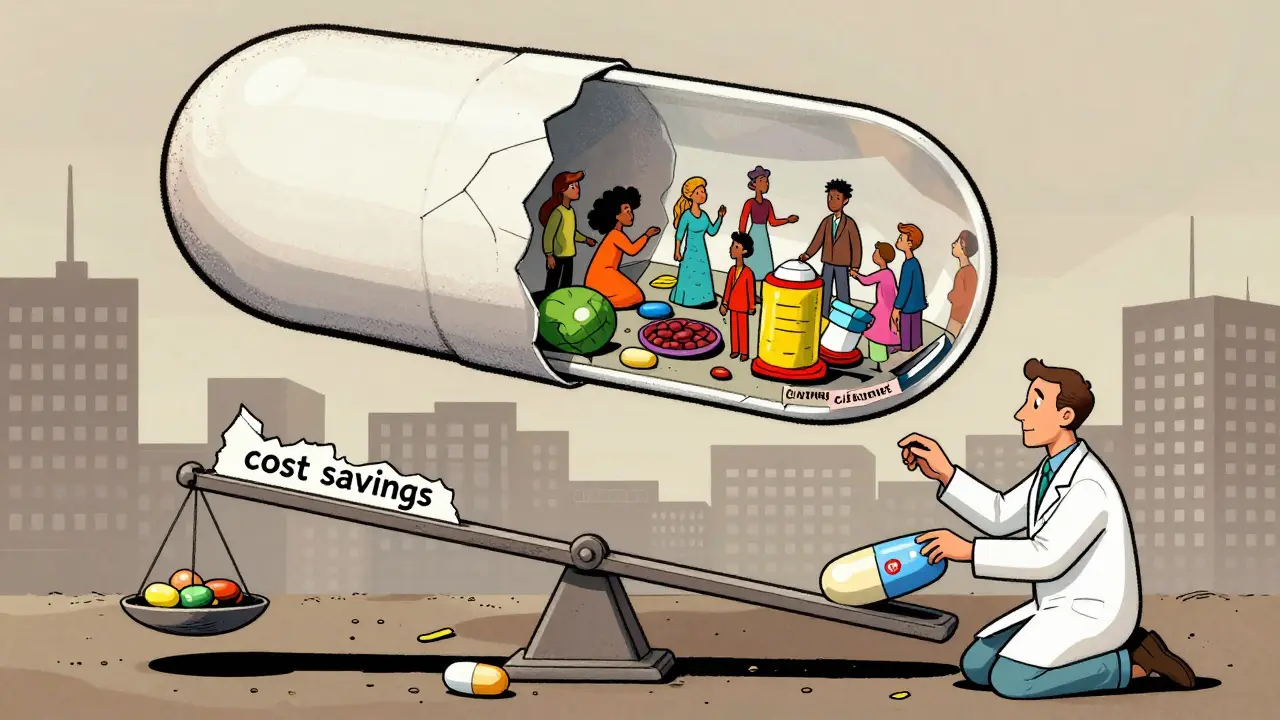
What Needs to Change
Manufacturers need to label excipients clearly. Every generic bottle should say: “Contains: gelatin (pork), soy, lactose, titanium dioxide.” Not just in English. In the languages of the communities that use it.
Regulators need to require this. The EU already does. The U.S. should too.
Pharmacies need training. Not a one-hour webinar. Eight to twelve hours of real education-on religious dietary laws, color symbolism, communication styles, and how to ask the right questions without making patients feel judged.
And patients need to be asked. Not assumed. Not guessed. Asked. “Is there anything about how this medicine looks or what’s in it that makes you uncomfortable?” That one question can prevent a life-threatening mistake.
What You Can Do
If you’re a patient: Don’t be afraid to ask. Say, “I’m Muslim/Jewish/Hindu/and I can’t take something with pork gelatin.” Say, “This pill looks different. Is it the same?” Say, “I don’t understand the instructions.” You have the right to know what you’re taking.
If you’re a caregiver or family member: Help them ask. Translate. Go with them to the pharmacy. Speak up if you see confusion.
If you’re a healthcare worker: Learn. Ask. Listen. Don’t assume everyone thinks like you. Your job isn’t just to dispense pills. It’s to make sure they’re taken.
Generics are a gift. They make life-saving medicine affordable. But if we ignore culture, we risk turning that gift into a gamble. And no one should have to gamble with their health.

11 Comments
Oh please, this is just woke pharmaceutical propaganda. Pills don’t care about your cultural sensitivities-they care about bioavailability. If you can’t swallow a white tablet because it’s not blue like your grandma’s version, that’s not a systemic failure, that’s irrational fear mongering. We’re not designing medicine for Pinterest boards, we’re saving lives. Stop treating patients like fragile porcelain dolls.
Wow. This is one of those posts that makes me cry happy tears 😭. Finally, someone’s talking about the real human side of healthcare. I work in a pharmacy in Toronto and we started asking patients about their beliefs last year-turns out, so many people were too scared to speak up. Now we have a little card with symbols: halal, kosher, veggie, no-dye. One woman hugged me because she finally felt seen. This isn’t ‘woke’-it’s basic human dignity.
Great breakdown. This is exactly why we need standardized labeling across all generics. No more guessing games. If you’re gonna put a pill in someone’s hand, you owe them full transparency. Simple. No fluff. Just facts. The system’s broken, but it’s fixable if we stop pretending culture doesn’t matter.
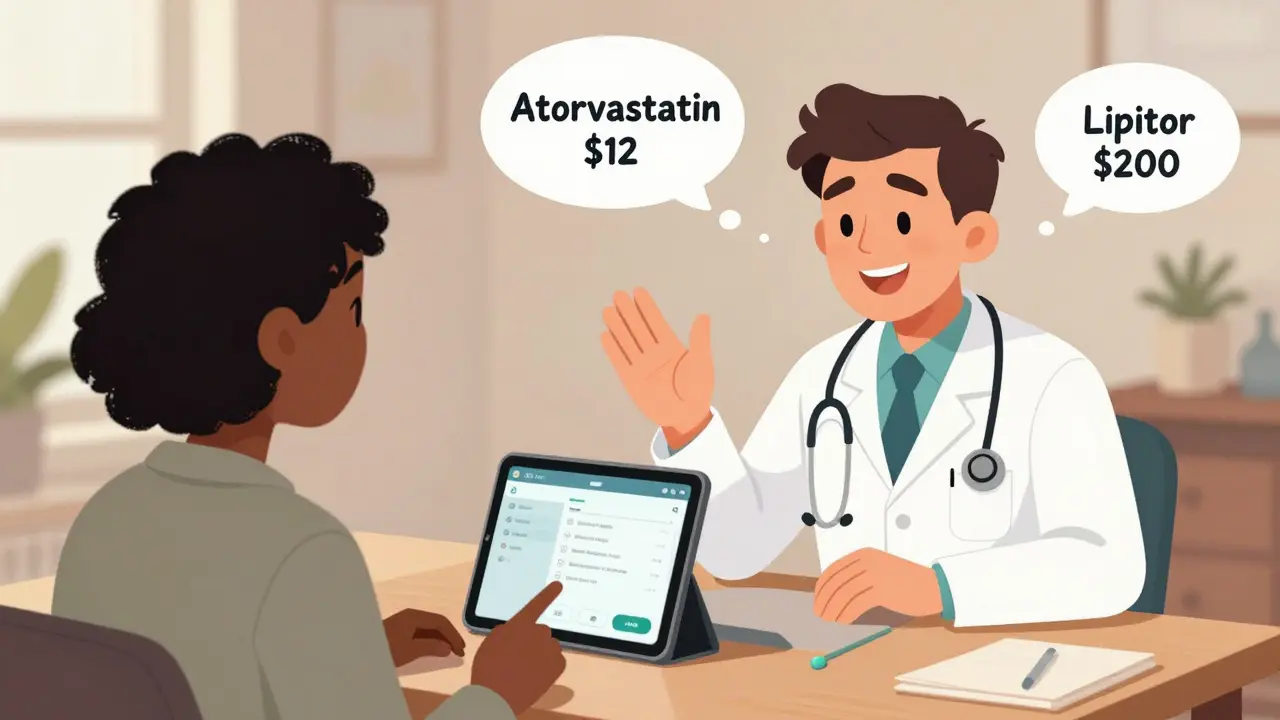
Let’s deconstruct this epistemologically: the ontological crisis of pharmaceutical identity arises not from the molecule itself, but from the semiotic dissonance between the pharmakon and the patient’s phenomenological schema. The pill is a signifier stripped of its mythic aura-replaced by cold, bureaucratic equivalence. When a patient rejects a generic, they’re not rejecting chemistry-they’re rejecting the erasure of their cultural narrative by a technocratic hegemony. The real drug isn’t atorvastatin-it’s trust. And trust, my friends, is the last unpatented medicine.
bro i had this happen to me last month 😭 my blood pressure med went from big blue to tiny white and i thought i got scammed. called my doc, cried, asked if it was the same… turns out it was. but i still felt weird. like my body knew something was off. maybe it’s not dumb to feel this way??
this is why america is crumbling nobody cares anymore everyone just wants to be offended and get paid for it you think a pill should come with a cultural sensitivity manual now next thing you know we'll have gluten free insulin and vegan epinephrine
I love how this post doesn’t just point out the problem-it shows solutions. That pharmacy in Perth with the picture guides and symbols? That’s genius. Simple, visual, respectful. Why isn’t this standard everywhere? We have the tech, the language tools, the empathy. We just need to choose to use it. This isn’t extra work-it’s better care.
As an Indian pharmacist in Chicago, I’ve seen this daily. A patient refuses a capsule because it has gelatin. I check the database. It’s pork. I say, ‘Let me find you another.’ Sometimes it takes hours. But I do it. Because their health isn’t a compromise. This isn’t about politics-it’s about being human.
Real talk: the FDA’s excipient disclosure rules are a joke. In the EU, they require full labeling in 24 languages. In the US? Good luck finding a generic bottle that says ‘contains gelatin’-let alone if it’s pork. We need mandatory, multilingual labeling. Period. It’s not hard. It’s not expensive. It’s just… not prioritized. And that’s a choice.
I get why people are frustrated-but let’s not villainize manufacturers. They’re trying to cut costs, not hurt feelings. But you’re right-patients deserve better. I’ve had people cry because they thought their meds were fake. It breaks my heart. A little empathy goes further than a hundred pages of legal disclaimers.
So now we’re regulating pill aesthetics? Next they’ll ban red pills in countries that associate them with communism. This is the slippery slope of cultural relativism gone wild. Medicine is science. Not a cultural art exhibit. If you can’t adapt to a different-looking pill, maybe you shouldn’t be on meds at all.