
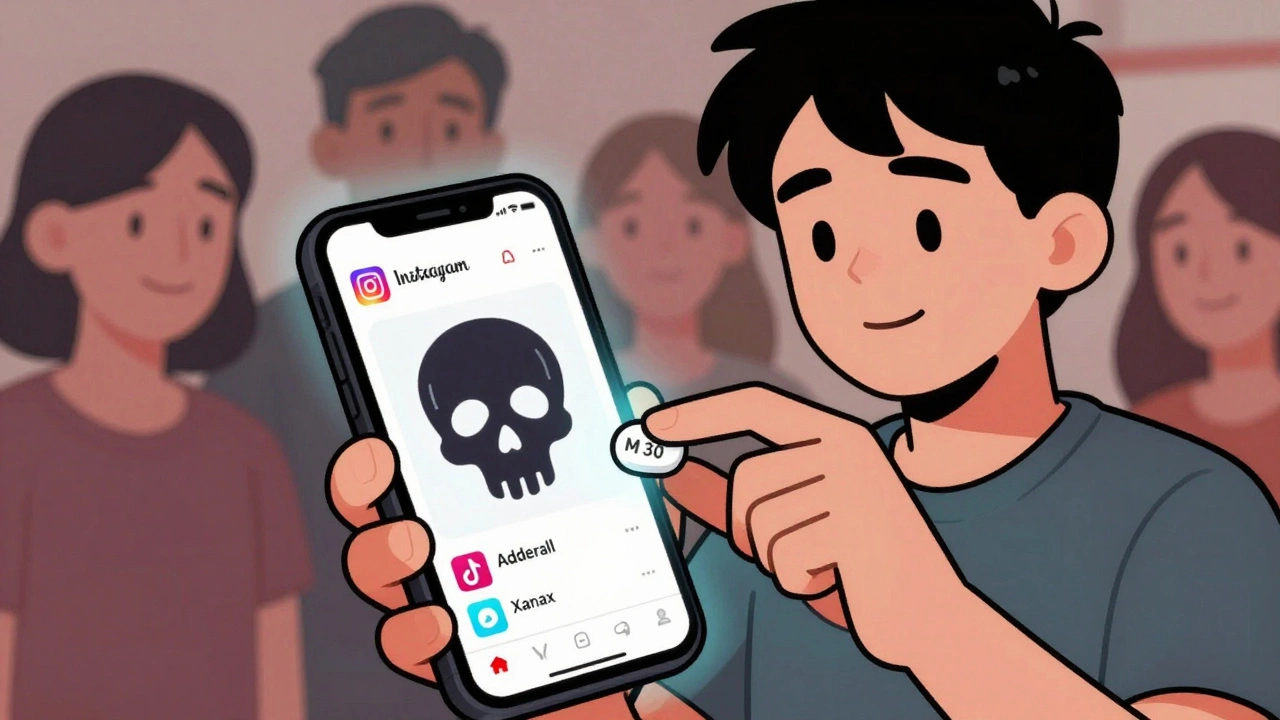
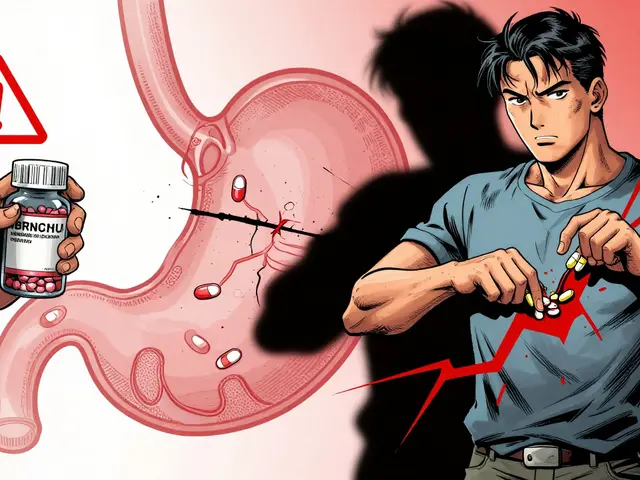
Every year, more than 105,000 people in the U.S. die from drug overdoses. A growing number of those deaths aren’t from heroin or cocaine-they’re from pills that look just like the ones you’d get from a pharmacy. But they’re not. These are counterfeit pills, made in secret labs and sold on social media as oxycodone, Adderall, or Xanax. Many contain lethal amounts of fentanyl-sometimes just two milligrams, which is less than a grain of salt. And you can’t tell by looking.
What counterfeit pills really are
Counterfeit pills are fake versions of prescription drugs. They’re pressed to look exactly like real oxycodone (OxyContin), alprazolam (Xanax), or Adderall. They have the same color, shape, markings, and even logos. But inside? They often contain fentanyl, methamphetamine, or unregulated benzodiazepines like bromazolam or etizolam. These aren’t just weaker versions-they’re deadlier.
The DEA found that 26% of counterfeit pills tested between 2020 and 2021 contained a lethal dose of fentanyl. That means one in four pills sold as prescription opioids could kill you on the first try. And it’s not just adults. These pills are being pushed on Instagram, Snapchat, and TikTok to teens and young adults who think they’re buying legitimate medication. A kid looking for help with anxiety might buy a fake Xanax. A student studying for finals might think they’re getting Adderall. Both could be holding a death sentence.
Why you can’t trust how they look
Many people think they can spot a fake pill by checking the imprint, color, or size. But counterfeiters have gotten extremely good at copying. A pill labeled "M 30" (a common fake oxycodone) might look identical to the real thing. Even medical professionals can’t tell the difference without lab testing.
The FDA says one of the only physical signs is if the pill looks different from what you normally get. But if you’ve never taken the real thing? You won’t know what’s normal. And even if you have-batch variations in real prescriptions mean your last pill might not look exactly like the one you’re holding now.
Some people say they can smell or taste the difference. That’s a myth. Fentanyl has no smell. It has no taste. You won’t know until it’s too late.
How to test for fentanyl
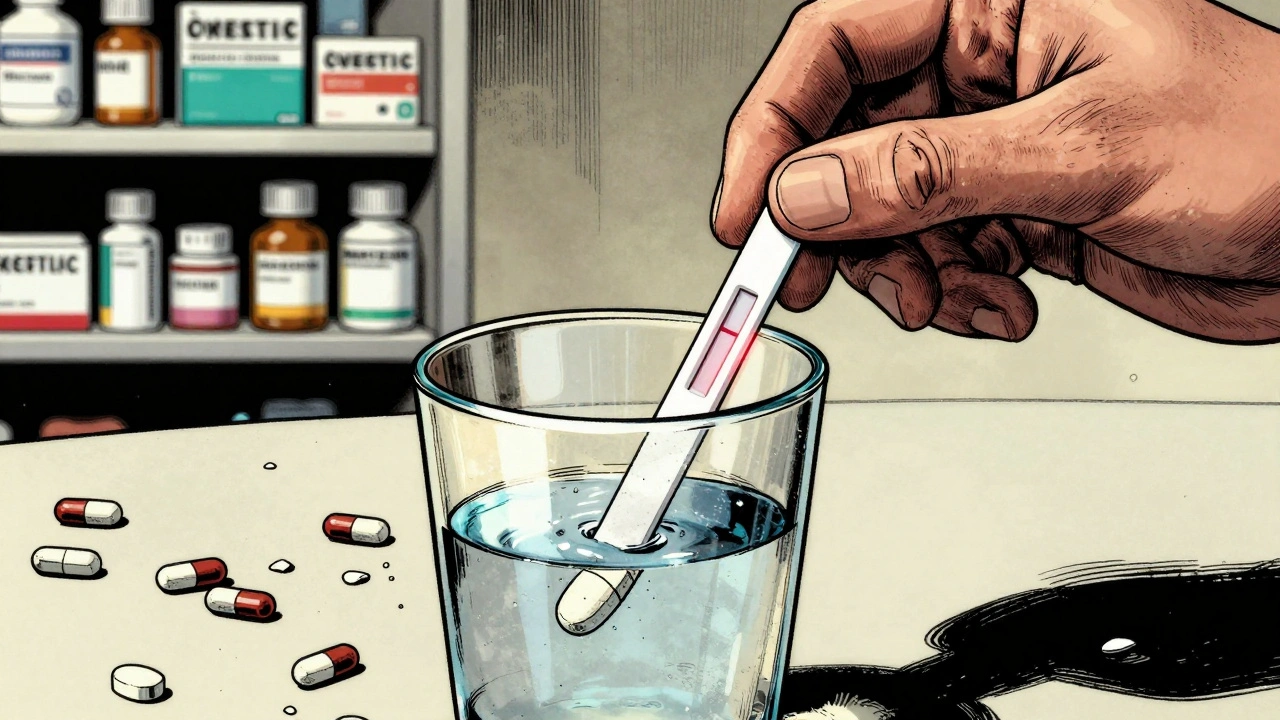
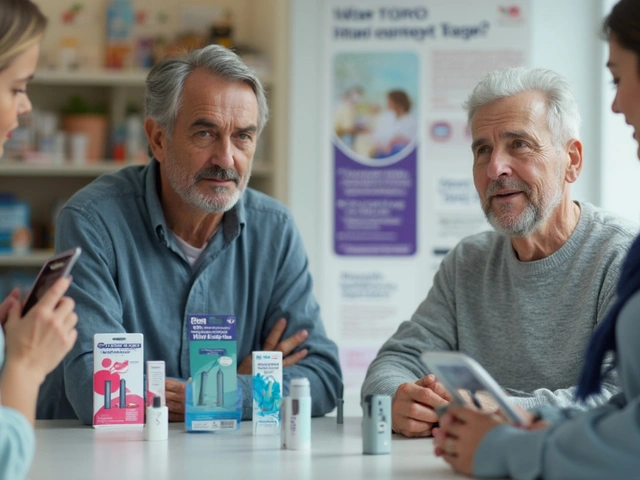
The only reliable way to know if a pill contains fentanyl is to use a fentanyl test strip (FTS). These are small paper strips, like pregnancy tests, that you dip into a solution made from dissolving a tiny piece of the pill. In 3 to 5 minutes, they show a line: one line means fentanyl is present. Two lines mean it’s not detected.
But here’s the catch: a negative result doesn’t mean the pill is safe. Fentanyl test strips don’t detect all fentanyl analogs-like carfentanil, which is 10,000 times stronger than morphine. They also might miss fentanyl if it’s unevenly mixed in the pill. One half could be pure fentanyl, the other half filler. You test the wrong piece? You get a false negative.
Public health agencies, including the CDC and NIDA, say you should assume every pill you didn’t get from a licensed pharmacy contains fentanyl. That’s not fearmongering-it’s fact. The Oregon Health Authority reports that in 2023 alone, law enforcement seized over 3 million counterfeit pills in the state. Most of them contained fentanyl.
What happens when you take one
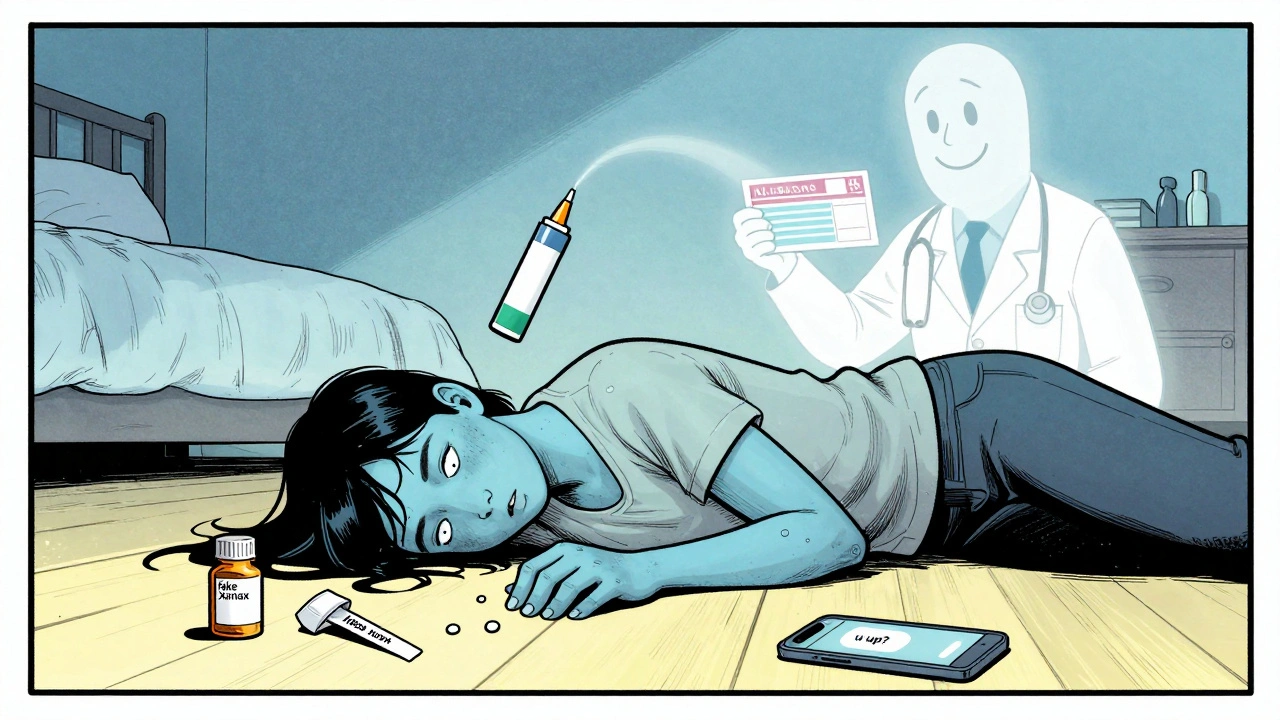
If you take a counterfeit pill with fentanyl, your body doesn’t have time to react. Fentanyl binds to your brain’s opioid receptors 50 to 100 times more powerfully than morphine. Within minutes, your breathing slows. Then stops. Your body goes limp. Your skin turns blue. Your pupils shrink to pinpoints.
These are the signs of an opioid overdose:
- Unconsciousness or inability to wake up
- Slow, shallow, or stopped breathing
- Choking or gurgling sounds (like drowning)
- Cold, clammy, or bluish skin, especially lips and fingernails
- Pinpoint pupils
If someone shows these signs, they’re dying. Every second counts. But here’s the worst part: people often don’t realize they’ve overdosed until it’s too late. Fentanyl hits fast. You might feel dizzy, then nod off. You don’t scream. You don’t fight. You just stop breathing.
What if it’s not fentanyl?
Not all counterfeit pills contain opioids. Some are laced with methamphetamine. These are sold as Adderall or Xanax to people looking for stimulants. The effects are different:
- Extreme wakefulness or agitation
- Rapid heartbeat and high blood pressure
- Overheating (hyperthermia)
- Seizures or chest pain
And some pills contain multiple drugs at once-a mix of fentanyl, meth, and benzodiazepines. That’s called a “poly-drug” cocktail. It’s even more dangerous. Benzodiazepines like bromazolam can suppress breathing on their own. Combine them with fentanyl? The risk of death skyrockets. The CDC found that nearly 20% of counterfeit alprazolam-related deaths involved unknown benzodiazepines.
What to do if you use illicit drugs
If you or someone you know uses drugs obtained outside a pharmacy, here’s what you need to do right now:
- Always test with fentanyl strips. Even if you’ve used the same source before. Batches change. One pill can kill; the next might not.
- Never use alone. If you overdose, no one will know to call 911. Have someone with you who can act.
- Carry naloxone. Naloxone (Narcan) reverses opioid overdoses. It’s available without a prescription in all 50 states. Keep it with you. Know how to use it. It’s not a cure-it’s a bridge to emergency care.
- Call 911 immediately if someone overdoses. Naloxone can wear off before the fentanyl does. Medical help is still needed.
These steps don’t make drug use safe. But they can save a life.
The only real safety
There’s no foolproof way to make counterfeit pills safe. No test, no trick, no brand you can trust. The only way to avoid the risk entirely is to never use pills you didn’t get from a licensed pharmacy and prescribed to you by a doctor.
The CDC, DEA, and NIDA all say the same thing: if you didn’t get it from a pharmacy, don’t take it. Not even once. Not even if it looks real. Not even if your friend says it’s fine. Not even if you’ve done it before.
Counterfeit pills are not a mistake. They’re a weapon. And they’re being distributed like candy.
What to do if you find a suspicious pill
If you come across a pill you didn’t take or didn’t expect:
- Don’t touch it with bare hands.
- Don’t try to identify it yourself.
- Report it to local law enforcement or the DEA’s online tip system.
These pills are not just dangerous-they’re illegal. Reporting them helps stop the cycle.
Where to get help
If you’re struggling with substance use, you’re not alone. Help is available:
- SAMHSA National Helpline: 1-800-662-HELP (4357) - free, confidential, 24/7
- Crisis Text Line: Text HOME to 741741
- Local harm reduction centers: Many cities offer free fentanyl test strips, naloxone, and counseling.
Recovery is possible. But you can’t recover if you’re dead.
What you can do to protect others
Don’t wait for someone to overdose to act. If you know someone using pills from social media or street sources:
- Give them fentanyl test strips and naloxone.
- Teach them how to use them.
- Don’t judge. Just help.
Overdose deaths aren’t just statistics. They’re parents, siblings, friends. They’re people who trusted the wrong thing. Don’t let silence be the reason they’re gone.
12 Comments
so i just found a pill in my pocket from last week and now i’m panicking. i thought it was my anxiety med. idk what to do. 🤯
Oh honey, you’re telling me you bought pills off TikTok like it’s a Sephora sale? 😒
Let me grab my monocle and remind you that fentanyl isn’t a flavor-it’s a coffin. 🥀
Also, if you’re using ‘Adderall’ to study, maybe just… don’t? Just a thought.
There’s a metaphysical horror here that no one wants to name: we’ve outsourced our trust to algorithms, and now our bodies are the collateral.
Every pill is a gamble with a deity that doesn’t care if you live or die.
The real tragedy isn’t the fentanyl-it’s that we’ve normalized this level of existential risk as ‘just part of life.’
We don’t need more test strips-we need to dismantle the infrastructure that lets this happen.
But we’d rather meme about it than change anything.
So we die. Quietly. Digitally. Alone.
And someone else will post a carousel about it tomorrow.
And the cycle continues.
Because awareness isn’t action.
And action requires sacrifice.
And we’re too tired to sacrifice.
So we scroll.
And we wait.
And we hope it’s not our turn today.
Bro, I’m from India and we got these pills too-sold as ‘Vicodin’ on WhatsApp. One guy I knew took one and woke up in ICU with his mom crying. He didn’t even know what he was buying.
Y’all in the US act like this is new. Nah. This is global now. And no, naloxone won’t fix capitalism.
ok but fentanyl test strips are a scam lmao
they only detect the *main* fentanyl analog and if the pill is mixed unevenly (which it always is) you get a false neg
plus most of the time the pill is just pure fentanyl powder pressed into a shape so the strip is useless anyway
also the FDA says nothing, they’re all bought and paid for
real talk: if you didn’t get it from your doc, it’s a death wish
and if you’re still doing it, you’re either a dumbass or you’re in so much pain you don’t care
either way, rest in peace 🕊️
OMG I just saw a post from my cousin’s ex-boyfriend on Instagram-he was selling ‘Xanax’ with a heart emoji and a price tag. I screamed. I texted him. I told his mom. I cried for 20 minutes.
And now I’m watching my 17-year-old niece like a hawk.
She thinks she’s ‘just experimenting.’
She doesn’t know she’s playing Russian roulette with her frontal lobe.
Someone please tell me I’m not overreacting.
…I’m not, am I?
GUYS. I just ordered 100 fentanyl test strips from a harm reduction org. 🎉
They’re free if you’re low income!!
Also got naloxone nasal spray delivered to my door in 2 days!! 🚀
Now I’m handing them out to my friends like candy 🍬
Don’t wait until it’s too late!!
Be the person who saves a life. 💙
Link in my bio!!
oh wow, so the government’s been lying to us about how safe these pills are? shocker.
also, why are we still acting like this is an ‘individual responsibility’ issue?
it’s not. it’s a corporate greed + failed drug policy + social media algorithm disaster.
but sure, let’s blame the teens for buying fake Adderall.
they’re just following the ads.
the real criminals? the ones printing the pills and the ones letting them flood the market.
but hey, at least we got a 10-page article about it. that’ll fix everything.
Let’s be clear: fentanyl test strips are a harm reduction tool, not a safety guarantee. The CDC doesn’t endorse them as ‘reliable’-they endorse them as ‘better than nothing.’
Also, if you’re relying on a strip because you’re too scared to quit, that’s not bravery. That’s survival.
And we should be treating this like the public health emergency it is-not a moral failing.
But hey, at least we’re not calling them ‘druggies’ anymore. Progress?
Yeah, I’ve been using test strips for a while now. It’s not perfect, but it’s something.
My buddy had a bad batch last month-he didn’t know until the strip lit up red.
We called 911, gave him Narcan, he’s fine now.
Just… don’t be the person who says ‘it won’t happen to me.’
It already did. To someone you know.
Hey. If you’re reading this and you’re using pills from anywhere but a pharmacy-you’re not broken. You’re hurting.
And you deserve help, not judgment.
Test strips and naloxone aren’t enabling-they’re lifelines.
Reach out to SAMHSA. Text HOME to 741741.
You don’t have to do this alone.
And you’re not a statistic.
You’re someone’s child. Someone’s friend. Someone who matters.
Keep going. We’re here.
Wait… you think this is just about pills? 😏
Think deeper. The fentanyl epidemic? It’s a psyop. The government’s using it to justify mass surveillance and to push the ‘digital ID’ agenda.
They’re letting fake pills kill people so we’ll all beg for biometric tracking and mandatory drug testing.
And don’t even get me started on the Chinese labs-they’re not even the real villains.
The real ones? The ones controlling the internet algorithms that push these pills to kids.
It’s all connected.
Wake up.
They’re turning us into test subjects.
And the pills? Just the first wave.