


NTI Medication Safety Checker
Check Your Medication Safety
Enter a medication name to see if it has a narrow therapeutic index (NTI) and requires careful monitoring.
How It Works
Narrow therapeutic index (NTI) drugs have a small margin between effective and toxic doses. These medications require careful monitoring and dose adjustments based on individual factors like kidney function, age, and other medications.
Important: Never adjust your dose without consulting your healthcare provider. This tool is for educational purposes only.
Getting the right dose of medication isn’t just about following the label. It’s about finding the sweet spot where the drug works - without hurting you. Too little, and it does nothing. Too much, and you risk serious side effects, hospital visits, or worse. For some drugs, the difference between healing and harm is razor-thin. This isn’t theoretical. It’s happening right now to millions of people managing chronic conditions like heart disease, epilepsy, or depression.
Why One Size Doesn’t Fit All
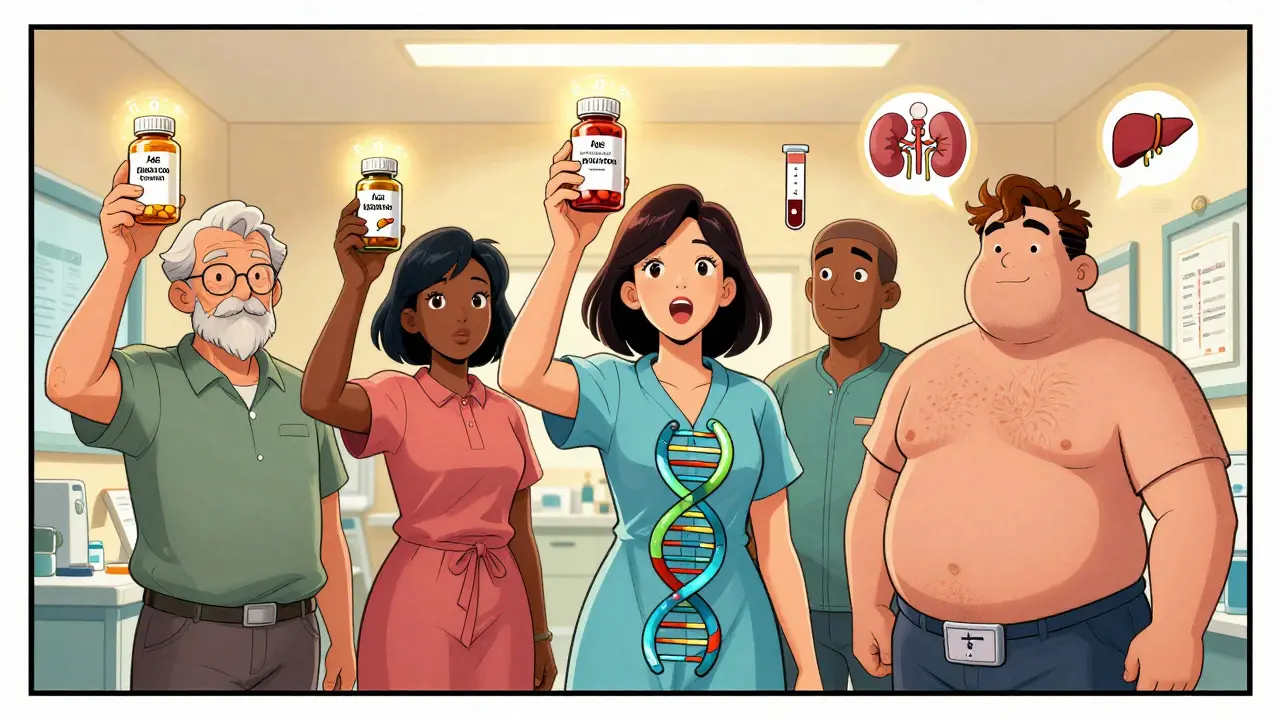
You might think all prescriptions are created equal. But the truth is, your body processes medicine differently than your neighbor’s. Age, weight, kidney function, liver health, genetics - all of these change how much drug stays in your system. Take digoxin, a heart medication. Just two and a half times the normal dose can kill half the people who take it. That’s not a typo. It’s a therapeutic index of 2-3. That means the gap between a helpful dose and a deadly one is tiny. Most drugs have a wider safety margin. Penicillin, for example? You’d need to take dozens of extra pills to reach toxic levels. But for drugs like warfarin, phenytoin, or lithium, that margin is narrow. These are called Narrow Therapeutic Index (NTI) drugs. They need careful monitoring. Regular blood tests. Dose tweaks. Skipping a dose or taking an extra one can throw your whole balance off.What Factors Actually Change Your Dose?
Doctors don’t guess. They use real data. Here’s what matters most:- Kidney function: If your kidneys aren’t clearing the drug, it builds up. Creatinine clearance is the standard test. A drop from 80 to 40 mL/min might mean cutting your dose in half.
- Liver health: The liver breaks down most meds. If you have cirrhosis, your dose might need to be reduced by 30-50%.
- Age: Older adults often need 20-30% less. Their bodies process drugs slower. Their kidneys and liver don’t work as hard. Yet, many still get the same dose as a 40-year-old.
- Body weight: For obese patients, dosing isn’t based on total weight. It’s usually based on ideal body weight plus 40% of the excess. Using total weight can lead to overdose.
- Genetics: About 25% of common drugs are affected by gene variants. If you’re a slow metabolizer of CYP2D6 or CYP2C19 enzymes, even a standard dose can be too strong.
- Other meds: Mixing drugs can change how your body handles each one. A common antibiotic can spike warfarin levels by 30%. That’s a bleeding risk.
NTI Drugs: The High-Stakes Players
These aren’t just any medications. They’re the ones that demand attention:| Drug | Therapeutic Index | Primary Use | Monitoring Required |
|---|---|---|---|
| Warfarin | ~2 | Blood thinning | INR blood test every 2-4 weeks |
| Digoxin | 2-3 | Heart failure, atrial fibrillation | Serum level checks, potassium levels |
| Phenytoin | 1.7-6.8 | Seizure control | Monthly blood levels, liver function |
| Lithium | ~2 | Bipolar disorder | Monthly blood tests, kidney function |
| Cyclosporine | ~2 | Organ transplant rejection | Twice-weekly blood levels |
What Happens When Dosing Goes Wrong?
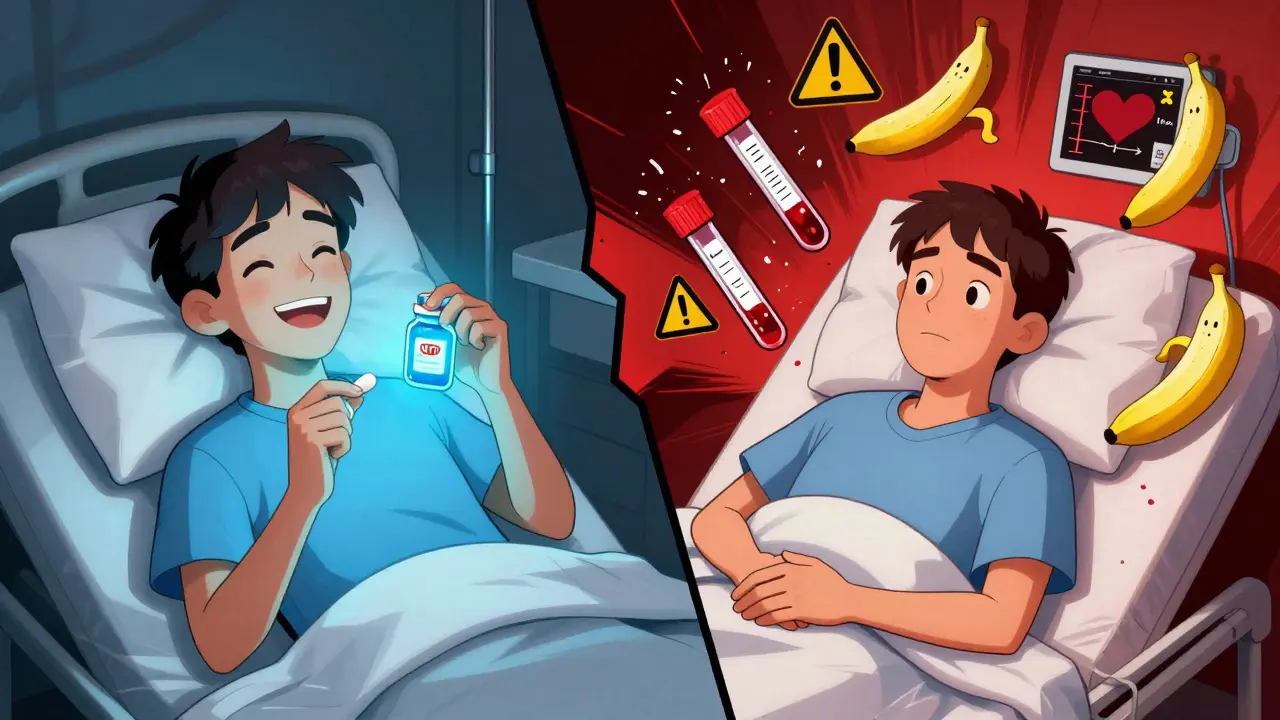
The risks aren’t abstract. They’re in hospital records. In Norway, drug-related problems were far more common with NTI drugs than others. Why? Drug interactions. Poor dosing. Lack of monitoring. In older adults taking five or more medications - 44% of seniors - the chance of a serious side effect jumps by 300%. That’s not just inconvenience. That’s falls, kidney failure, internal bleeding, confusion, even death. A patient on digoxin might eat more bananas (high in potassium) and suddenly feel dizzy. That’s not a coincidence. Potassium changes how digoxin binds to heart cells. Too little potassium? Toxicity risk spikes. Too much? The drug stops working. This isn’t rare. It’s routine. And then there’s the gap between clinical trials and real life. Most trials exclude older adults, pregnant women, people with multiple illnesses, or those on complex med regimens. So when your doctor prescribes based on trial data, they’re guessing for you. That’s not negligence. It’s systemic.How Do You Get It Right?
There’s no magic formula. But here’s what works:- Keep a live list of all meds: Include supplements, OTC painkillers, herbal teas. Bring it to every appointment. Pharmacists can spot interactions you miss.
- Ask about therapeutic drug monitoring: If you’re on warfarin, lithium, or phenytoin, ask: “Should I be getting regular blood tests?” If the answer is no - push back.
- Use a pill organizer with alarms: Missing a dose or doubling up is easy. Especially if you’re on multiple meds. Set reminders on your phone. Use a box with compartments.
- Know your kidney and liver numbers: Get your creatinine clearance and liver enzymes checked yearly - or more often if you’re on NTI drugs.
- Work with a pharmacist: Pharmacists are trained in drug interactions, metabolism, and dosing math. They can catch errors doctors miss. Many hospitals now have anticoagulation clinics staffed by pharmacists - and they’ve cut bleeding events by 60% in warfarin users.
The Future: Precision Dosing Is Here
The old way - “start low, go slow” - still works. But it’s outdated. New tools are changing the game. Pharmacogenomic testing is now available for over 15 high-risk drugs. If you’re on clopidogrel, for example, a simple genetic test can tell you if you’ll respond at all. No more trial-and-error. No more strokes from ineffective doses. AI-powered dosing tools are being used in transplant centers and hospitals. They take your age, weight, kidney function, genetics, and current meds - then spit out a personalized starting dose. One study showed these tools improved accuracy by 35% compared to standard methods. The FDA is pushing for this. In 2022, they released new guidance asking drug companies to study how dose affects both benefit and side effects - early in development. That means future drugs might come with smarter dosing rules built in. But here’s the catch: These tools aren’t in every doctor’s office. Most primary care clinics still rely on paper charts and memory. That’s why you need to be your own advocate.
What You Can Do Today
You don’t need to wait for the future. Start now:- Ask your doctor: “Is this drug on the narrow therapeutic index list?”
- Ask your pharmacist: “Could any of my meds interact in a dangerous way?”
- Get your kidney and liver function tested if you’re over 60 or on long-term meds.
- Don’t ignore side effects. Dizziness, nausea, confusion, unusual bruising - these aren’t just “aging.” They could be your dose.
- Keep a symptom journal. Note when you feel off, what you ate, what meds you took. Patterns matter.
When to Call Your Doctor
Don’t wait for a scheduled visit. Call if you notice:- New or worsening side effects
- Confusion, memory lapses, or dizziness
- Unexplained bruising or bleeding
- Heart palpitations or skipped beats
- Changes in urine output or swelling in legs
Final Thought: It’s Your Body, Your Dose
Medication isn’t a one-time prescription. It’s a conversation - between you, your doctor, your pharmacist, and your body. What works today might not work next month. Your kidneys slow down. You gain weight. You start a new supplement. Life changes. So should your dose. You don’t have to accept feeling “off” because the label says so. You don’t have to guess. Ask questions. Track your symptoms. Demand testing if you’re on a high-risk drug. The goal isn’t just to take medicine. It’s to take the right amount - safely, effectively, and for you.What does it mean if a drug has a narrow therapeutic index?
A narrow therapeutic index means the difference between a helpful dose and a dangerous one is very small. Drugs like warfarin, digoxin, and lithium fall into this category. Even a slight increase can cause serious harm, and a slight decrease can make the drug ineffective. These drugs require regular blood tests and careful monitoring to stay safe.
Can I adjust my own medication dose if I feel it’s not working?
Never adjust your dose without talking to your doctor or pharmacist. Even small changes can be dangerous, especially with narrow therapeutic index drugs. Feeling like a medication isn’t working could mean your body has changed - your kidneys, liver, or other meds may be affecting how it’s processed. A professional can check your levels and adjust safely.
How often should I get blood tests for my medication?
It depends on the drug. For warfarin, you typically need an INR test every 2-4 weeks. For lithium or phenytoin, monthly checks are common. If your condition is stable, your doctor might space them out. But if you’ve had recent changes - like a new medication, illness, or weight shift - you may need testing more often. Always follow your provider’s schedule.
Why do older adults need lower doses?
As we age, our kidneys and liver don’t clear drugs as efficiently. We also have less body water and more body fat, which changes how drugs are distributed. This means drugs stay in the system longer and build up to higher levels. A standard adult dose can become toxic in someone over 70. Most guidelines recommend starting at 20-30% lower for older adults.
Can supplements or food affect my medication dose?
Yes, absolutely. Grapefruit juice can make some drugs 2-5 times stronger. St. John’s Wort can make antidepressants and birth control less effective. High potassium foods like bananas or spinach can interfere with digoxin. Even over-the-counter painkillers like ibuprofen can raise your blood pressure if you’re on certain heart meds. Always tell your pharmacist about everything you take - including vitamins and herbal teas.
What’s the role of a pharmacist in dose adjustment?
Pharmacists are trained to understand how drugs interact with each other, your body, and your lifestyle. They can calculate the right dose based on your kidney function, weight, and other meds. Many hospitals have pharmacist-run clinics for anticoagulants like warfarin - and they’ve cut serious bleeding events by 60%. If you’re on multiple drugs or a high-risk medication, ask to see a pharmacist for a medication review.
Are there tools or apps that help with medication dosing?
Yes. Some apps help track doses and remind you when to test. Hospitals and clinics use AI-powered tools that analyze your age, weight, lab results, and genetics to suggest optimal doses. While these aren’t widely available in community pharmacies yet, you can ask your doctor if they use clinical decision support systems. In the next few years, these tools will become standard.




13 Comments
This is why America’s healthcare system is broken. Doctors don’t even check kidney function before prescribing? And you expect patients to memorize drug interactions? I’ve seen people die because some intern thought 'standard dose' meant 'safe dose'.
Stop pretending this is science. It’s Russian roulette with pills.
The therapeutic index is not merely a pharmacological metric-it is an existential threshold, a razor’s edge upon which the delicate architecture of homeostasis teeters. To reduce human physiology to a mathematical ratio is to commit epistemic violence against the lived experience of suffering bodies. We must transcend the mechanistic paradigm and embrace a phenomenological approach to pharmacotherapy-one that honors the patient’s subjective resonance with their own biochemistry.
I really appreciate this post. My dad is on warfarin and we’ve been through so much with his INR levels going up and down. The pharmacist at our local clinic saved his life when they caught that his new herbal tea was interfering. I didn’t even know tea could do that!
Just wanted to say: don’t be afraid to ask questions. Even if you feel silly. Your life matters more than sounding smart.
This is so important! I used to skip my lithium checks because I felt fine. Then I got dizzy one day and ended up in the ER. Turned out my levels were double what they should’ve been. Now I get tested every month like clockwork.
You guys are doing amazing just by reading this. Keep going. You’ve got this!
Stop waiting for doctors to save you. Your body talks. Listen.
Oh wow. A 3,000-word essay on how to not die from your own prescription. Groundbreaking. I’m sure the FDA will be thrilled to learn that people might need to read before swallowing pills.
Meanwhile, my cat’s thyroid med has better dosing guidelines than most human drugs. At least she doesn’t have to fill out a 17-page intake form.
I wonder how many of these interactions are actually studied in diverse populations. The trials always seem to exclude older adults, minorities, people with multiple comorbidities. Is the 'standard dose' just a default for the statistically average white male under 60?
The therapeutic index is a well-documented pharmacokinetic parameter, not some mystical concept. If you’re on an NTI drug and not monitoring serum levels, you’re not managing care-you’re gambling. And no, 'I feel fine' is not a valid lab result.
Also, 'natural supplements' are not exempt from CYP450 interactions. St. John’s Wort induces CYP3A4-look it up. You’re not special.
I’m 72 and on three NTI drugs. I use a pill organizer with alarms and write down every side effect in a little notebook. My pharmacist calls me every month to check in. It’s not perfect-but it’s working. You’re not alone in this.
I cried reading this. My mom had a stroke because her doctor didn’t adjust her phenytoin after she started on a new antibiotic. She was 68. They didn’t even test her levels. I’ve spent years trying to get people to understand how dangerous this is.
Thank you for saying it out loud.
This article is a masterpiece of bureaucratic panic. You think your grandma needs a blood test every month because she takes lithium? That’s not medicine-that’s institutionalized distrust of the elderly. We used to trust doctors. Now we’re turning them into pharmacists’ assistants.
Also, AI dosing? Please. The only algorithm that matters is the one between your ears. Use it.
You people are obsessed with blood tests like they’re some holy ritual. I’ve been on warfarin for 12 years. I know my body. I know when I’m off. I don’t need some lab tech telling me what my INR should be. You’re turning patients into data points.
And don’t get me started on pharmacists. Half of them can’t even spell 'therapeutic'.
I must respectfully interject with a nuanced perspective: while the empirical data presented is compelling, one must consider the ontological implications of reducing patient autonomy to algorithmic outputs. The human body is not a machine to be calibrated, but a sentient ecosystem that resists quantification. One cannot, in good conscience, outsource one’s physiological intuition to a machine trained on homogenized clinical trial populations-especially when those populations exclude the very demographics most in need of precision dosing.
That said, I do appreciate the mention of pharmacist-led anticoagulation clinics. A step in the right direction, albeit one that still operates within a commodified healthcare paradigm.