

ADHD isn’t just about being distracted or fidgety. For millions of people-kids, teens, and adults-it’s a real neurodevelopmental condition that affects focus, impulse control, and daily functioning. And while there’s no cure, there are clear, research-backed ways to manage it. The most effective approach? A mix of medication and behavioral strategies. Not one or the other. Both.
How Medication Works for ADHD
ADHD is linked to how the brain handles dopamine and norepinephrine-two chemicals that help with focus, planning, and self-control. In people with ADHD, these signals don’t work as smoothly. Medication helps fix that.
Stimulants are the most common and most effective ADHD meds. They don’t make you hyper. Instead, they calm the brain by boosting those key neurotransmitters. About 70-80% of kids and adults see real improvement with stimulants, according to the landmark MTA study from 1999. That’s why doctors usually start here.
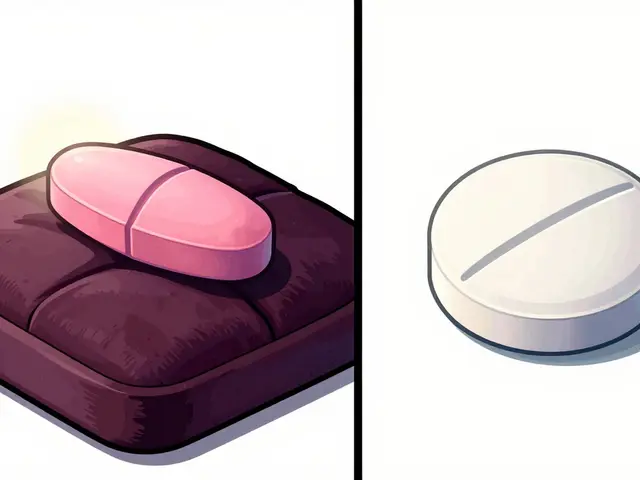
There are two main types: methylphenidate and amphetamine derivatives. Methylphenidate includes brands like Ritalin, Concerta, and Focalin. Amphetamine-based meds include Adderall, Vyvanse, and Dexedrine. Both work similarly, but their chemical structures mean they can affect people differently. One person might thrive on Vyvanse and feel awful on Adderall. Another might find generic methylphenidate works perfectly and costs less than $20 a month.
Extended-release versions are now the standard. Why? Because they last longer-10 to 12 hours-and avoid the sharp highs and crashes that come with pills that wear off after 3-4 hours. A child on Concerta won’t need to take a pill at school. An adult on Vyvanse won’t feel a sudden drop in focus by 3 p.m.
Non-Stimulant Options: Slower, But Still Powerful
Not everyone tolerates stimulants. Some have anxiety, tics, or a history of substance use. Others just can’t handle the side effects. That’s where non-stimulants come in.
Atomoxetine (Strattera) is the first non-stimulant approved for ADHD. It works by increasing norepinephrine, but it doesn’t touch dopamine the way stimulants do. It takes 4-6 weeks to kick in. That’s a long time to wait if you’re struggling in school or at work. But once it does? It works. About 50-60% of people see improvement. It’s also not addictive, which makes it a go-to for teens or adults with substance abuse risks.
Guanfacine (Intuniv) and clonidine (Kapvay) were originally blood pressure meds. Turns out, they also help calm the overactive prefrontal cortex in ADHD. They’re especially helpful for kids with emotional outbursts, impulsivity, or trouble sleeping. They don’t fix focus like stimulants do-but they help with self-control. Many parents report fewer meltdowns and better sleep after starting these.
Non-stimulants don’t have the same abuse potential. They’re not scheduled drugs. But they’re not magic bullets either. They’re slower. Less dramatic. And sometimes, they’re the only thing that works.
Side Effects: What to Expect and What to Watch For
Medication isn’t risk-free. And knowing what to expect can make all the difference.
With stimulants, appetite loss is the most common side effect. Up to 60% of kids lose interest in food. That’s not just about being picky-it’s real. Some kids drop below the 5th percentile for weight. Growth suppression is real too. Studies show about 30% of children on stimulants grow slower in the first year. But here’s the good news: most catch up by year three. Still, doctors check height and weight every six months. If a kid’s growth slows too much, the dose gets adjusted.
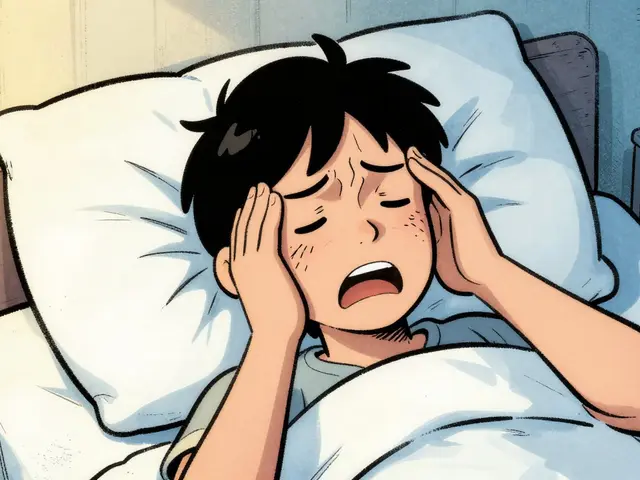
Sleep problems? Very common. 30-50% of users have trouble falling asleep. That’s why timing matters. If the last dose is given too late, sleep gets wrecked. Most experts recommend the final dose be taken at least 6-8 hours before bedtime. Some parents switch to once-daily extended-release meds to avoid afternoon crashes that interfere with sleep.
Headaches, stomachaches, and moodiness? They happen. About 15-25% get headaches. 10-20% get stomach issues. And “rebound”-that irritability or emotional meltdown as the medication wears off? It’s real. One survey found 45% of parents noticed it in their kids. The fix? Sometimes a tiny afternoon booster. Sometimes switching to a longer-acting form.
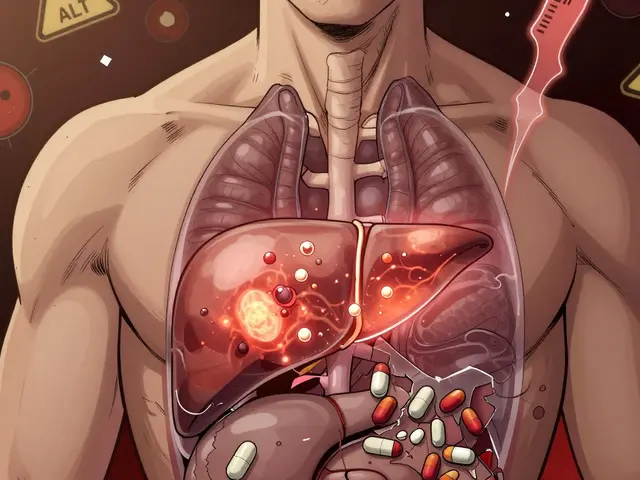
Cardiovascular risks? Yes, but rare. Stimulants can raise heart rate and blood pressure. A 2023 AAFP guideline says baseline checks are required before starting, and then every three months. If someone has a family history of heart disease or arrhythmia, they need a cardiologist’s green light first.
For non-stimulants, side effects are different. Strattera can cause nausea, dizziness, and fatigue. Intuniv and Kapvay can cause drowsiness and low blood pressure. But they don’t suppress appetite or cause insomnia the way stimulants do. That’s why many families choose them-especially if sleep and eating are already big challenges.
Behavioral Strategies: The Missing Piece
Medication helps the brain. But it doesn’t teach skills. That’s where behavioral strategies come in.
Think of it like this: medication gives you the energy to focus. Behavioral strategies teach you how to use that energy wisely.
For kids, parent training programs like the New Forest Parenting Programme have been proven to cut ADHD symptoms by 40-50%. These aren’t quick fixes. They’re 12-16 weekly sessions, each 90 minutes long. Parents learn how to give clear instructions, use consistent rewards, and avoid power struggles. The results? Kids listen better, argue less, and get more done.
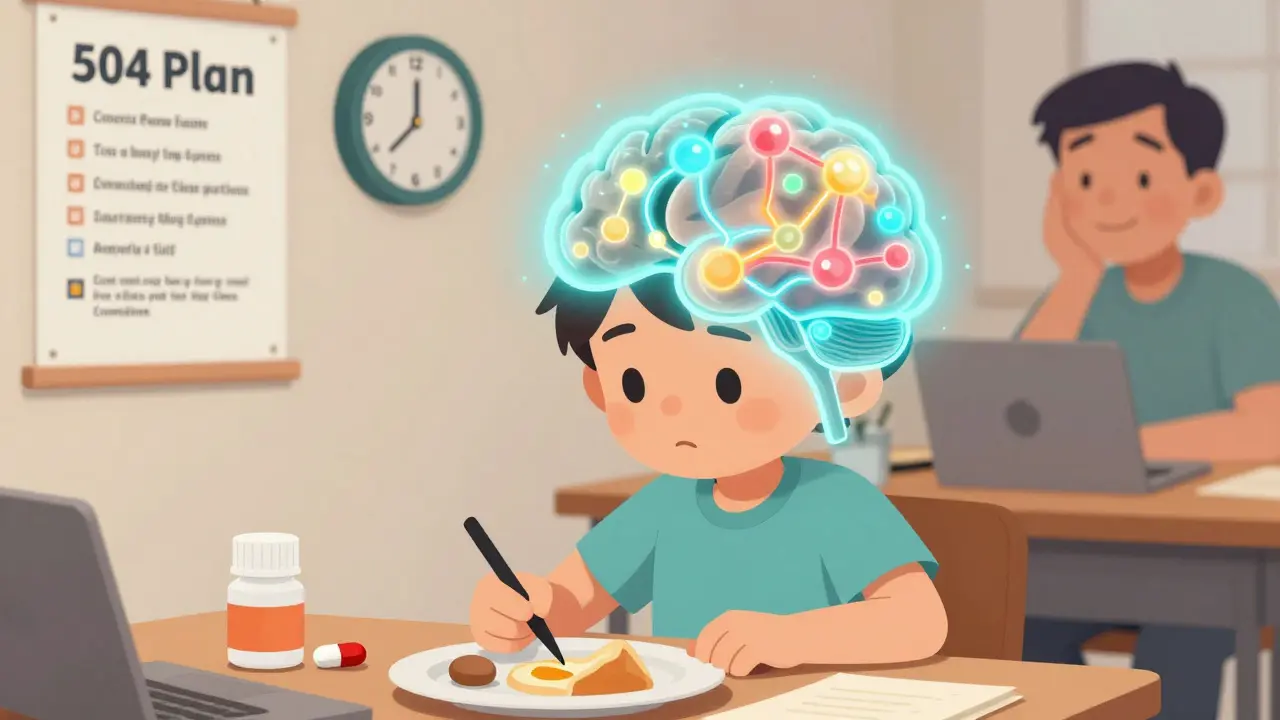
Schools matter too. A 504 Plan or IEP can give a child extra time on tests, seating near the front, or breaks to move around. Teachers who understand ADHD don’t see a “bad kid.” They see a kid whose brain works differently.
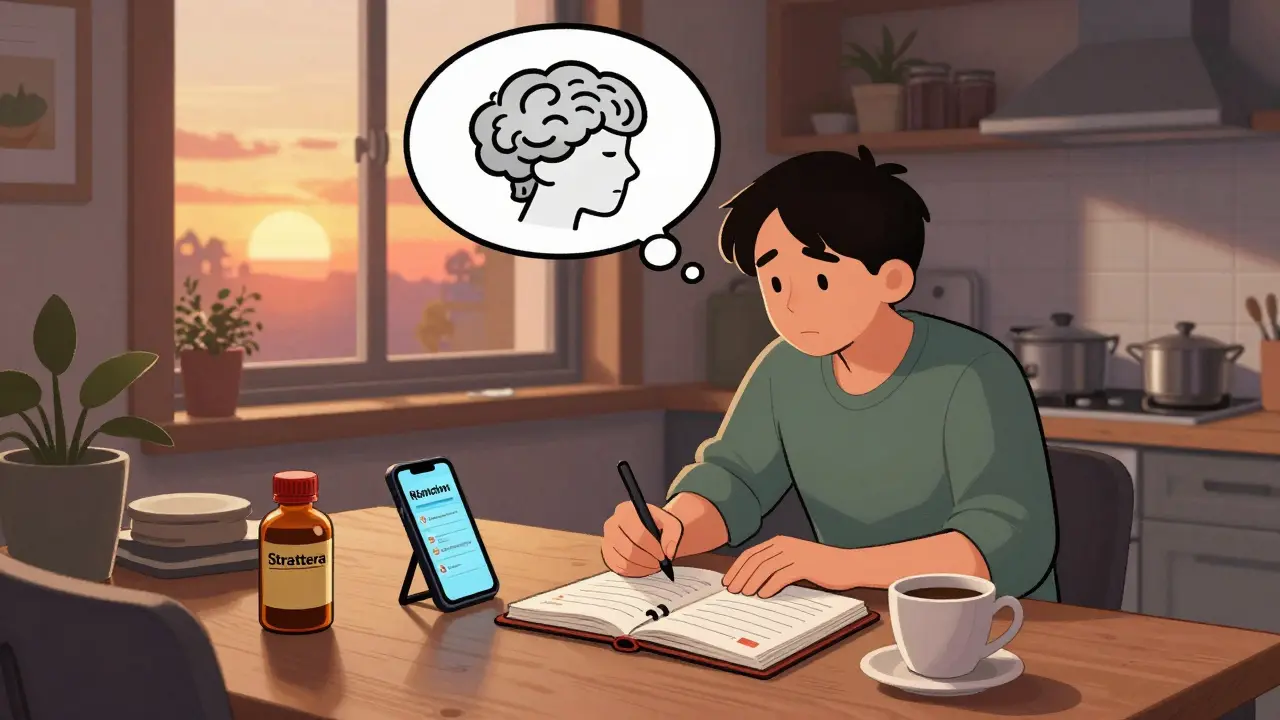
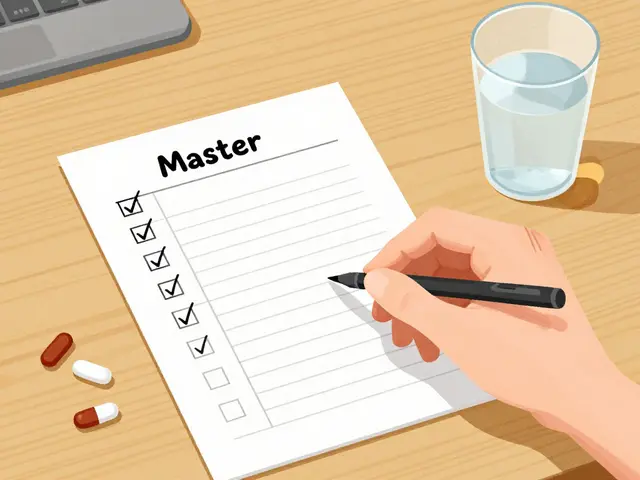
For adults, organizational tools are key. A planner isn’t just a nice-to-have-it’s essential. Digital reminders, alarms, and task lists help bridge the gap between intention and action. Cognitive Behavioral Therapy (CBT) for ADHD helps adults reframe thoughts like “I’m lazy” into “My brain needs structure.” Studies show CBT improves time management, emotional regulation, and self-esteem.
And don’t forget routines. Structure reduces the mental load. Same wake-up time. Same evening wind-down. Same place for keys, wallet, phone. These small things add up. For someone with ADHD, less chaos means more control.
Choosing the Right Path: No One-Size-Fits-All
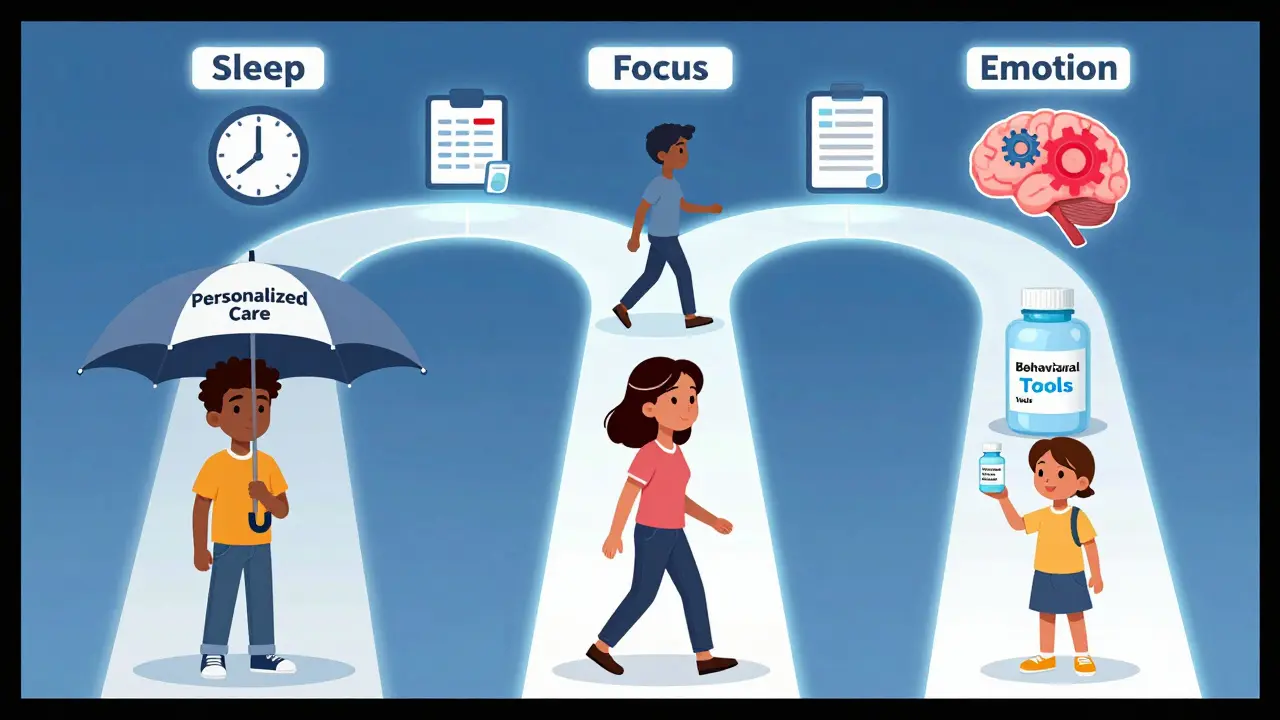
There’s no perfect treatment. Only the best fit.
Start with stimulants? Often yes. But not always. If a child has tics, anxiety, or a family history of substance abuse, non-stimulants might be the first move. If an adult has trouble sleeping and appetite is already low, maybe start with guanfacine instead of Vyvanse.
Cost matters too. Generic methylphenidate can cost $15-$25 a month. Brand-name extended-release meds? $250-$400 without insurance. In the U.S., 78% of insurance plans require you to try the cheapest option first. That’s step therapy. It’s frustrating-but it’s the rule.
And then there’s gender. Women and girls report side effects more often than men and boys. A 2022 study found females experienced side effects 1.4 times more frequently. Why? Hormones? Body weight? Differences in how drugs are metabolized? We don’t fully know yet. But it means women often need lower doses or different timing.
Preschoolers? They respond differently too. A 2023 study found alpha-2 agonists like guanfacine caused less irritability and appetite loss in kids under 6 than stimulants. That’s why some doctors start with behavior therapy first for this age group.
The new FDA-approved drug AZSTARYS? It’s a prodrug combo designed to reduce misuse. That’s important. Stimulants can be diverted, sold, or misused. AZSTARYS makes that harder. It’s not a magic bullet, but it’s progress.
What’s Next? Personalized Medicine and Digital Tools
The future of ADHD treatment is personal.
Genetic testing is already here. Tests like Genomind’s PGx Express can tell you if you’re a slow or fast metabolizer of certain stimulants. If your body breaks down methylphenidate too fast, you’ll need a higher dose. If it’s too slow, you’ll get side effects. This test predicts non-response in 65% of cases. It’s not perfect-but it’s better than guessing.
Digital tools are too. EndeavorRx, an FDA-cleared video game for kids with ADHD, improves attention after 4 weeks of play. VR-based training programs are now in phase 3 trials. They’re not replacements for medication-but they’re powerful supports.
And research is shifting. The NIMH is pouring $47 million into non-drug interventions. Because medication isn’t enough for everyone. And not everyone wants to take it.
Real Talk: What People Actually Experience
Reddit’s r/ADHD has over 1.2 million members. In one 2023 thread, 1,842 people shared their side effects. 68% said appetite loss never went away. 52% struggled with sleep. 31% felt emotionally flat-like they weren’t themselves.
CHADD’s 2022 survey of 5,327 adults and parents found 79% had at least one side effect. 63% changed their dosing to cope. Some took meds only on school days. Others skipped weekends. One dad said, “I let my son go off meds in summer so he can enjoy food again. He’s a different kid then. But he’s also less focused. It’s a trade-off.”
There’s no shame in that. ADHD treatment isn’t about perfection. It’s about balance. Finding what lets you live well.
Some people stop meds. Maybe they outgrew the symptoms. Maybe the side effects were too much. The MTA 20-year follow-up found 28% stopped by adolescence. That’s okay. ADHD isn’t a life sentence. It’s a condition you manage.
What works today might not work tomorrow. That’s normal. Keep talking to your doctor. Keep tracking what helps. Keep trying.
Are stimulants addictive?
When taken as prescribed, stimulants for ADHD are not addictive. They don’t produce euphoria the way recreational drugs do. In fact, treating ADHD with stimulants reduces the risk of future substance abuse. But they are controlled substances because they can be misused if taken in high doses or by someone without ADHD. That’s why doctors require regular check-ins and prescriptions are tightly monitored.
Can ADHD be managed without medication?
Yes, but it’s harder. Behavioral strategies, routines, coaching, and school accommodations can help a lot-especially for mild cases or young children. But for moderate to severe ADHD, medication is usually needed to bring symptoms down to a manageable level. Think of it like glasses for vision: you can learn to compensate without them, but it’s exhausting. Medication doesn’t fix everything-but it gives you the mental bandwidth to use other tools effectively.
How long do you need to take ADHD medication?
There’s no set timeline. Some people stop in high school or college. Others take it for life. It depends on symptoms, life demands, and how well non-medication strategies work. Many adults find they need medication for work, driving, or managing household responsibilities. The key is to reassess every 6-12 months. If your life has changed-new job, new routines, better sleep-you might need less. Or more.
Do ADHD meds stunt growth?
Some children experience slower growth in the first year, especially in height and weight. About 30% show this effect. But studies show most catch up by year three. Doctors monitor height and weight every six months. If growth slows too much, they adjust the dose or switch medications. The long-term impact on adult height is minimal. The trade-off-better focus, fewer meltdowns, improved grades-is often worth it.
Why do some people say stimulants make them feel "emotionless"?
Some people report emotional blunting-a feeling of being "numb" or less reactive. This isn’t universal, but it’s common enough that doctors ask about it. It might mean the dose is too high. Or the medication is suppressing normal emotional responses along with ADHD symptoms. Lowering the dose, switching to a different stimulant, or adding a non-stimulant can help. Talk to your provider. This isn’t normal, and it’s fixable.
Is it safe to take ADHD meds long-term?
Yes, for most people. Decades of research, including the 20-year MTA follow-up, show no serious long-term harm from ADHD medication when used properly. The biggest risks are short-term: appetite loss, sleep issues, or slight blood pressure changes. These are manageable with monitoring. The bigger risk? Not treating ADHD. Untreated ADHD is linked to higher rates of job loss, accidents, substance use, and depression. Treatment reduces those risks.

15 Comments
So we're just supposed to believe that a pill fixes a brain that's been wired differently since birth? Cool. I'll just take my stimulant and magically become productive. Meanwhile, my kid's still crying because they can't sit still in class. Thanks for the oversimplification.
I’ve been on Vyvanse for 8 years. Appetite loss? Yeah. Sleep issues? Always. But I finally held a job. Paid my rent. Didn’t miss a deadline in 3 years. It’s not perfect. But it’s the difference between surviving and sinking.
You say stimulants reduce substance abuse risk? That’s a myth. People with ADHD who take stimulants are more likely to abuse them later because they know how they feel. It’s not treatment-it’s chemical dependency with a prescription.
I’m a parent of a 9-year-old with ADHD. We started with behavioral strategies-parent training, routines, visual schedules. It helped. But it wasn’t enough. When we added a low-dose methylphenidate, it was like a fog lifted. She started asking for homework help. Made a friend. We didn’t fix her. We gave her a chance. That’s all.
I love how this post doesn’t just say ‘take meds’ but actually talks about the trade-offs. The sleep stuff? Real. The growth thing? Real. The emotional numbness? So real. I felt like a zombie for 6 months on Adderall. Lowered the dose. Now I’m me again-just with better focus. It’s not about being ‘fixed.’ It’s about being more *you*.
The philosophical dilemma here is not pharmacological, but ontological. If medication alters perception of self, is the ‘true self’ the one medicated or unmedicated? Or is identity itself a neurochemical construct? The answer, I believe, lies not in the pill-but in the silence between thoughts.
In India, we don’t have access to Vyvanse or Concerta. We get generic methylphenidate-$12/month. My daughter’s teacher says she’s ‘calmer’ now. But she still forgets her lunch. Still cries when she can’t finish homework. Medication helps. But it doesn’t fix the system. Schools here don’t have 504 plans. No counselors. Just shame. And silence.
I tried Strattera. Took 6 weeks. Felt like a zombie in slow motion. Then I tried guanfacine. Felt like my brain finally stopped screaming. Now I sleep. Eat. Breathe. It’s not glamorous. But it’s peace. And peace? That’s worth more than a ‘high-performing’ brain.
This is why the West is broken. You medicate children instead of teaching discipline. In India, we don’t need pills. We need a good slap and a stern word. ADHD? It’s just laziness with a fancy name. Your society is weak.
The truth no one says: stimulants don’t make you productive. They make you *less distracted*. You still have to do the work. I took Adderall for a year. Wrote a novel. Then I realized-I didn’t need the drug. I needed a quiet room, a timer, and a damn rule: no phone until 3pm. The pill just gave me the breathing room to build that.
I’m a psychiatrist. I’ve seen too many parents rush to meds because they’re exhausted. But here’s the thing: if you’re not doing behavioral work, the meds are just a bandaid. And bandages rot. You need structure. Consistency. Boundaries. Or the kid will grow up thinking the world owes them focus.
The MTA study is outdated. 1999. We’ve had 25 years of new data. The placebo effect in ADHD trials is higher than in depression. And the long-term cognitive benefits? Nonexistent. We’re pathologizing normal human variation. Again.
Dose timing matters more than you think. Last dose before 3pm. Always.
You mention AZSTARYS as progress? It’s just corporate innovation dressed as science. Another patent extension. Another $300/month drug. The real innovation is generic methylphenidate. The system doesn’t want you to know that.
i just wanted to say tht i relly relly relly appricate this post. i’ve been on strattera for 3 years and i wasnt sure if i was the only one who felt like a ghost. but now i know its normal. also my dog sleeps on my lap when i take it and its the only thing that makes me feel human. thank you.